Your Response Rate Tells You What's Broken
Before you rewrite your templates, look at your numbers. Your response rate is a diagnostic tool.
Industry data shows the average cold outreach response rate sits around 8.5%. Top performers hit 15-20%. If you're below average, you have a fixable problem. Here's how to diagnose it:
- 30-50% response rate: You're doing warm outreach well
- 10-20% response rate: Solid cold outreach
- 5-10% response rate: Messaging problem. Your emails are getting opened but not answered.
- Below 5% response rate: Targeting or positioning problem. You're reaching the wrong people or your offer doesn't make sense.
If you're above 20% but deals aren't closing, your offer is the issue. Creators are interested but the terms aren't working.
If you're not tracking response rates, start. You can't fix what you don't measure.
Failure Mode #1: You're Reaching Out Before They Know You Exist
Cold outreach works. But the data on personalization tells the story: emails with no personalization get about 9% reply rates. Basic personalization (just using their name) bumps it to 14%. Advanced personalization, where you reference something specific about them, hits 18%.
That's double the response rate just from showing you actually know who you're emailing.
The difference between cold and warm is simple: has the creator seen your brand before you hit send?
Most brands skip this step. They find a creator, draft an email, and send it within 10 minutes. The creator has never heard of them. The email lands next to 30 others from brands they've also never heard of.
The fix is the "3 touches before ask" principle. Before you pitch:
- Follow them
- Leave a genuine comment on 2-3 posts (not "Great post!" but something specific)
- Share or engage with their content in a way they might notice
This takes 5-10 minutes spread over a week. It moves you from "random brand" to "oh, I've seen them around."
Creators remember who shows up in their comments. When your pitch arrives, they recognize the name. That recognition is the difference between "delete" and "let me read this."
Decision rule: If you can't name 2-3 of their recent posts from memory, you're not ready to pitch.
Failure Mode #2: You're Personalizing the Wrong Things
Every outreach guide tells you to personalize. Brands hear this and write things like:
- "I loved your recent content!"
- "Your feed is amazing!"
- "I saw your post about skincare and thought of our brand."
This is personalization theater. It proves you looked at their profile for 10 seconds. It doesn't prove you understand them.
Effective personalization references something specific about their perspective, not just their topic.
The difference:
Weak: "I saw your skincare post."
Strong: "Your take on why SPF marketing is misleading made me rethink how we talk about sun protection. Most creators just recommend products. You actually explained the science."
The second version shows you paid attention to what they think, not just what they post about.
Personalization signals that actually work:
- An opinion they've shared that most creators wouldn't
- A creative choice they made (editing style, how they structure videos)
- Something they've said about working with brands
- A specific moment in a video or post that stuck with you
If your personalization could apply to any creator in their niche, it's not personalization.
Failure Mode #3: Your Pitch Is All About You
Read your last outreach email. Count how many sentences are about your brand versus how many are about the creator.
Most pitches look like this:
"We're launching our new summer collection and think you'd be a great fit to help us spread the word. Our brand has been featured in Vogue and we have 200K followers on Instagram. We're looking for creators who align with our values of sustainability and authenticity."
The creator's internal reaction: "Cool. What's in it for me?"
This pitch makes a classic mistake. It leads with what the brand wants. It assumes the creator cares about your launch, your press mentions, your follower count.
They don't. Not yet.
Flip the frame. Lead with their upside.
Self-focused: "We're launching a new product and want you to promote it."
Creator-focused: "I think your audience would genuinely find this useful, and I'd love to structure something that gives you creative control and fair compensation. Would you be open to a quick chat about what that might look like?"
What creators actually care about:
- Creative freedom - Will they have to read a script or can they make it their own?
- Fair pay - Is the offer reasonable for their audience size and effort?
- Audience fit - Will their followers actually care about this product?
- Not being used as a billboard - Do you want a partner or just a distribution channel?
Decision rule: If your first paragraph is about your brand, rewrite it. Start with them.
Failure Mode #4: You Sound Like Everyone Else
Open a creator's inbox and you'll see the same email 30 times with different brand names swapped in.
"Dear Creator, We love your content and think you'd be a great fit for an exciting collaboration opportunity with [Brand]. Please let us know if you're interested in learning more!"
This is brand voice at its worst. Polished, formal, and forgettable.
Creators respond to people, not press releases.
The fix:
- Write like a human. Use contractions. Write shorter sentences. Sound like you're sending an email, not drafting a legal document.
- Use their name. "Hey Sarah" beats "Dear Creator" every time.
- Skip the corporate speak. "Exciting collaboration opportunity" means nothing. Say what you actually want.
- Have a point of view. If every brand sounds the same, the one with personality stands out.
Try the inbox test: Put your email next to 5 others the creator might receive that week. Can you tell yours apart? If not, rewrite until you can.
Example of a generic pitch:
Dear Creator, We at SunCare Co. are reaching out because we believe your content aligns with our brand values. We would love to discuss a potential partnership opportunity. Please let us know your rates and availability.
Example of a distinctive pitch:
Hey Sarah, I saw your rant about SPF misinformation last week and sent it to our whole team. We're trying to fix exactly that problem. Would you be open to trying our sunscreen and telling your audience what you actually think? No script, no required talking points. If you hate it, don't post. Interested?
Same ask. Different energy.
The Email vs. DM Decision
Should you email or DM? It depends on their size and stated preference.
Under 10K followers: DM first. Email can feel overly formal for smaller creators. They're used to handling brand deals in their DMs.
10K-100K followers: Check their bio for a preferred contact method. Many list a business email or say "DM for collaborations." If they don't specify, default to email.
100K+ followers: Email only. Their DMs are a disaster. Messages from brands get buried under fan messages, spam, and other pitches. You need the business email.
Exception: If you have a mutual connection or the creator has engaged with your brand before, a DM is fine regardless of size.
Decision rule: When in doubt, match how they communicate. If their content feels casual and personal, a DM might work. If they present themselves professionally, go email.
Timing Matters More Than You Think
When you send affects whether you get read.
Best times to send:
- Tuesday through Thursday, 9 AM to 11 AM in the creator's local timezone
- Research shows these windows deliver the highest reply rates
- Late-night or Friday sends cut response rates by up to 40%
Times to avoid:
- Monday mornings (inbox overload from the weekend)
- Friday afternoons (creators are mentally checked out)
- Weekends (75% of cold emails are opened within the first hour, but weekend sends get buried)
Follow-up timing:
Wait 4-5 days before your first follow-up. Not 24 hours. Creators are busy and your email isn't their priority.
Here's why follow-ups matter: reply rates can increase by up to 49% after the first follow-up. Nearly half of marketers give up after one attempt. That's leaving responses on the table.
Your follow-up should be short. Don't resend the whole pitch. Just bump it.
"Hey, just floating this back up in case it got buried. No worries if the timing isn't right."
Stop after 2 follow-ups. If they haven't responded after two nudges, they're not interested. Three or more crosses into annoying.
A System for Improving Over Time
The difference between brands that get 5% response rates and brands that get 25% is iteration.
Track these metrics:
- Response rate (replies divided by emails sent)
- Conversion rate (how many replies turn into partnerships)
- Time to response (how quickly creators reply)
A/B test one variable at a time. Don't change your subject line, opening line, and offer in the same batch. You won't know what worked.
Variables worth testing:
- Subject line (specific vs. vague, question vs. statement)
- Opening line (personalization approach)
- The ask (specific terms vs. "let's chat")
- Length (short vs. detailed)
The 20-email rule: Don't judge any approach until you've sent at least 20 emails with it. Anything less is noise.
Build a swipe file. When something works, save it. When a creator replies positively, note what you did differently. Over time, you'll have a collection of proven approaches for different creator types.
Fix the Mechanism, Not the Template
Templates aren't the answer. Understanding why outreach fails is.
Quick diagnostic:
- Below 5% response rate: Targeting or positioning problem. You're reaching wrong creators or your brand/offer doesn't fit them.
- 5-10% response rate: Messaging problem. Your emails are getting opened but not answered. Work on personalization and framing.
- Replies but no deals: Offer problem. Creators are interested but terms aren't working. Revisit compensation and creative freedom.
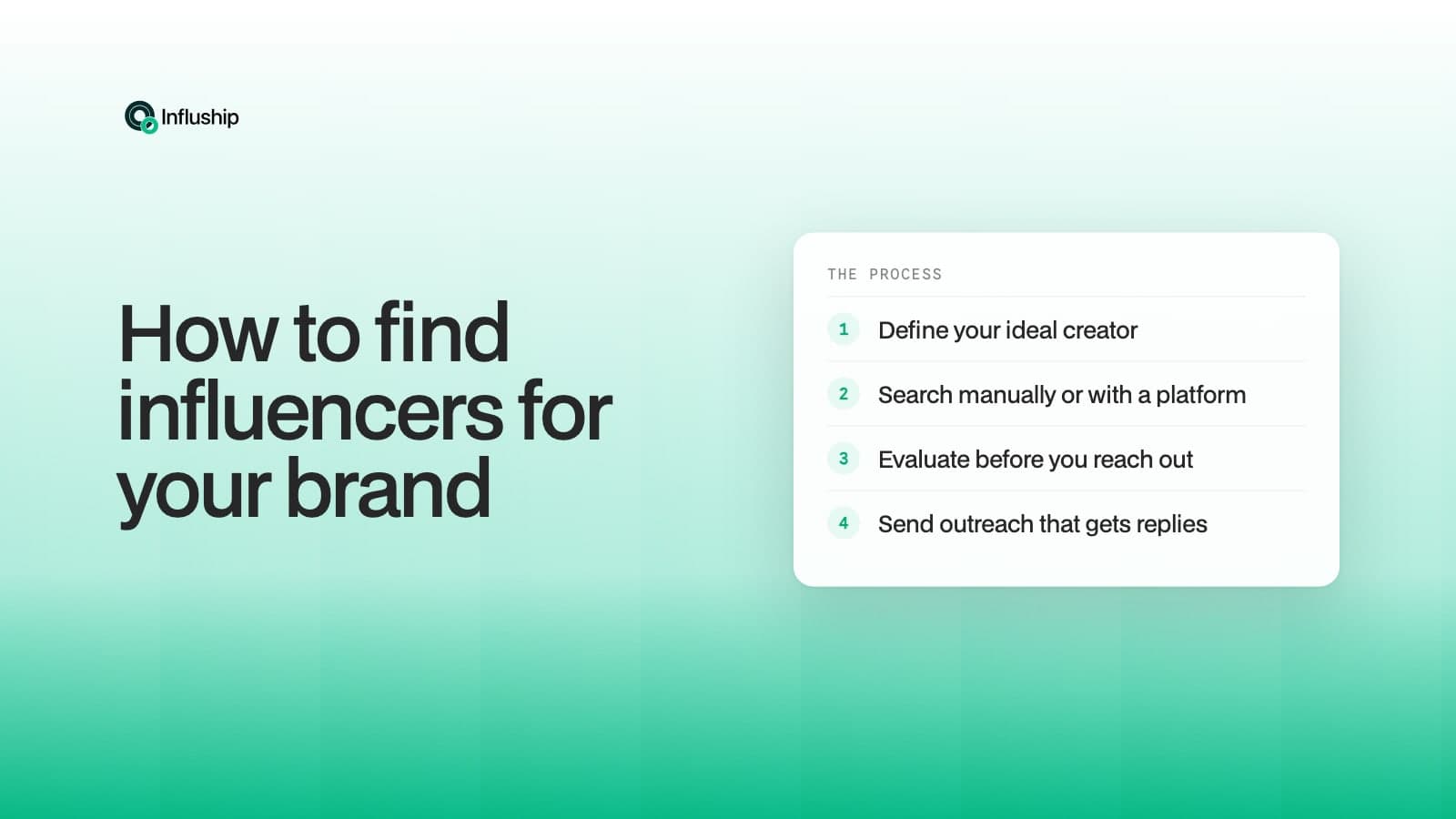
Your next step: Pull up your last 10 outreach emails. Check each one against the 4 failure modes:
- Did you warm them up first?
- Did you personalize the right things?
- Did you lead with their upside?
- Do you sound different from everyone else?
Fix the mechanisms. The responses will follow.