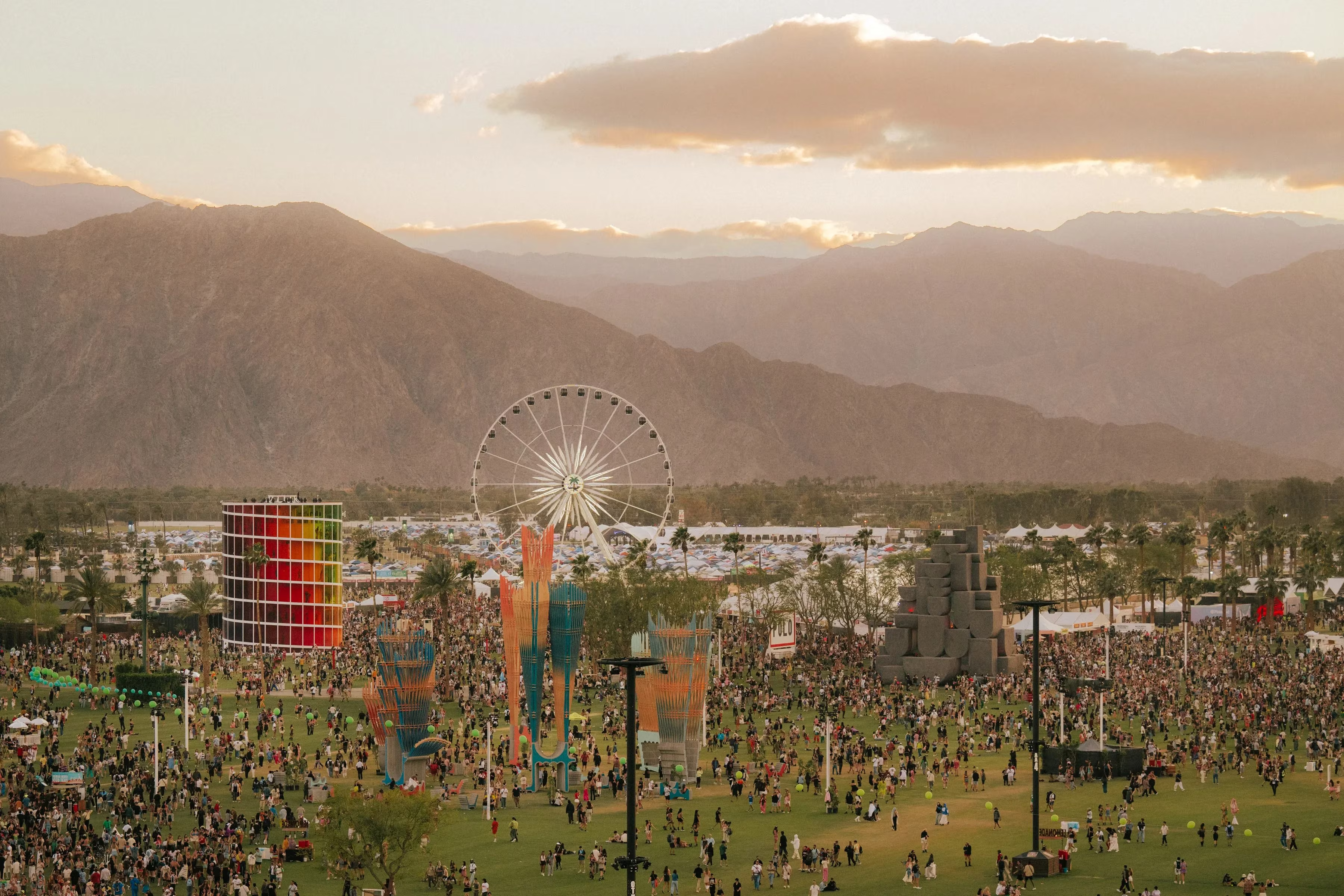
official
Festival grounds
Use for sanctioned presence, official sponsor utility, VIP, merch, food, skincare, payment, and moments that are allowed to live inside the festival.
Good onsite work feels useful, not smuggled in.
Build a Coachella 2027 creator shortlist around the signals that actually matter: prior festival attendance, Palm Springs and offsite coverage, category fit, audience questions, and whether the creator can make a brand moment feel native to the weekend.
Find creators attending Coachella 2027 with prior festival content, offsite event coverage, fashion or beauty relevance, and audience comments about the actual weekend.

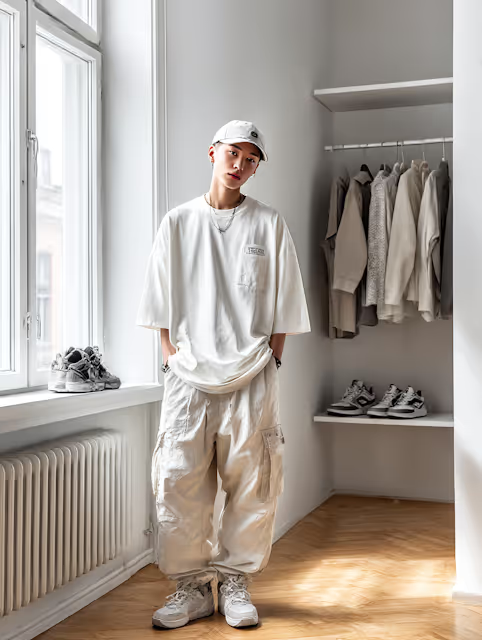
Maya R.
92% matchFashion and beauty creator with Coachella 2025 and 2026 content, Palm Springs brand-event coverage, and audience comments about outfits, heat, SPF, and festival packing.
Attendance proof
Posted grounds, Palm Springs arrival, and Weekend 1 recaps.
Offsite proof
Covered invite-only events without losing the festival thread.
Audience proof
Comments ask about outfits, SPF, bags, heat, and access.
onsite vs offsite
The mistake is treating Coachella like one backdrop. Strong campaigns know which layer they are using: sanctioned onsite presence, offsite Brandchella circuit, travel path, or the post-weekend content tail.

offsite reality
If the brief depends on creator houses, pool clubs, gifting, glam, and dinners, you are buying Palm Springs coverage first. Treat it like its own channel, not a footnote to the festival.
official
Use for sanctioned presence, official sponsor utility, VIP, merch, food, skincare, payment, and moments that are allowed to live inside the festival.
Good onsite work feels useful, not smuggled in.
offsite
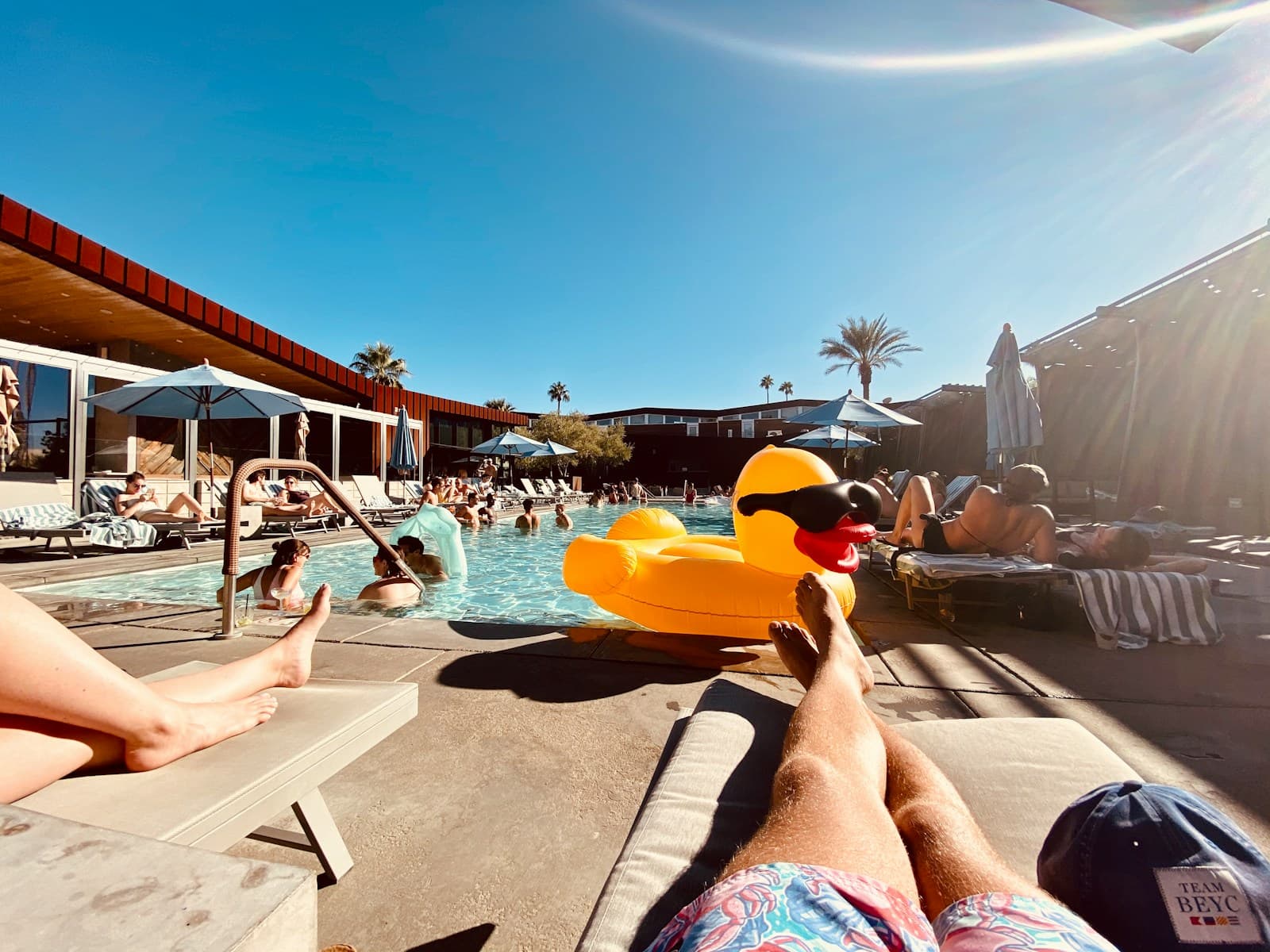
Creator houses, hotel takeovers, pool clubs, invite-only events, brand dinners, glam, gifting, interviews, and product launches do most of the creator-heavy storytelling.
Most Brandchella content is built here.
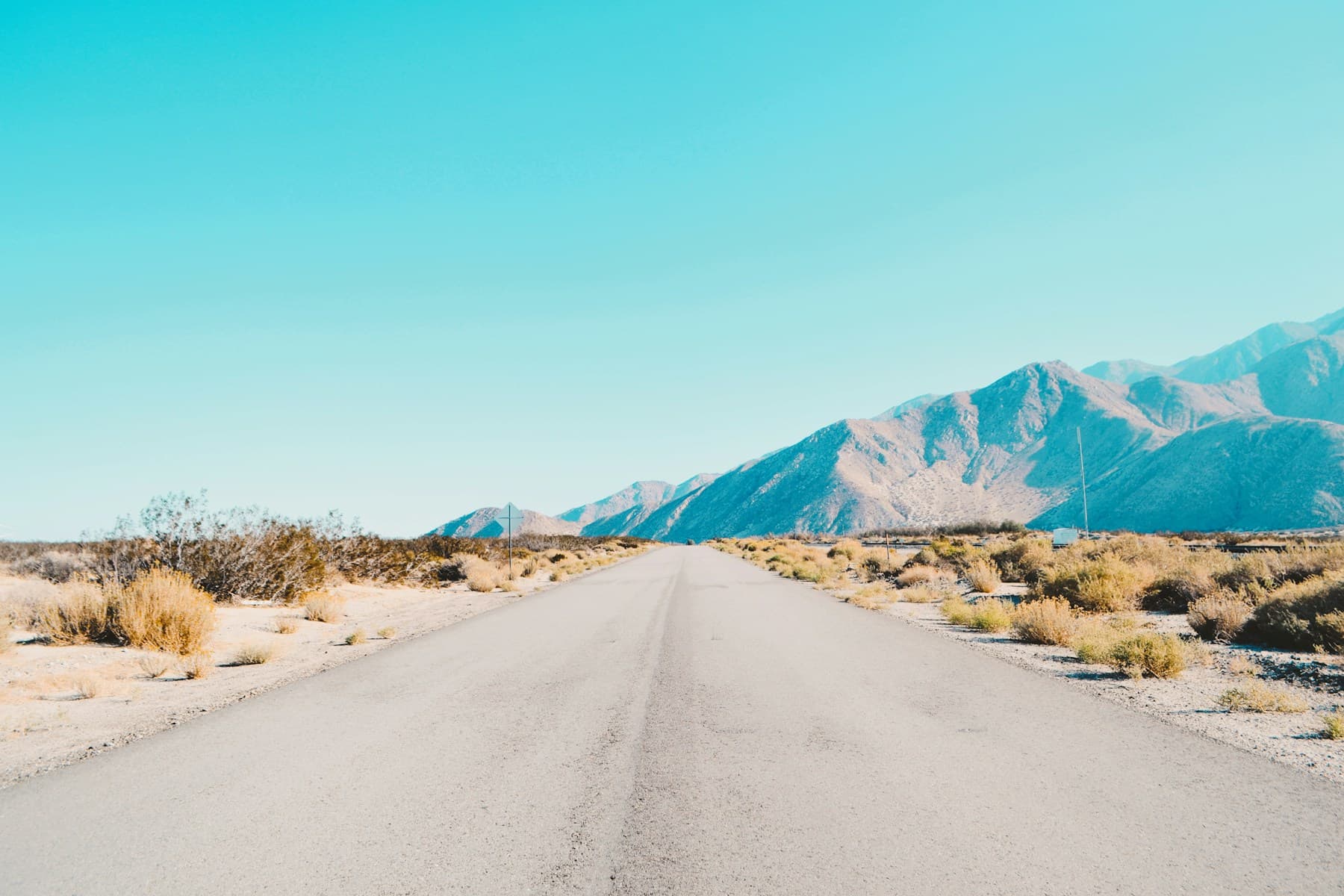
route
Airport arrivals, billboards, packing, road stops, rideshare, shuttle, hotel check-ins, and creator convoy content create the pre-festival runway.
The journey is inventory.
after
Recaps, press pickup, paid creator usage, product learnings, whitelisting, and "what actually worked" edits can outlast the live weekend.
Do not stop the campaign at checkout.
campaign calendar
By Friday afternoon, the best creators have already planned the looks, pitched the brands, booked the house, mapped the parties, and started posting. A useful brief starts before the grounds open.

the drive is inventory
The campaign often starts in packing, airport, roadside, and hotel check-in content, before anyone reaches the grounds.
6-8 weeks out
Tickets, invite asks, lineup opinions, outfit boards, travel plans, and brand pitches begin before most campaign teams have their shortlist.
Find creators already posting Coachella intent, not just festival aesthetics.
2-3 weeks out
Fittings, glam, packing, product seeding, skin prep, bag checks, and sponsor reveals shape what the audience expects from the weekend.
Look for creators whose comments ask about links, sizing, SPF, packing, or travel.
Day zero
Airport moments, creator houses, offsite events, hotel pools, welcome dinners, and first sponsor posts land before the festival content peaks.
Separate offsite-event proof from official-grounds proof.
Weekend 1
Press, celebrity adjacency, launch velocity, invite-only social proof, and brand density all stack into the same 72 hours.
Prioritize creators with a clear point of view, not only access.
Between weekends
The first read shows which hooks repeated too much, which products looked natural, and which creator posts deserve paid lift.
Use W1 engagement to adjust W2 briefs instead of repeating the same shot list.
Weekend 2
Less novelty can mean better music credibility, less duplicated launch noise, and more informed content about what mattered.
Do not treat Weekend 2 as leftover inventory.
campaign teardowns
The point is not to copy Rhode, e.l.f., Neutrogena, Gap, Dove, or Pacsun. The point is to notice the mechanics: celebrity gravity, offsite-to-onsite continuity, product utility, merch behavior, route ownership, and the risk of saturation.
Celebrity gravity plus product world
What happened
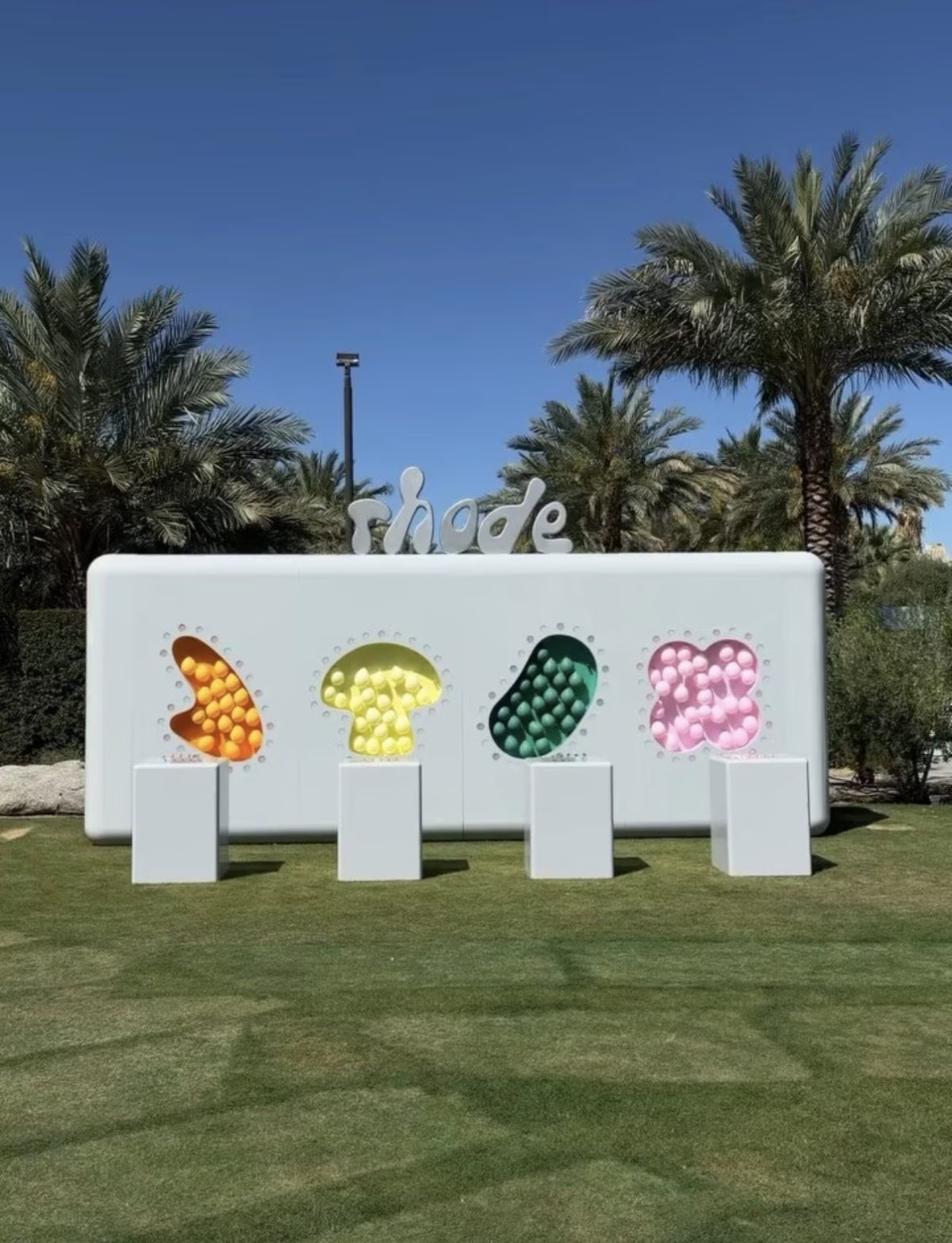
Rhode did not just host creators near the festival. It built a branded world around Hailey Bieber, product play, photo moments, games, beauty stations, and the broader Bieber cultural moment.
Why it worked
The activation gave creators a simple story to repeat: this was not a random beauty lounge, it was Rhode World. That made the content legible across celebrity posts, creator recaps, press, and fan accounts.
What to search for
For a brand without Hailey-level celebrity gravity, the useful search pattern is creators who can make a branded environment feel like a destination, not just a backdrop. Look for creators whose audience follows their event access, product discovery, and social context.
Don't copy
Do not copy the scale if you cannot copy the cultural center. A weaker version becomes a pretty room with expensive attendance and interchangeable content.
Reported 2026 data put Rhode at $13.4M EMV from 484 pieces of content.
Offsite house plus on-grounds thread
What happened
e.l.f. connected a wider festival system: creator and community kickoffs, LA prep, Ulta pit stops, rides, after-hours moments, on-grounds presence, and extensions into Roblox and Twitch.
Why it worked
The idea travelled. A creator could post getting ready, moving through the desert, hitting the brand house, seeing the brand on-site, and still have it feel like one campaign instead of five unrelated placements.
What to search for
Search for creators who already connect prep, beauty, transit, party, and recap content. The value is not one perfect post; it is whether their audience follows the full weekend arc.
Don't copy
A multi-touch campaign only works if the thread is obvious. If each touchpoint needs a paragraph of explanation, creators will simplify it into generic GRWM content.
Traackr reported e.l.f. generated 2.4k VIT, 1.1M engagements, and 15.8M video views from 133 creators.
Utility that matched the desert
What happened
Neutrogena showed up as official sun-care partner with sunscreen touchpoints across the journey: airport, Palm Springs, festival grounds, campgrounds, offsite hotspots, and creator-led Club Neutrogena moments.
Why it worked
The product solved a real Coachella problem. Sun, sweat, reapplication, makeup, dust, and long outdoor days gave creators a reason to mention it without forcing an artificial brand line.
What to search for
Look for creators whose audience asks practical questions: SPF, makeup wear, heat, packing, bag rules, skin recovery, and what survived the weekend. The right creator makes utility feel social.
Don't copy
Utility can still become invisible if the brief only asks for signage. The creator has to show when the product matters, not just prove the brand was present.
Campaign coverage noted the brand meeting festivalgoers from Palm Springs Airport through the grounds, campgrounds, and offsite hotspots.
Merch, customization, and searchable proof
What happened
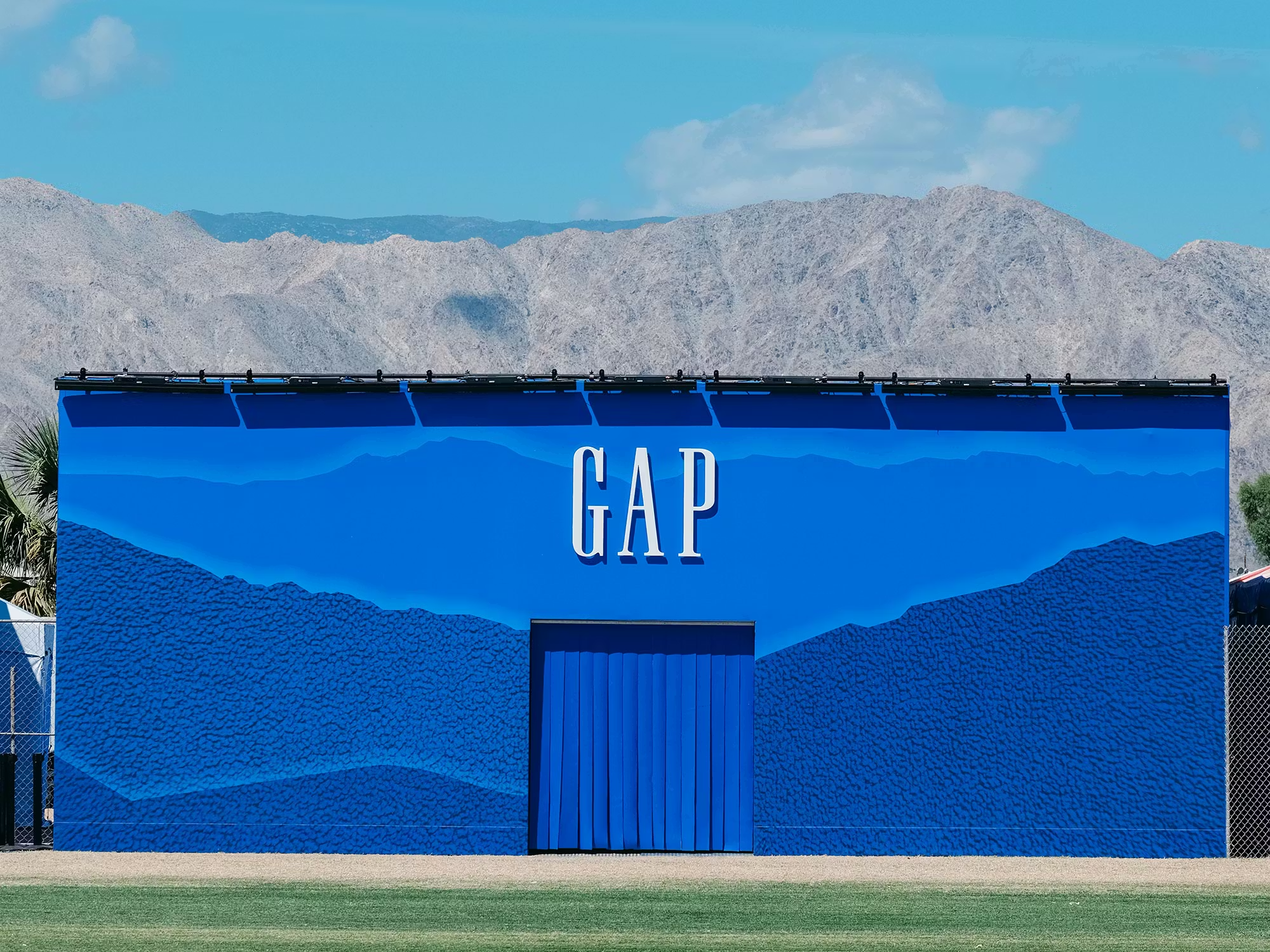
Gap used an official apparel role and Hoodie House to turn a simple product into an on-site behavior: buy, customize, wear, photograph, and talk about the hoodie.
Why it worked
The campaign gave creators a concrete thing to do. Customization produces process content, lines create social proof, and wearing the product turns attendees into distribution.
What to search for
Search for creators who can sell product behavior, not just fit pics: try-on, customization, line energy, price reaction, styling, and whether the item makes sense after the festival.
Don't copy
Merch moments can look popular while doing little for the brand if creators never explain why the product is desirable beyond access.
Glossy reported more than 1M views and a roughly 5,000% Google Trends search spike.
High-heat distribution logic
What happened
Dove tied deodorant to Indio and the physical reality of the weekend: heat, movement, crowds, travel, and the difference between looking good in content and feeling functional on-site.
Why it worked
The category made sense for the environment. Deodorant is not glamorous, but Coachella gives it a real problem to solve, especially when creators are moving between hotels, shuttles, parties, and stages.
What to search for
Look beyond polished beauty creators. The better fit may be creators who talk about getting ready, long-day routines, sweat-proof outfits, body confidence, or what they actually packed.
Don't copy
The risk is making hygiene feel like a legal disclaimer. The strongest creator angle is lived utility, not “remember to use deodorant.”
Campaign US reported Dove became the official deodorant sponsor of Coachella’s host city, Indio.
Owning the road into the desert
What happened
Pacsun spread Weekend 1 across offsite experiences: creator house, roadside retail, and billboards along the Coachella Valley route.
Why it worked
It treated the trip as media inventory. For fashion and youth retail, the campaign did not have to wait for the festival gates because the audience was already watching packing, driving, shopping, and arrival.
What to search for
Search for creators who naturally document the before: outfit planning, suitcase edits, road-trip content, friend groups, hotel arrivals, and shopping stops.
Don't copy
Route ownership can become ambient noise if the creator never connects the roadside moment back to a product, collection, or reason to care.
BizBash described Pacsun’s Weekend 1 creator house, roadside stand, and billboard placements.
creator proof patterns
A creator being in the desert is not enough. A ferris wheel photo is not enough. The better question is what kind of Coachella evidence they already have.

endurance proof
Late-night content is not the same skill as a polished outfit carousel.
Low light, sound, crowd density, dead phone batteries, and 1am fatigue all change what a creator can actually deliver.
Has the creator shown the actual grounds, sets, crowds, camping, shuttles, or festival experience, not only Palm Springs parties?
Can they cover brand houses, hotel takeovers, pool parties, and invite-only events without every post collapsing into ad wallpaper?
Does their normal content make the brand category believable: beauty, fashion, beverage, wellness, travel, music, food, accessories, or sun care?
Do comments show buying and planning intent: outfit sources, product questions, packing, heat, artist plans, event access, or "was this worth it"?
Can they carry prep, arrival, live weekend, and recap, or are you buying one polished carousel and hoping it does the work?
Do they know when the post is a festival moment, party moment, celebrity moment, product moment, or just noise?
weekend strategy
Weekend 1 is not automatically better. Weekend 2 is not leftover inventory. They are different reads on the same cultural moment.
weekend 1
weekend 2
brief autopsy
Coachella punishes vague briefs because the weekend already has too many competing stories. The useful question is simple: where would this product actually show up if no one was paying the creator?
Capture our brand throughout Coachella weekend.
Use the product where it would actually show up: packing, getting ready, the hotel room, the ride, the party, or the recovery recap.
Post at the festival and mention our launch.
Separate festival content from offsite content. If it is a brand house, call it a brand house. If it is the grounds, keep the product role natural and compliant.
Make it aspirational.
Show why the product earns a place in the weekend: heat, dust, photos, packed bags, long days, social plans, or recovery.
search recipes
The page should not rank because it says Coachella a lot. It should rank because it teaches the search pattern behind a better shortlist.
Bad: Coachella influencers
> Find creators attending Coachella 2027 who posted Coachella or Palm Springs brand-event content in 2025 or 2026, with audience comments about festival outfits, beauty prep, packing, or travel.
Bad: Festival fashion creators
> Find fashion creators with Coachella attendance proof, outfit planning content, brand-event coverage, and comments asking for links, sizing, styling, or what survived the weekend.
Bad: Beauty influencers going to Coachella
> Find beauty creators who tested SPF, makeup, hair, fragrance, or skin prep in desert heat, with Coachella or Palm Springs content history.
Bad: Coachella creators with high engagement
> Find creators whose Coachella posts include official festival grounds, not only offsite parties, and whose comments mention artists, set times, outfits, product use, or festival logistics.
official planning notes
The 2027 dates are set, but rules, maps, lineup, travel, and onsite policies should be checked again when the 2027 guide is live. This is especially important for cameras, sampling, giveaways, signage, wristbands, and commercial use of festival marks.
Use for timing around Weekend 1, Weekend 2, creator travel, and planning windows.
Check this before briefing anything involving onsite products, cameras, giveaways, marks, wristbands, or commercial behavior.
Use before any campsite, creator convoy, branded vehicle, or camping-adjacent concept.
A useful read on how offsite houses, airport moments, road stops, and official placements played out in 2026.
Useful context for Weekend 1 vs Weekend 2, creator volume, beauty performance, e.l.f., and other tracked brand results.
A useful example of how merch, customization, lines, and creator posts created measurable demand.
Useful context for Neutrogena, Dove, celebrity influence, and utility-led beauty campaigns around the desert.
Search beyond "festival influencers." Build a Coachella 2027 shortlist around the attendance history, offsite proof, audience behavior, and moments your campaign can actually own.
Start your Coachella creator searchInfluship is not affiliated with, endorsed by, or sponsored by Coachella, Goldenvoice, or AEG Presents. Always confirm current event rules with official sources before planning onsite activity.