

AI creators.
Beyond the demo.

People who explain the technology, build with it, and put it to work. Twelve voices worth knowing when your product needs more than another “this changes everything.”

Start with the person using it.

A developer evaluating an API needs something different from a team choosing its first AI workflow. This edit covers technical understanding, production engineering, everyday work, and the communities following what comes next.

Make the technology understandable.

Clear explanations help people form better questions before they choose a tool.

Ethan Mollick01
AI at work & in educationemollick

Ethan Mollick

The question after “what can it do?”

Ethan Mollick’s One Useful Thing explores how AI changes work, learning, and the choices people make with it. The Wharton professor and Co-Intelligence author gives readers a way to think about the technology beyond a stream of product announcements.

For a brand, the useful lesson is to connect capability with behavior. What changes in a real task? What should the person still decide? His work is a reference for a thoughtful discussion, rather than a shortcut to a conventional endorsement.

Our pick forWorkplace AILearning toolsBusiness audiences

The campaign we’d make

Develop an open workplace experiment around a single task, with examples of different approaches and a discussion of where human judgment changes the result.


Read One Useful ThingEssays on working and learning with AI.Find more like Ethan Mollick on Influship
Simon Willison02
Tools, code & technical explanationExplore the work

Simon Willison

Show enough of the work to make it useful.

Simon Willison’s writing connects new AI capabilities with experiments, code, and practical observations. The Datasette creator and Django co-creator gives technically curious readers a way to examine what a tool does and how it behaves.

This is a strong reference for a developer product with something concrete to demonstrate. An example repository, a reproducible task, or a carefully explained integration gives the audience more to work with than a claim about productivity.

Our pick forDeveloper toolsAPIsTechnical audiences

The campaign we’d make

Publish a small, reproducible application that solves one awkward information problem. Explain the tool choices, include the code, and invite readers to adapt it to their own data.

Explore Simon’s technical writingPractical investigations of AI tools and software.Find more like Simon Willison on Influship
Andrej Karpathy03
Technical foundationsAndrejKarpathy

Andrej Karpathy

Give people the explanation they keep coming back to.

Andrej Karpathy’s educational work moves between technical foundations and broad explanations of language models. His Deep Dive into LLMs and How I Use LLMs offer two useful entry points: understanding the system and seeing how someone experienced approaches it.

For a brand, this is a benchmark for depth and clarity. The creative opportunity is educational substance with lasting value. An association would need to serve that work; a conventional scripted product pitch would miss its appeal.

Our pick forTechnical educationDeveloper audiencesLearning experiences

The campaign we’d make

Support an open learning resource that follows one concept from a small example to a working implementation, with exercises people can run and modify.

Watch the LLM deep diveA long-form explanation of language models.Find more like Andrej Karpathy on Influship

Show what it takes to make it work.

Evaluation, implementation, and the decisions between a promising demo and a useful system.

Chip Huyen04
AI engineering & system designExplore the work

Chip Huyen

For the decisions a demo leaves out.

Chip Huyen writes about building machine-learning and AI systems, including the books Designing Machine Learning Systems and AI Engineering. Her work gives builders language for the choices around the model: data, evaluation, architecture, and the demands of an application.

That makes her a useful reference for infrastructure and engineering education. A strong campaign concept would start with a design problem that readers recognize and explore the options in enough detail to help them make a decision.

Our pick forAI infrastructureEngineering educationTechnical books

The campaign we’d make

Create a worked architecture guide for one application. Trace the choices from the user’s task to evaluation and deployment, with alternatives for different constraints.

Explore Chip’s books and writingSystem design and engineering beyond the prototype.Find more like Chip Huyen on Influship
Hamel Husain05
Evaluation & applied AIExplore the work

Hamel Husain

Make “better” something the team can examine.

Hamel Husain’s work focuses on practical AI engineering, with particular depth in evaluation and error analysis. His writing and teaching help teams look closely at the behavior of an application instead of relying on a few impressive examples.

For a developer-tool brand, the opportunity is to make a difficult engineering task easier to learn. A useful example should expose the decisions behind the evaluation, giving builders something they can adapt rather than a dashboard to admire.

Our pick forEvaluation toolsAI engineeringDeveloper education

The campaign we’d make

Build an evaluation workshop around a deliberately imperfect assistant. Let participants inspect failures, define useful checks, and see what changes when the system is improved.

Explore Hamel’s evaluation writingPractical guidance for examining AI application quality.Find more like Hamel Husain on Influship
Jeremy Howard06
Practical machine learningExplore the work

Jeremy Howard

Help someone become a builder.

Jeremy Howard co-founded fast.ai, whose practical courses make machine learning accessible through doing. The approach gives learners working examples early, then develops the understanding needed to go further.

That is valuable territory for tools that remove a real obstacle to learning or building. Compute, development environments, and educational products can have a clear role when the campaign helps someone complete an actual project.

Our pick forDeveloper educationCompute platformsLearning tools

The campaign we’d make

Create a short project course with a working application by the first lesson. Provide the environment and exercises so learners can continue experimenting after the course ends.

Explore fast.ai’s practical courseProject-led learning for people building with machine learning.Find more like Jeremy Howard on Influship

Give the tool an actual job.

Workflows and practical teaching connect capability to a task someone already needs to finish.

Jeff Su07
Workplace workflowsJeffSu

Jeff Su

Start with the task on someone’s desk.

Jeff Su’s work connects AI and productivity with the routines of professional life. His tutorials and resources focus on making tools useful in familiar situations, giving viewers a practical reason to try a workflow.

For a workplace product, the strongest brief is a task with a visible finish line. Show the input, the decisions, and the usable output. The viewer should be able to recognize their own work in the example.

Our pick forWorkplace softwareAI productivityTeam workflows

The campaign we’d make

Take a messy meeting-to-project handoff and rebuild it as a complete workflow. Show the source notes, the decisions that need a person, and the final plan the team can use.

Explore Jeff’s practical guidesAI and productivity in everyday professional work.Find more like Jeff Su on Influship
Allie K. Miller08
Business adoptionalliekmiller

Allie K. Miller

Help the team move from interest to a useful first step.

Allie K. Miller’s work brings AI into business conversations through education, resources, and executive guidance. Her background includes AI roles at AWS and IBM, while her public work focuses on how organizations approach the technology.

That perspective suits a brand selling to teams rather than individual hobbyists. The campaign should make the adoption decision clearer: which task to start with, who needs to be involved, and what a useful outcome looks like.

Our pick forBusiness AITeam educationExecutive audiences

The campaign we’d make

Build a practical first-project workshop for a specific function. End with a scoped use case, a working example, and a plan the team can take back to its own workflow.

Explore Allie’s AI resourcesBusiness-focused education and practical AI guidance.Find more like Allie K. Miller on Influship
Tina Huang09
AI learning & technical skillsTinaHuang1

Tina Huang

Make the unfamiliar concept feel learnable.

Tina Huang combines an ex-Meta data-science background with content on AI, coding, careers, and self-study. Her explanations of agents and local AI models give viewers a compact way into technical subjects they may be encountering for the first time.

For an educational or developer product, the opportunity is a useful learning sequence. A clear concept, a small exercise, and a working result can make the product part of someone’s growing ability rather than another tool to collect.

Our pick forLearning platformsDeveloper toolsTechnical careers

The campaign we’d make

Create an agent-building lesson around one modest task. Explain the components, build the first version, and give learners a second challenge that requires changing the design.

Watch the agents introductionA compact explanation of agent fundamentals.Find more like Tina Huang on Influship

Meet people where they’re exploring.

News, demonstrations, and practitioner conversations help new products find their context.

Matt Wolfe10
AI tools & demonstrationsExplore the work

Matt Wolfe

Give a new tool a reason to be tried.

Matt Wolfe connects AI news with tool discovery through his videos, Future Tools, and The Next Wave podcast. That combination gives a new product several possible contexts: a demonstration, a comparison, or a discussion of where the category is going.

The strongest brief contains a task that can be shown clearly. A feature becomes interesting when viewers can see what it lets them make, how the process works, and where it fits among the tools they already know.

Our pick forAI tool launchesCreative softwareProduct discovery

The campaign we’d make

Build the same small creative project through a complete workflow, from source material to final output. Show where the product saves a step and where the creator still makes the important choices.

Explore Matt’s AI workTool discovery, videos, and The Next Wave.Find more like Matt Wolfe on Influship
Rowan Cheung / The Rundown11
AI news & practical guidestherundownai

Rowan Cheung / The Rundown

Put the announcement in a reader’s working day.

Rowan Cheung’s The Rundown is a creator-led publication covering AI news, tools, and practical learning. Its team format matters: the opportunity extends beyond one person’s social feed into a publication and educational resources.

For a launch, the useful question is what readers can do with the news. A concise introduction paired with a genuinely useful guide gives the product more substance than a feature announcement alone.

Our pick forAI launchesPractical guidesNewsletter audiences

The campaign we’d make

Pair a product introduction with a tutorial for one recognizable task. Give readers an example they can try immediately and a clear explanation of who will find it useful.

Explore The RundownAI news, practical learning, and tool coverage.Find more like Rowan Cheung / The Rundown on Influship
swyx12
AI engineering communityExplore the work

swyx

Meet the people deciding what to build with.

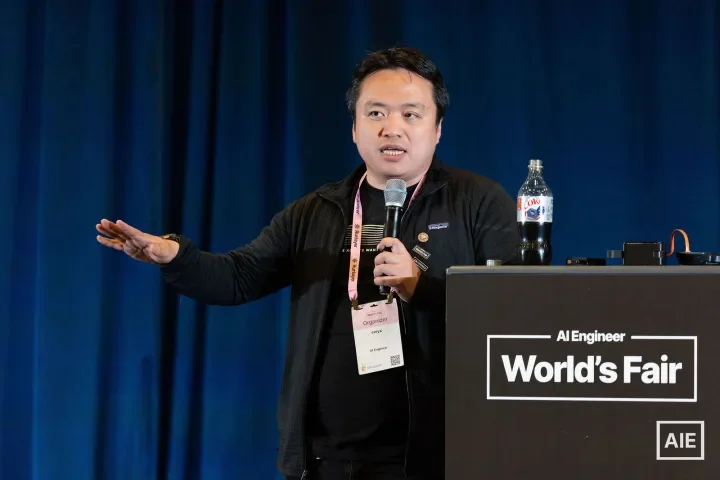
Shawn Wang, known as swyx, connects technical writing with the AI engineering community through Latent Space and AI Engineer. His work gives practitioners a place to discuss the tools, roles, and implementation choices emerging around AI.

This is a strong context for infrastructure and developer products that benefit from conversation. A technical demonstration, a workshop, or a candid discussion with the builders can give the product a place in the community’s working knowledge.

Our pick forDeveloper infrastructureTechnical eventsAI engineering

The campaign we’d make

Run a workshop around a small production-style application. Put the engineers behind the product in the room, share the implementation, and leave time for difficult questions.

Explore swyx’s workWriting and community around AI engineering.Find more like swyx on Influship

Before you
write the brief.

Which AI influencers are best for a workplace tool?

Jeff Su is a strong reference for practical workplace workflows, Allie K. Miller for business adoption, and Tina Huang for learning and technical skills. Brief a task with a visible outcome so the audience can judge the usefulness for themselves.

Who should a developer-tool brand look at?

Simon Willison, Hamel Husain, Jeremy Howard, and swyx publish work that speaks to people building with AI. Their formats differ: technical writing, evaluation education, practical courses, and practitioner conversations. Treat them as distinct editorial voices, not interchangeable ad placements.

Does AI influencers mean virtual influencers?

Here it means people and creator-led publications covering artificial intelligence: the tools, engineering, and ways people use it. Computer-generated characters and virtual personalities are a different category.

How should we brief an AI creator?

Provide a real task, working product access, and a clear explanation of what the product does. Let the creator demonstrate the process and its limitations. The most persuasive outcome is something the audience can understand and reproduce.

Your product.
The right people.

Tell Influship what you’re making.
Find the creators who give it a place in the conversation.

Find my creators Start free. Search in your own words.