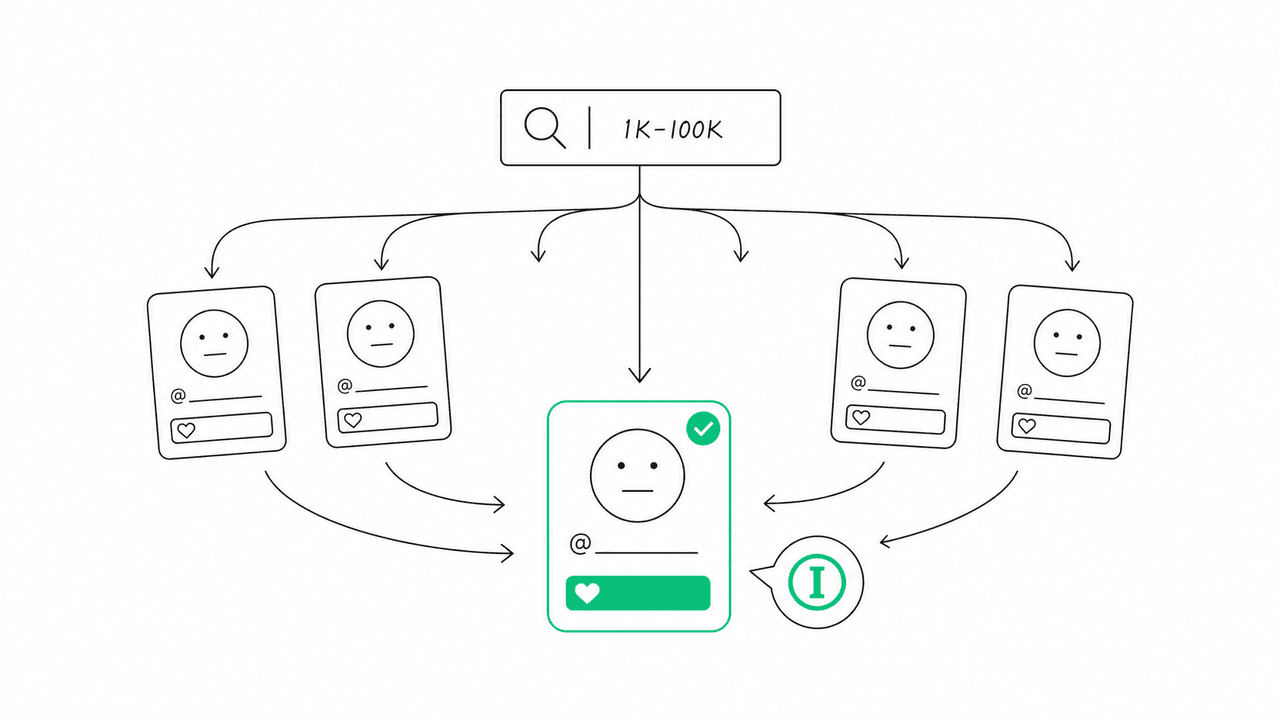
Micro-influencers are the most efficient spend in creator marketing, and almost every platform on the market is built for the opposite end. The big influencer marketing suites were designed around macro and celebrity deals: high minimums, annual contracts, a customer success manager, and a roster that thins out fast once you filter below 100K followers. If you run programs on nano and micro creators (roughly 1K–100K followers), that pricing and that database are a bad fit, and you end up paying enterprise money to find creators you could have sourced by hand.
This is a buyer's guide for the brand or agency that has already decided micro is the play. It covers what a micro-influencer platform actually needs to do well, where the common tools land on price and fit, and how to choose without signing a contract you'll regret in month three. We build creator discovery software, so treat the Influship row in the table below as an interested party's pitch and weight it accordingly. Everything else here is meant to help you pick the right tool even when that tool isn't ours.
One honest caveat up front: pricing in this category changes constantly and most vendors hide it behind a "book a demo" wall. The numbers below are directional, based on publicly reported ranges and what the tools are positioned to serve. Verify current pricing and minimums on each vendor's own site before you commit, because list prices, included seats, and credit limits move quarter to quarter.
Why micro-influencers need a different kind of platform
The economics of a micro program invert the assumptions enterprise tools are built on. A macro campaign is a handful of large, expensive deals you negotiate and manage closely. A micro program is the reverse: many small, cheap collaborations where the bottleneck is finding and qualifying creators at volume, not managing a short list. That difference drives almost every requirement. The primary-source creator selection statistics show how often follower count and engagement enter current selection decisions.
Volume changes what matters. When you're working with 5 macro creators, manual vetting is fine. When you're building a roster of 80 micro creators a quarter, you need search that surfaces relevant accounts fast, vetting data attached so you're not opening 80 profiles by hand, and outreach you can run without a 12-person team. The platform's job shifts from deal management to discovery throughput.
Database depth matters more, not less. Most influencer databases are thin below 50K followers, because the data is harder to collect and the platforms' original customers cared about big names. For a micro program that's exactly backwards: the creators you want are the ones the database covers worst. If a tool can only show you the same 100K-plus accounts everyone else is contacting, it's not a micro-influencer platform, it's a macro platform with a follower filter.
What a good micro-influencer platform should do
Before the comparison, here's the checklist to judge any tool against. A platform built for micro creators should cover most of these well; a repurposed enterprise suite usually covers two or three and charges you for the rest.
- Deep discovery below 100K followers: Real coverage of nano and micro creators, not a database that thins out the moment you filter small. This is the single most important feature and the one most tools fail.
- Search that fits intent, not just filters: Filtering by "fitness" and a follower range returns thousands of irrelevant accounts. The better tools let you describe the creator you want in plain language and rank by fit. See our influencer discovery definition for what modern discovery means.
- Vetting data on the result, not a separate report: Real audience size, engagement rate, audience geography and age, and fake-follower signals attached to each creator so you can shortlist without manual checks.
- Fake-follower and engagement-quality detection: Micro creators are cheaper to fake. A tool that can't flag bought followers will quietly cost you more than its subscription. Our guide on how to detect fake followers covers the tells.
- Outreach and CRM that scale to volume: Templated outreach, sequences, and tracking, because a micro program is dozens of conversations, not five.
- Pricing that matches a micro budget: No five-figure annual minimum to contact creators who charge $200 a post. Monthly plans and self-serve onboarding beat a forced demo and a contract.
The best micro-influencer platforms in 2026, compared
The table below is a directional comparison of tools commonly used for micro-influencer work, including ours. "Micro fit" is our read on how well each tool serves nano and micro programs specifically, not the tool's overall quality. Pricing is approximate and positioning-based; confirm on the vendor site.
| Platform | Best for | Discovery approach | Directional pricing | Micro fit |
|---|---|---|---|---|
| Influship | Brands & agencies that want deep micro discovery without a retainer | Natural-language semantic search with vetting and fake-follower data attached | Self-serve monthly plans; no enterprise minimum | High |
| Modash | Discovery-first teams that want broad coverage of smaller creators | Large filterable database (250M+ profiles) with audience and fake-follower data | Mid (monthly plans from low hundreds/mo) | High |
| Upfluence | Ecommerce brands wanting discovery plus affiliate and outreach in one suite | Filter-based database with ecommerce/affiliate integrations | Higher; quote-based, leans annual | Medium |
| Aspire (AspireIQ) | Larger brands running ambassador and gifting programs at scale | Database plus marketplace where creators apply to campaigns | Higher; quote-based, enterprise-leaning | Medium |
| HypeAuditor | Teams that prioritize analytics and audience-quality vetting | Analytics-first discovery with strong fraud detection | Mid to higher; tiered | Medium |
| Heepsy | Small brands and solo marketers on a tight budget | Affordable filter-based search across Instagram, TikTok, YouTube | Low (entry plans from tens/mo) | Medium |
| GRIN | DTC brands wanting end-to-end creator management plus ecommerce | Relationship/CRM-led; discovery is secondary to management | Higher; quote-based, annual | Low–Medium |
A few patterns are worth naming. The full management suites (Aspire, GRIN, Upfluence) are powerful but priced and structured for brands spending real money on programs, and their discovery is often the weaker half of the product. The discovery-first tools (Modash, Heepsy, HypeAuditor, and Influship) are easier to start with for a micro program because they let you find and vet creators without buying a workflow suite you don't need yet. Where they differ is database depth below 100K followers and how search actually works, which is the part to test in a trial.
How to read the field: three buying lenses
Discovery-first vs. management-first
The biggest fork in this category is whether the tool is fundamentally about finding creators or managing them. Management-first platforms (GRIN, Aspire) assume you already have creators and want a CRM, payments, and content approvals around them. Discovery-first platforms assume finding the right creators is your bottleneck and build around search and vetting. For most teams starting a micro program, discovery is the bottleneck, so a discovery-first tool gets you to value faster and cheaper. You can add management once the roster justifies it.
Database depth where you actually shop
Every vendor quotes a giant total profile count. The number that matters is coverage in your niche, on your platform, in your follower band. The only way to test it is to run the same three searches across two or three trials: a specific niche ("ceramics creators"), a tight follower band (10K–40K), and a geography you care about. Count how many results are actually relevant and actually in band. The total profile count tells you nothing; the relevant-results count tells you everything.
Search quality: filters vs. intent
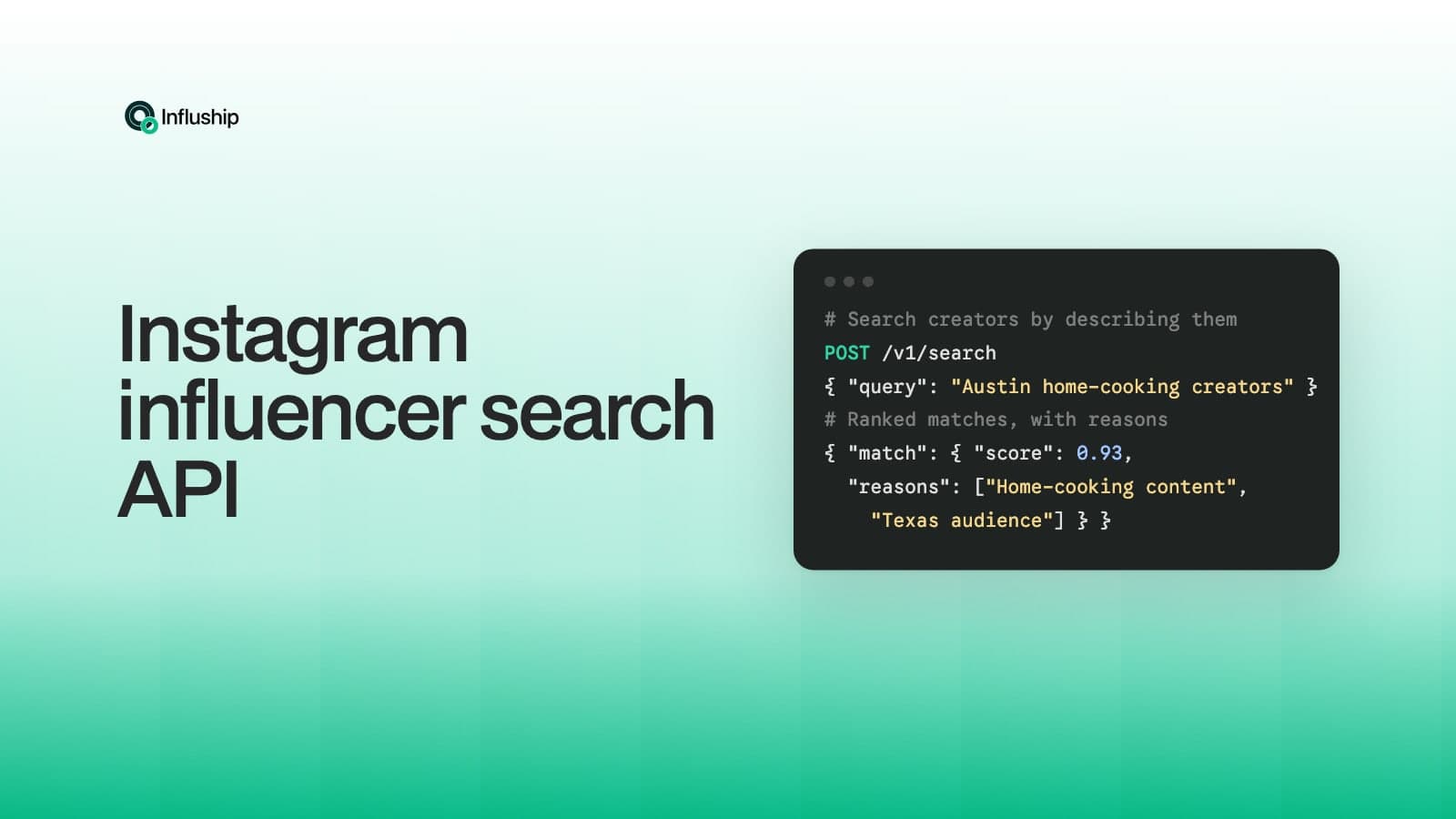
Filter-based search is the old model: pick a category, set sliders, page through results. It's fine until your category is broad, at which point you're scrolling thousands of loosely-relevant accounts. Intent-based search lets you describe the creator in a sentence and ranks by how well each one matches. With Influship's influencer discovery, you can search something like "outdoor and hiking micro-creators under 50K with an engaged US audience who post trail content," and get matches ranked by fit, with the vetting data attached. The practical test in any trial: how many of the top 20 results would you actually contact? Good intent search puts most of your shortlist in that top 20; filter search makes you dig.
Engagement rate by tier: the context behind the "micro converts" claim
The reason to build on micro creators in the first place is that engagement rate falls as follower count rises. Smaller accounts have tighter, more responsive communities. This is well documented: HypeAuditor's State of Influencer Marketing and Influencer Marketing Hub's benchmark report both consistently report that nano and micro creators carry higher average engagement rates than macro and mega accounts. Check the current edition of each for the exact figures, since they revise the benchmarks annually and the deltas shift with platform algorithm changes.
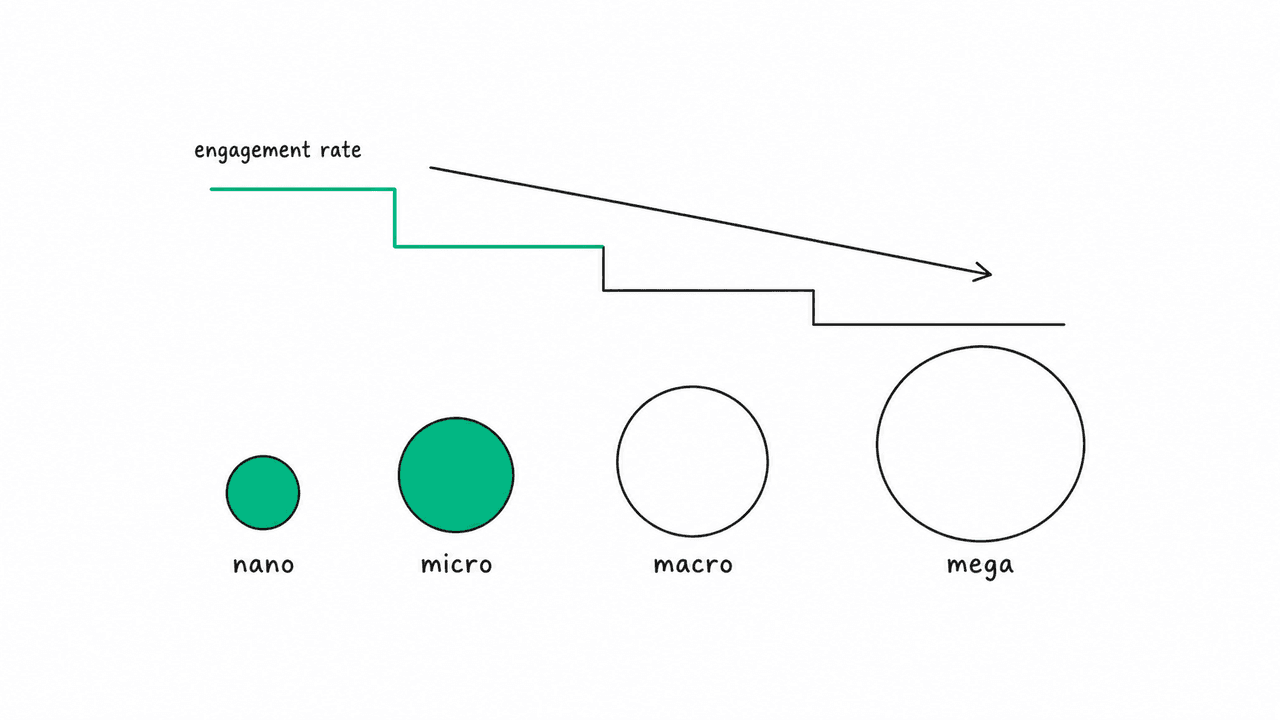
The directional pattern that holds across editions: nano creators tend to post the highest engagement rates, micro creators sit below them but well above the larger tiers, and engagement keeps declining through macro and mega. That gap is the entire micro thesis. You trade reach for resonance, and for many performance goals the resonance wins on cost per engaged view and cost per acquired customer. We dig into the tradeoff in macro vs. micro influencers, and make the case for the smallest tier in nano influencer marketing.
Two warnings on engagement rate. First, judge it against the tier, never as an absolute: a 3% rate is mediocre for a nano creator and excellent for a macro one. Second, the headline rate is gameable. Bought followers and engagement pods inflate the number without adding buying intent, and micro creators are the cheapest to fake. A platform that surfaces engagement rate without fake-follower context is handing you a number you can't trust, which is why vetting depth belongs in your buying criteria, not just discovery depth.
How to choose the right platform for your program
Skip the feature-matrix paralysis and let a few questions narrow the field. The answers point you at a category, not a single tool, and then a trial picks the winner.
- What's your actual bottleneck? If it's finding creators, buy a discovery-first tool. If you already have a roster and drown in spreadsheets, buy management. Don't pay for both until you need both.
- What's your monthly budget for the tool itself? If a five-figure annual minimum is off the table, the enterprise suites are out regardless of features. Be honest about this before you sit through demos.
- How many creators per quarter? A handful means manual work plus a cheap discovery tool is plenty. Dozens means you need search throughput and vetting automation, which is where the better discovery tools earn their keep.
- Which platforms and niches? Verify coverage on your platform (Instagram, TikTok, YouTube) and in your niche specifically. Run the three-search trial test above rather than trusting the total profile count.
- Do you need outreach in the same tool? Some teams prefer discovery in one tool and outreach in email or a CRM they already own. Don't pay for an outreach module you'll route around.
For a deeper walkthrough of sourcing the smaller tiers specifically, our guide on how to find micro-influencers covers the manual and software approaches side by side, and our pricing shows where Influship lands if a self-serve, discovery-first tool fits your program.
Where Influship fits
We built Influship for exactly the buyer this guide is written for: a brand or agency running micro programs that needs deep discovery and trustworthy vetting without an enterprise contract. The two things we optimize for are the two that most matter for micro work: coverage of smaller creators in our creator database, and intent-based search that ranks by fit with vetting data (real audience, engagement quality, fake-follower signals) already attached, so you can build a shortlist of dozens without opening dozens of profiles by hand. We're not the right choice if you want a full payments-and-content-approval management suite today; we're the right choice if finding and qualifying the right small creators is your bottleneck. Run the three-search trial test against us and one competitor and let the relevant-results count decide.
Micro-influencer platform FAQ
What is the best micro-influencer platform?
There isn't one universal best, because the right tool depends on your bottleneck and budget. For discovery-first teams that want deep coverage of small creators without an enterprise contract, Influship and Modash are strong starting points. For tiny budgets, Heepsy is the cheap entry. For brands that need full creator management and payments around an existing roster, the suites like GRIN and Aspire make sense despite the price. Match the tool to whether finding creators or managing them is your real problem.
How much do micro-influencer platforms cost?
It ranges widely. Budget discovery tools start in the tens of dollars per month. Mid-tier discovery and vetting platforms run from low hundreds per month. Full management suites are typically quote-based and lean toward five-figure annual contracts. The category's pricing changes often and is frequently hidden behind a demo, so treat any number here as directional and confirm on the vendor's site before committing.
Do I need a platform, or can I find micro-influencers manually?
For a handful of creators, manual sourcing through hashtags, competitor tagged posts, and your own customer list works fine and costs nothing. The case for a platform is volume: once you're building rosters of dozens per quarter, manual discovery and vetting eats your week, and a tool that surfaces and qualifies creators fast pays for itself. Our guide on finding micro-influencers covers both routes so you can decide where the line is for your program.
What follower range counts as a micro-influencer?
Definitions vary slightly by source, but the common convention is nano at roughly 1K–10K followers and micro at roughly 10K–100K. Above that you're into macro (100K–1M) and mega or celebrity (1M+). The exact cutoffs matter less than the principle: smaller creators trade reach for higher engagement and trust, which is why they tend to convert efficiently for the budget.
Which platform has the best fake-follower detection?
Audience-quality and fraud detection is a core strength of analytics-led tools like HypeAuditor, and most serious discovery platforms (including Modash and Influship) attach fake-follower and engagement-quality signals to results. The feature matters most for micro creators specifically, because they're the cheapest tier to fake. Whatever tool you choose, make sure vetting data is on the search result itself, not buried in a separate paid report.
Sources and further reading
- HypeAuditor — State of Influencer Marketing (engagement rate by tier and audience-quality benchmarks).
- Influencer Marketing Hub — Influencer Marketing Benchmark Report (tier definitions, engagement, and pricing benchmarks).
- Influship — How to Find Micro-Influencers (manual and software sourcing methods for the smaller tiers).
- Influship — Macro vs. Micro Influencers (the reach-versus-engagement tradeoff in detail).