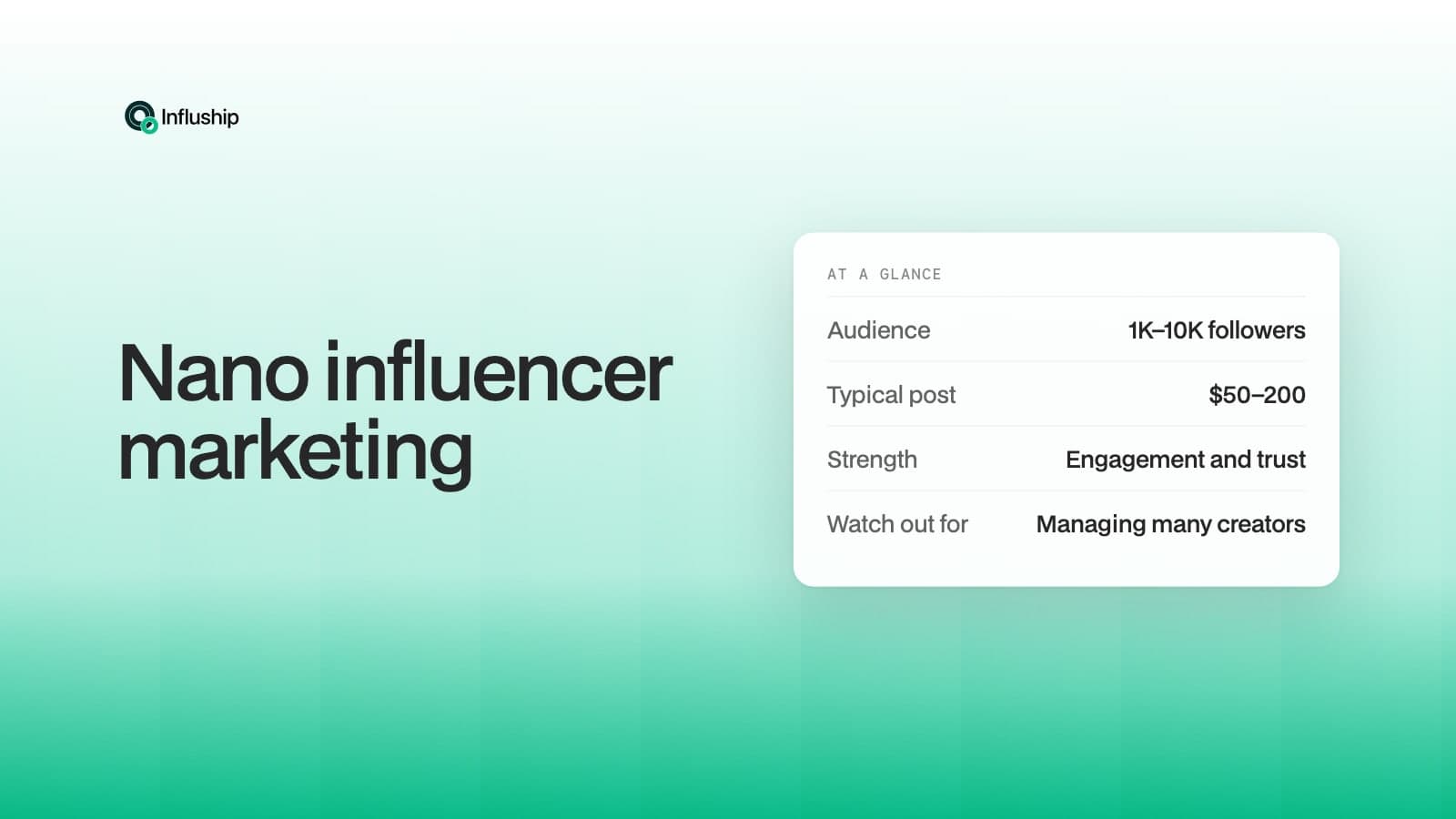
Nano influencers are creators with 1,000 to 10,000 followers. They represent 75.9% of Instagram's influencer base and 87.68% of TikTok's, yet most brand budgets still flow to bigger names. That's a mistake. In 2025, 44% of brands preferred nano influencers over every other tier, and the data behind that preference is hard to argue with.
Why Nano Influencers Outperform on Engagement
The engagement gap between nano influencers and larger creators is not subtle. On TikTok, nano influencers average a 10.3% engagement rate compared to 7.1% for mega-influencers, according to Influencer Marketing Hub's 2025 Benchmark Report. On Instagram, nanos average 2.71% engagement versus 1.81% for micro-influencers and roughly 1.2% for mega-influencers.
But engagement rate alone is a poor buying signal. As we covered in our macro vs. micro influencer comparison, you should measure cost per customer acquired, not likes per post. The reason nano influencers still win on that metric comes down to two things: trust and conversion.
Trust Drives Conversions
Nano influencers maintain closer relationships with their audience. When someone with 3,000 followers recommends a product, it reads like a friend's recommendation, not a sponsored ad. Audiences perceive nano creators as peers rather than celebrities.
The numbers reflect this. Nano influencers achieve an average 4.2% conversion rate with an 87% authenticity score, compared to 3.1% for micro-influencers and 0.8% for macro-influencers. A 2025 Forrester study confirmed the pattern: nano and micro campaigns average 5-8% conversion rates versus 2-3% for mega-influencer campaigns.
So you pay less per post, get a higher percentage of the audience to act, and the audience trusts the recommendation more. The math stacks up, but only if you understand what nano influencers cost. See the peer-reviewed low-followership ROI finding for the study design and its limits.
What Nano Influencers Cost
Nano influencer pricing varies by platform, content type, and niche. For a full breakdown across all tiers, see our influencer pricing guide. Here are the nano-specific ranges for 2026.
Reel: $100-500. Story Set (3-5 frames): $50-150. Static Post: $10-100. Carousel: $50-250.
Most nano deals on Instagram fall in the $50-200 range for a single piece of content. Creators in high-value niches like finance, B2B software, or healthcare command the upper end. Lifestyle and beauty creators tend toward the lower end because supply is higher.
TikTok
Video (15-60s): $25-200. Video with voiceover or effects: $50-300.
TikTok pricing for nanos has crept upward as brands pour more budget into short-form video. Videos that include voiceover, trending sounds, or special effects run 25-50% higher than basic clips. Even so, nano TikTok content remains the cheapest format per thousand impressions in influencer marketing.
Gifting vs. Paid: When Each Makes Sense
Product gifting works best when your product has a retail value of $50 or more, you want organic-feeling content without a posting obligation, and you're running a long-term brand awareness play. For detailed templates and outreach scripts, see our product gifting email templates.
Paid collaborations make sense when you need guaranteed posting dates, specific messaging or CTAs, usage rights for the content, or campaign-aligned timing. At nano scale, paid collaborations are cheap enough that the control they provide is often worth the extra $50-200 per creator.
Why the Math Works Differently at Nano Scale
With macro influencers, your budget buys one or two posts. You're placing a concentrated bet on a single creator's audience. If the post underperforms, your entire budget underdelivers.
With nanos, the same budget buys 20 to 50 posts. You're running a portfolio strategy. Some will flop. Some will overperform. The aggregate tends to be more predictable and more resilient than any single macro bet. A $5,000 budget that buys 30 nano posts at $150 each generates more total content, more diverse audience exposure, and a larger library of repurposable assets than one $5,000 macro post.
The tradeoff is management time, which brings us to how you run nano programs without drowning in DMs.
How to Find Nano Influencers
Finding nano influencers requires different tactics than finding larger creators. They don't show up on most influencer marketing platforms because their follower count falls below minimum thresholds. For a broader view of discovery methods, see how to find influencers for your brand.
Platform Search Tools
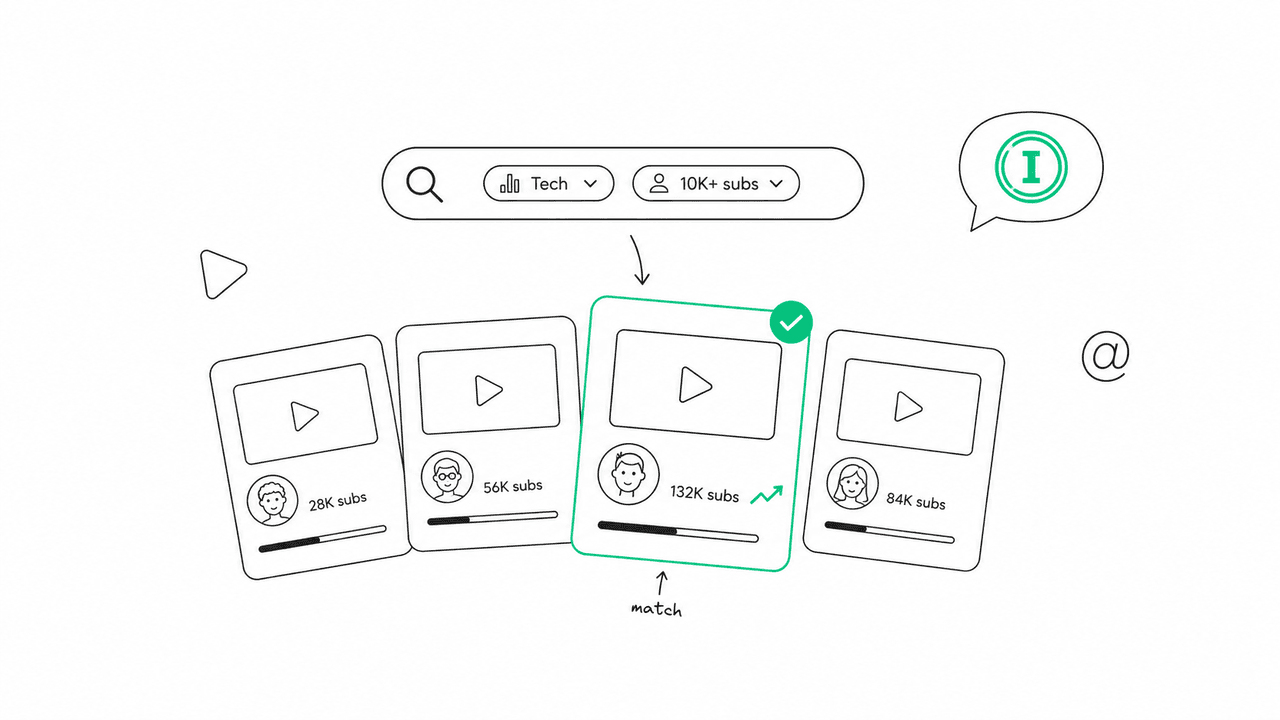
Some influencer search platforms, including Influship, index creators down to 1,000 followers. This is the fastest route if you need to filter by niche, location, audience demographics, and engagement rate. The advantage over manual search: you can vet audience quality before reaching out, filtering for fake follower percentages and audience location data that would take hours to check by hand.
Hashtag Mining
Search platform-native hashtags related to your product category. On Instagram, look for niche-specific hashtags with 10,000 to 500,000 posts. Anything larger is too broad. Anything smaller might not have enough activity. Browse the "Recent" tab, not "Top," because recent posts surface smaller creators who are actively posting.
On TikTok, search relevant keywords and sort by "Most Recent." TikTok's algorithm surfaces nano creators more aggressively than Instagram does, so you'll find active nanos faster here.
Your Own Customers and Followers
The highest-converting nano influencers are people who already use your product. Check your tagged posts, brand mentions, and customer reviews for people who create content about your category. A customer with 2,000 followers who posts about your product unprompted will produce more authentic content than a stranger with 8,000 followers who's never tried it.
Export your email list and cross-reference it against social profiles. Tools like Influship can match email addresses to creator profiles, making it easy to identify customers who also happen to be active content creators.
Local Search for Brick-and-Mortar
If you operate physical locations, nano influencers in your city are worth more than macro-influencers across the country. Search location tags on Instagram for your neighborhood, city, and nearby landmarks. Filter for accounts that post consistently and have between 1,000 and 10,000 followers.
Local nanos are also more likely to accept gifting-only deals because they value the relationship with a local business. A coffee shop that sends free drinks to ten local nanos each month builds a steady stream of organic-looking content for less than the cost of one macro post.
How to Work with Nano Influencers at Scale
The operational challenge of nano influencer marketing is volume. You need 20 to 50 nano partnerships to match the reach of one macro deal, and each one needs communication, content review, and payment processing. Without systems, this becomes unsustainable around 15 creators.
Gifting Programs
Structure your gifting as a standing program, not a one-off campaign. Create a landing page where creators can apply. Set clear criteria: follower range, content style, location, posting frequency. Ship product monthly to approved creators with no posting obligation, but include a simple brief card in the package with suggested hashtags and a discount code.
Track who posts and who doesn't. After three months, you'll know which creators consistently deliver value. Upgrade those to paid partnerships. Drop the ones who don't post. This self-selecting funnel keeps your active roster high-quality without requiring you to evaluate every creator upfront.
Batch Outreach
Write three to five outreach templates and rotate them. Personalize the first line with something specific about the creator's recent content, then keep the rest templated. Send outreach in weekly batches of 20 to 30 creators, giving yourself a manageable volume of responses to handle each week rather than 100 replies hitting your inbox on the same day.
Expect a 15-25% response rate from cold outreach to nano influencers. That's higher than micro or macro tiers because nanos get fewer brand inquiries and are more likely to respond. A batch of 30 outreach messages should yield 5 to 8 interested creators.
Simplified Contracts
Full influencer contracts designed for $10,000 macro deals are overkill for a $100 nano collaboration. But you still need the basics in writing: deliverables, timeline, usage rights, FTC disclosure requirements, and payment terms.
Use our free contract builder to generate a one-page agreement that covers the essentials. For nano deals, keep it to a single page. Anything longer will scare off creators who are new to brand partnerships, and most nanos are.
Content Rights and Repurposing
One of the strongest arguments for nano influencer programs is the content library you build. Each collaboration produces a piece of user-generated content that you can repurpose across paid ads, email marketing, product pages, and organic social.
Negotiate usage rights upfront. Most nano influencers will grant content usage rights for 6 to 12 months at no additional cost, or for a small add-on of $25-75. Macro influencers charge thousands for the same rights. This makes nano content a cost-effective source of ad creative, which often outperforms studio-produced content in paid social campaigns because it looks native to the platform.
Build a content library organized by product, format, and performance. Test nano-created content as ad creative in Meta and TikTok campaigns. Brands running UGC-style ads from nano creators consistently report lower cost-per-click and higher click-through rates compared to polished brand-produced ads.
When Nano Influencers Are the Wrong Choice
Nano influencer programs are not universally superior. Several scenarios call for larger creators.
Mass Brand Awareness Campaigns
If your goal is to reach millions of people quickly (a product launch, a rebrand, a cultural moment), nano influencers cannot deliver the concentrated reach you need. A single macro influencer post reaches 500,000 to 2,000,000 people overnight. Reaching the same audience with nanos would require hundreds of partnerships coordinated simultaneously. The logistics make it impractical.
When You Need Production Quality
Nano influencer content is authentic, but it's not polished. If your brand requires studio-quality photography, professional lighting, or broadcast-ready video, most nano creators cannot deliver it. They shoot on phones in natural settings. That's part of what makes their content feel real, but it limits the production value.
For campaigns where the creative will appear on billboards, television, or high-end digital placements, work with macro or mid-tier creators who have professional production setups, or hire a separate production team and use the influencer as talent.
Time-Sensitive Launches
Nano influencers are less reliable on timing. They have day jobs, school schedules, and competing priorities. If you need 30 posts to go live on the same Tuesday at 9 AM for a product launch, nano creators will miss deadlines at a much higher rate than professionals who treat content creation as their primary income.
For time-critical campaigns, either pad your nano roster by 30-40% to account for dropouts, or shift budget to fewer, more reliable mid-tier creators who can commit to exact posting schedules.
Highly Regulated Industries
Finance, healthcare, and pharmaceutical brands face strict compliance requirements for influencer content. Nano creators, many of whom have never worked with brands before, are more likely to miss required disclaimers, make unapproved claims, or post content that violates regulatory guidelines. The compliance risk per creator is higher, and when you're managing 30 of them, the aggregate risk becomes significant.
Nano Influencer Marketing FAQ
What is a nano influencer?
A nano influencer is a social media creator with 1,000 to 10,000 followers. They operate in specific niches and maintain high engagement rates because their audience is small enough for genuine interaction. Most nano influencers are not full-time creators. They have day jobs and create content about topics they care about, which is part of why their recommendations carry more trust.
How many nano influencers do I need to match one macro influencer?
On reach alone, you would need 50 to 200 nano influencers to match the audience size of one macro influencer with 500,000+ followers. However, this is a misleading comparison. The goal is usually cost-efficient conversions, not equivalent reach. Ten nano influencers at $150 each ($1,500 total) will typically drive more conversions than a single macro post at $10,000 because of the higher engagement and conversion rates at nano scale.
Do nano influencers need to disclose partnerships?
Yes. FTC disclosure rules apply to every paid partnership and gifted product, regardless of follower count. Nano influencers must use #ad, #sponsored, or the platform's built-in partnership label on all sponsored content. Because many nanos are new to brand deals, include disclosure requirements in your brief and contract. Don't assume they know the rules.
Should I pay nano influencers or offer free product?
Both approaches work. Gifting is better for long-term relationship building, testing new creators, and keeping costs minimal when you're managing a large roster. Paid collaborations are better when you need guaranteed posting, specific messaging, content usage rights, or campaign-aligned timing. Many brands start with gifting and move top performers to paid deals. See our gifting email templates for outreach scripts that work.
What platforms are best for nano influencer campaigns?
TikTok and Instagram are the primary platforms for nano influencer campaigns. TikTok's algorithm gives nano creators more organic reach than any other platform, making it the best choice for awareness campaigns. Instagram offers stronger conversion tools (Stories with link stickers, shoppable posts) and works better for direct-response campaigns. YouTube is less common for nano partnerships because video production costs are higher relative to the audience size, but YouTube Shorts has opened a lower-cost entry point.