Every year, the same Coachella debate comes back around: Weekend 1 or Weekend 2?
For fans, the argument usually turns into folklore. Weekend 1 is for influencers. Weekend 2 is for real music fans. Weekend 1 has better grass. Weekend 2 has better logistics. Weekend 1 gets the first surprise guests. Weekend 2 gets the cleaner performances.
There is some truth in all of that. But for brands, it is the wrong question.
The more useful question is not which Coachella weekend is better. It is what job each weekend should do in the campaign.
For marketers, Coachella is no longer just a three-day festival that happens twice. It is a two-week cultural system. Weekend 1 is where attention concentrates. The week between weekends is where the internet tells you what mattered. Weekend 2 is where smart brands can respond.
Most brands still treat Weekend 1 as the campaign and Weekend 2 as a repeat. That misses the real strategic advantage.
Coachella's two-weekend structure gives marketers something rare: a live cultural feedback loop. The same festival returns one week later after creators, fans, press, TikTok, Instagram, YouTube, and group chats have already revealed which artists, activations, outfits, products, complaints, and moments people actually care about.
That does not mean Weekend 2 is secretly bigger than Weekend 1. It usually is not. If the goal is raw earned media, creator volume, and first-wave cultural visibility, Weekend 1 still dominates. But Weekend 2 may be the more underpriced opportunity, especially for brands willing to move quickly.
The strongest Coachella strategy is not Weekend 1 vs Weekend 2. It is Weekend 1 for signal, the week between for interpretation, and Weekend 2 for the second wave.
Should brands prioritize Coachella Weekend 1 or Weekend 2?
The honest answer for Coachella influencer marketing is not which weekend is better. It is which job each weekend should do. Weekend 1 is for visibility — first-impression reach, press, brand-house gravity, celebrity firepower. Weekend 2 is for credibility — utility-driven activations, music-first creators, fan POV content, and the campaign adjustments that Weekend 1's data made possible. Most brands run the same campaign twice. The ones that win run two different ones.
Weekend 1 Is the Attention Market
Weekend 1 is where Coachella becomes a global feed event.
It is the first reveal of the sets, the outfits, the surprise guests, the brand houses, the on-site activations, the afterparties, and the celebrity sightings. It is where most press recaps are written. It is where creators can still be first. It is where the phrase "everyone is there" feels most true.
The data backs this up.
In its 2026 analysis, Traackr found that Coachella creator content grew meaningfully year over year: activated creators were up 137%, posts were up 148%, engagements were up 38%, video views were up 36%, and Brand Vitality Score was up 31%. For the full year's creator economy data, see our influencer marketing statistics. But that growth was heavily concentrated in the opening weekend. Traackr reported that Coachella-tagged VIT dropped 74% from Weekend 1 to Weekend 2, while active creators fell from roughly 29,500 to 15,100.
Launchmetrics reported a similar concentration of impact. Weekend 1 of Coachella 2026 generated $870 million in Media Impact Value, nearly matching the prior year's full two-weekend total of $908 million.
That is why brands cluster around Weekend 1. It is not irrational. If you are spending heavily on celebrities, creator travel, a brand house, a major product drop, or press-worthy experiential, the opening weekend gives you the best chance of immediate cultural visibility.
Weekend 1 is where a brand can become part of the first conversation. Rhode World, 818 Outpost, Revolve Festival, Gap's Hoodie House, Pinterest's Manifest Station, Medicube's K-beauty karaoke booth, e.l.f.'s distributed creator experiences, and Neutrogena's sun-care presence all sit inside that larger logic: show up when the cultural attention is most compressed.
But compressed attention has a cost.
Weekend 1 Is Also Where Brands Become Background Noise
The hardest part of Coachella Weekend 1 is not getting creators to post. It is getting audiences to remember why the post exists.
By Friday afternoon, the feed already has a pattern:
- the airport fit
- the hotel room rack
- the GRWM
- the brand house walkthrough
- the golf cart shot
- the desert fit
- the activation photo wall
- the afterparty entrance
- the blurry stage clip
- the day-one recap
For brands, that creates a real strategic problem. Weekend 1 has the highest attention, but it also has the highest creative saturation. A creator house can easily become indistinguishable from every other creator house. A photo booth can become just another photo booth. A gifted outfit can become a tag in a caption that no one reads.
The question is no longer "Can we get creators to post from Coachella?"
The question is: is the brand the reason the content exists?
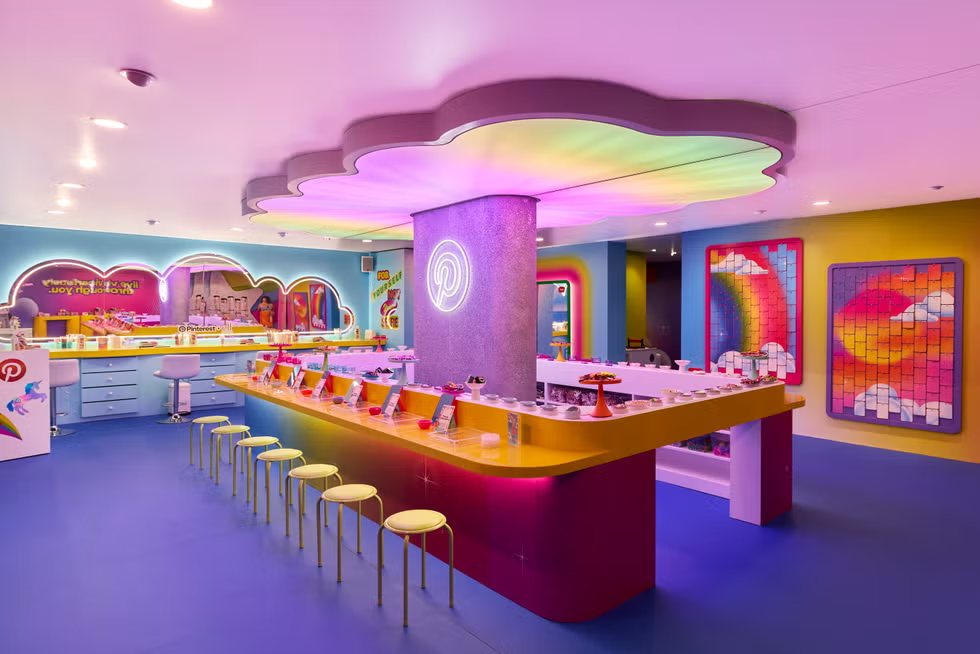
That is where the best activations separate from the filler. Pinterest's Manifest Station worked because Coachella outfit planning already happens on Pinterest. It was not an arbitrary sponsorship; it translated existing user behavior into a physical experience. Pinterest cited a 1,100% year-over-year increase in Gen Z searches related to Coachella outfit inspiration, then turned that insight into styling, beauty, and photo moments across the festival.
Buldak worked for a different reason. Spicy food reactions are native to TikTok. A tasting activation gives creators an immediate, legible, emotional response to film. In 2026, Traackr attributed Buldak's high video performance to on-ground spicy noodle tasting, with 89% of its VIT generated on TikTok.
Neutrogena's sun-care play worked because sunscreen is not decoration in the desert. It is utility. Medicube's karaoke booth worked because it had a clear participation mechanic. Gap's Hoodie House worked because customization gives attendees something to make, wear, photograph, and keep.
The weaker version of Coachella marketing is a brand trying to buy its way into the background of the same creator montage everyone else is making. The stronger version gives creators a moment they would struggle to make without the brand.
Weekend 1 rewards scale, but it punishes vagueness.
Weekend 2 Is Not the Leftovers. It Is the Second Draft.
Weekend 2 is often discussed as the "less influencer-heavy" weekend. That may be true culturally, but it understates the marketing opportunity.
The more interesting point is that Weekend 2 happens after the market has already reacted.
By the time Weekend 2 begins, brands can know which Weekend 1 activations earned organic attention, which creator formats actually travelled, which products people asked about, which outfits and aesthetics broke through, which artists became the center of conversation, which queues or hospitality issues created backlash, and which competitor moments felt overdone.
That is not a small advantage. Most cultural tentpoles do not repeat a week later under similar conditions. The Oscars do not rerun the following Sunday. The Super Bowl does not come back next weekend with the same audience energy and revised creative.
Coachella gives marketers a rare second pass.
The mistake is treating that second pass as a duplicate. Weekend 2 should not simply be the same creators, same briefs, same shot list, and same activation with less press around it. It should be a response campaign.
The Week Between Weekends Should Be a War Room
The most underused part of Coachella is not Weekend 2 itself. It is Monday through Thursday between the two weekends.
By Monday, pull every creator post, tagged mention, untagged mention, comment thread, TikTok search result, press recap, and competitor activation roundup you can find. Look for what people actually reacted to, not just what was contractually posted.
By Tuesday, sort the signal:
- Which creators overperformed relative to audience size?
- Which posts drove saves, shares, comments, or search interest?
- Which products were visible without feeling forced?
- Which activation mechanics made people stop?
- Which moments were copied across creators?
- Which complaints appeared repeatedly?
- Which content looked too polished to feel trusted?
- Which organic posts outperformed paid ones?
By Wednesday, change the plan.
Rewrite Weekend 2 creator briefs. Shift the shot list. Reallocate paid amplification. Invite opportunistic creators. Fix operational friction. Adjust product emphasis. Change the content prompts. Build reactive edits. Prep "what everyone missed" content. Turn top-performing organic hooks into Spark Ads, Reels ads, or whitelisted creator posts.
By Thursday, relaunch.
A four-day operating cadence
This is the Coachella strategy most brands talk around but do not operationalize: Weekend 1 is the signal layer; Weekend 2 is the second wave.
The Creator Mix Should Change by Weekend
Weekend 1 and Weekend 2 should not use identical creator rosters.
Weekend 1 is usually better for creators who can generate immediate visibility: fashion and beauty creators, lifestyle creators, celebrity-adjacent creators, high-reach Instagram and TikTok creators, GRWM creators, party creators, and creators with strong press or red-carpet adjacency.
Weekend 2 should lean into a different creator profile: music-first creators, fan POV creators, utility creators, micro and nano creators with high trust, commentary creators, local LA or Palm Springs creators, livestream creators, and creators who can explain what is actually worth doing.
Weekend 1 creators make the brand visible. Weekend 2 creators make the brand believable.
That distinction matters because the audience mindset shifts. During Weekend 1, people want to see what is happening. During Weekend 2, people want to know what was actually good.
This is where creator discovery becomes more sophisticated than follower count. A brand does not just need "Coachella creators." It needs different creator jobs across the campaign arc.
That is the kind of planning influencer teams should be doing before the first outreach email goes out. Influship is built around that premise: creator discovery should start with the role a creator can play in a campaign, not just their category, follower count, or whether they have posted from Coachella before.
Activations Should Have Different Jobs Too
The same logic applies to activations.
Weekend 1 activations need to photograph well. They need a clear brand world, a strong visual identity, recognizable entry points, celebrity gravity, and enough novelty to make press and creator recaps.
Weekend 2 activations need to work well.
That does not mean they can look bad. It means the value proposition has to hold up after the visual novelty has worn off. By Weekend 2, attendees have seen the posts. They know where the lines are. They know which activations are worth the detour. They know which brand moments looked good online but were not useful on the ground.
Weekend 1 is where the activation has to create desire. Weekend 2 is where it has to justify the trip.
That favors hydration, shade, charging, sunscreen, beauty refreshes, food and drink, merch customization, fast sampling, phone-friendly experiences, and creator access that does not create a bad attendee experience.
It also favors operational competence. The 2022 Revolve Festival backlash showed how quickly a creator-first experience can become a public case study in poor logistics when transportation, capacity, and communication break down. At Coachella, operations are marketing. The shuttle line, check-in flow, shade structure, and wait time are all part of the content.
By Weekend 2, brands should have enough information to fix what was not working. If the line was too long, create a better queue or timed access. If the best product ran out, restock it. If creators ignored the intended photo moment and filmed somewhere else, move the content focus.
The brands that win Weekend 2 are not always the loudest. They are often the ones that make the festival easier, better, or more interesting after everyone already knows the script.
Weekend 2 Is Also a Livestream and Search Opportunity
Weekend 2 is not limited to people on the ground.
YouTube has turned Coachella into a global viewing experience, with livestreams, multiview, stage-specific feeds, creator watch parties, 4K broadcasts, vertical formats, and shopping integrations. In 2026, YouTube's Weekend 2 preview specifically framed the second weekend as a chance to see how artists "switch up their sets" and to catch talked-about performances live rather than waiting for clips.
That matters because Weekend 2 content can be built for people who are not in Indio.
Brands often over-index on physical attendance and under-index on the much larger audience watching through TikTok, Instagram, YouTube, and group chats. Weekend 2 is a useful moment for livestream companion content, creator watch parties, reaction content, "what changed from Weekend 1" breakdowns, merch drops tied to remote viewers, recap content optimized for search, and paid amplification of Weekend 1's best creator assets.
The remote audience does not care whether an activation had the most exclusive guest list. It cares whether the content gives them access, taste, utility, or a reason to participate from home.
Which Weekend Should Your Brand Choose?
Choose Weekend 1 if your goal is maximum visibility.
Weekend 1 makes sense if you have a major product launch, celebrity or founder firepower, a need for press coverage, a visually distinct activation, and enough operational maturity to host creators properly.
Choose Weekend 2 if your goal is efficiency, trust, or sharper creative.
Weekend 2 makes sense if you cannot outspend the biggest brands, want less competition for creator attention, have a product that solves a real festival problem, care about fan credibility, want music-first or utility-first creators, and can move quickly based on Weekend 1 learning.
Choose both if you are treating Coachella as a serious campaign, not a photo opportunity.
The best version looks like this:
- Weekend 1: capture attention
- Week between: interpret the signal
- Weekend 2: respond with sharper creator strategy, better operations, and more useful content
Call it the Signal, Strategy, Second Wave framework.
Signal, Strategy, Second Wave
Weekend 1 gives you the signal. The week between weekends turns that signal into strategy. Weekend 2 is the second wave.
What Brands Get Wrong About Coachella Influencer Marketing
The biggest mistake in Coachella influencer marketing is assuming presence equals impact.
It does not.
A creator being at Coachella does not mean a brand has earned cultural relevance. A creator tagging a brand does not mean the brand was remembered. A beautiful activation does not mean anyone understood why it existed. A celebrity guest does not mean the experience mattered to the audience.
The better question is: what role did the brand play in the creator's story?
Did it help them get ready? Did it give them a better festival day? Did it create a moment worth sharing? Did it connect to the artist, the outfit, the heat, the food, the group dynamic, the livestream, the fan experience, or the post-weekend recap?
That is the difference between being present at Coachella and being useful inside Coachella.
Weekend 1 can make a brand visible. Weekend 2 can reveal whether the brand had a real reason to be there.
The New Coachella Playbook
The old Coachella playbook was simple: invite influencers, build a beautiful space, get the posts, collect the recaps.
That still works for some brands. But it is getting more expensive, more crowded, and easier for audiences to tune out.
The new playbook is more dynamic:
- Define the role of each weekend before booking creators.
- Build an activation that creates content behavior, not just content backdrops.
- Treat Weekend 1 as a live research environment.
- Use the week between weekends to rewrite briefs and reallocate spend.
- Use Weekend 2 for trust, utility, commentary, and second-wave creative.
- Measure not only who posted, but what audiences actually did with the content.
- Separate creator roles: reach creators, trust creators, utility creators, fan creators, and reaction creators.
Coachella is too expensive to be treated as a vibe.
It should be treated as an operating system for cultural timing.
Conclusion
The Weekend 1 vs Weekend 2 debate will probably never go away. It is too easy, too emotional, and too useful for festival identity.
But for marketers, the better answer is that the two weekends are not interchangeable.
Weekend 1 is the attention market. It is where brands buy or earn the right to enter the conversation. It is also where they risk becoming indistinguishable from every other activation chasing the same creators, the same aesthetics, and the same recap slots.
Weekend 2 is the underused strategy window. It has less raw creator volume, but it comes with something Weekend 1 does not: context. By the time Weekend 2 starts, the internet has already shown what it cares about.
The brands that win Coachella will not simply be the ones with the biggest houses, most famous guests, or most expensive creator trips. They will be the ones that understand the timing.
Weekend 1 tells you what culture noticed.
Weekend 2 lets you prove you were paying attention.
FAQ
Is Coachella Weekend 1 or Weekend 2 better for influencer marketing?
Weekend 1 is usually better for raw reach, press visibility, and creator volume. Weekend 2 can be better for efficiency, trust, music-first creators, and content that responds to what audiences already cared about during Weekend 1.
Why do brands prefer Coachella Weekend 1?
Brands prefer Weekend 1 because it is the first major attention spike. Creators, celebrities, press, and audiences are all reacting to the festival for the first time, which creates more opportunity for earned media and first-wave social content.
Is Coachella Weekend 2 useful for brand activations?
Yes. Weekend 2 is useful when brands treat it as more than a repeat. It can be a strong moment for utility-led activations, fan-focused content, music-first creators, livestream reactions, recap content, and campaigns informed by Weekend 1 performance.
How should brands use the week between Coachella weekends?
Brands should use the week between weekends to analyze creator performance, audience comments, competitor activations, organic posts, operational issues, product interest, and emerging trends. Then they should revise creator briefs, paid media plans, on-site operations, and content strategy before Weekend 2.
What is the best Coachella strategy for brands?
The best strategy is to assign each phase a different role: Weekend 1 for attention, the week between for interpretation, and Weekend 2 for iteration. Brands should not simply repeat the same campaign twice.
Photo credits
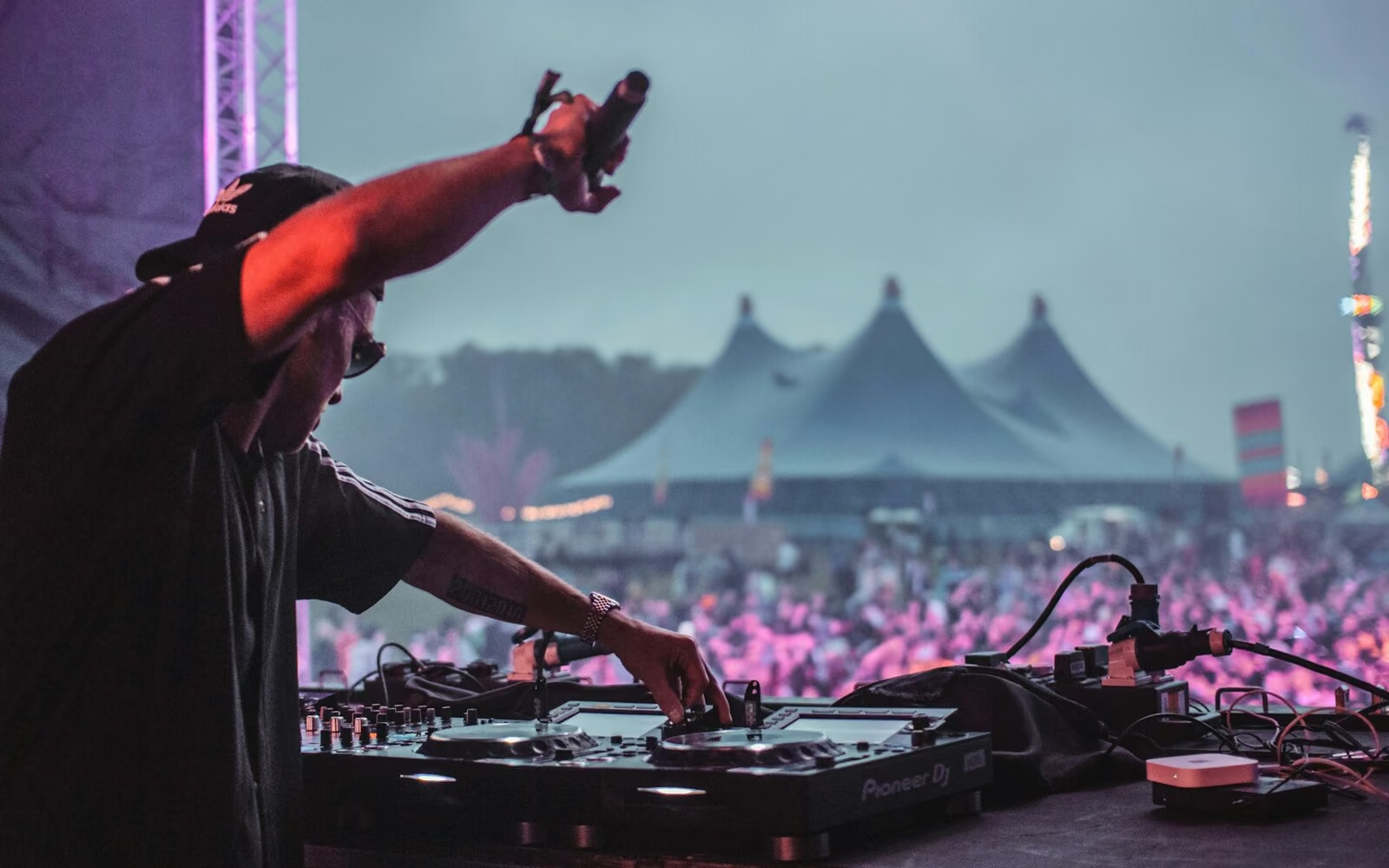
- Hero: Arthur Edelman (Unsplash), DJ at a festival stage with crowd behind. Free use under the Unsplash License.
- Pinterest Manifest Station interior: courtesy of Pinterest.
Sources and further reading
- Traackr, "Coachella 2026 Influencer Marketing Strategy: What Every Brand Can Learn."
- Launchmetrics, "Coachella 2026: From Bieberchella to Rhode World, the Brands That Won Weekend One."
- Vogue Business, "Coachella's Big Brand Renaissance."