Heineken's Coachella 2026 activation generated $3.1 million in earned media value across 33 pieces of content. Gap's Hoodie House needed 64 pieces of content to reach $2.3 million. Rhode World produced $13.4 million in EMV across 484 pieces. The numbers come from WeArisma's Coachella tracking, and they describe the same two weekends at the same festival, three brand strategies, and three very different returns on creator output.
The Coachella 2026 brand activations that pulled the highest return on creator output designed creator mechanics into the activation from the start, then matched those mechanics with the creator tiers best suited to running them. Brands that bought reach without designing the mechanic generated content volume with low efficiency. Brands that engineered the mechanic produced earned media at multiples of the average per-piece value across the festival.
WeArisma tracked over $1.7 billion in earned media value from Coachella-related brand and creator activity in 2026, across nearly 30,000 pieces of content and 3.3 billion engagements during the festival window. Launchmetrics measured Weekend One alone at $870 million in Media Impact Value, close to the previous year's full two-weekend total. Traackr reported a year-over-year rise in creator participation and a sharp drop-off in active creators between weekends. For context against the rest of the year's influencer marketing data, Coachella delivered a meaningful share of annual US creator earned media inside a single festival window.
Four findings emerge from a brand-by-brand review of the 2026 activations covered by WeArisma, Launchmetrics, Traackr, and CreatorIQ. On-site activations that built a content workflow into the experience produced higher earned media per post. Utility-driven activations created credible angles for sponsored content without forcing creators to manufacture relevance. Off-site activations performed when the brand world the activation constructed was coherent enough to justify the trip away from the festival. And brands that selected creators by tier and role generated higher engagement efficiency than the spreadsheet sort by follower count would have predicted.
On-site activations succeed when creators have a content workflow built in
The 2026 on-site activations that pulled the highest efficiency built a content sequence into the activation itself, so that a creator engaging with the experience produced social content as a byproduct of the engagement. The activations that generated lower per-post returns gave creators a logo and a stylized space, and asked them to write the script themselves. The first model produced repeatable content shapes across many creators. The second produced one or two arrival posts and an exit photo.
Gap's Hoodie House offers the cleanest mechanical case study of the category. The brand sold a limited-edition Gap x Coachella hoodie for $100 and built a customization counter around it, stocked with patches, beads, charms, and embellishments that attendees applied themselves across both weekends. WeArisma valued the resulting earned media at $2.3 million across 1.16 million engagements, with Event Marketer attributing more than a million views to the creator program layered on top. The mechanic that separated Hoodie House from a standard brand booth was the workflow built into the customization process. A single purchase unlocked a five-step social sequence: choose the base, pick the embellishments, show the finished detail, wear it at the festival, style it post-event. Each step is a discrete piece of UGC the brand never had to brief.
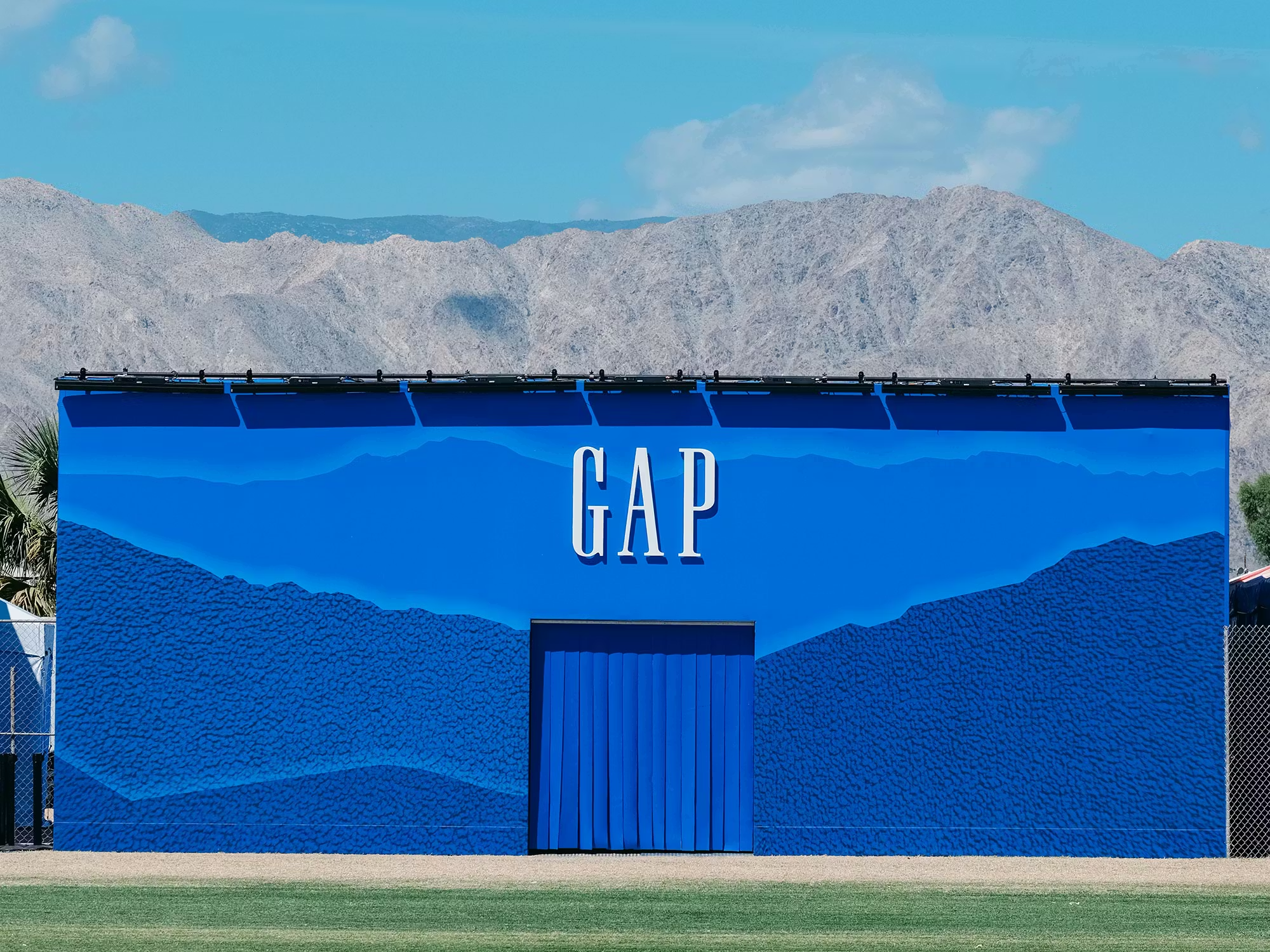
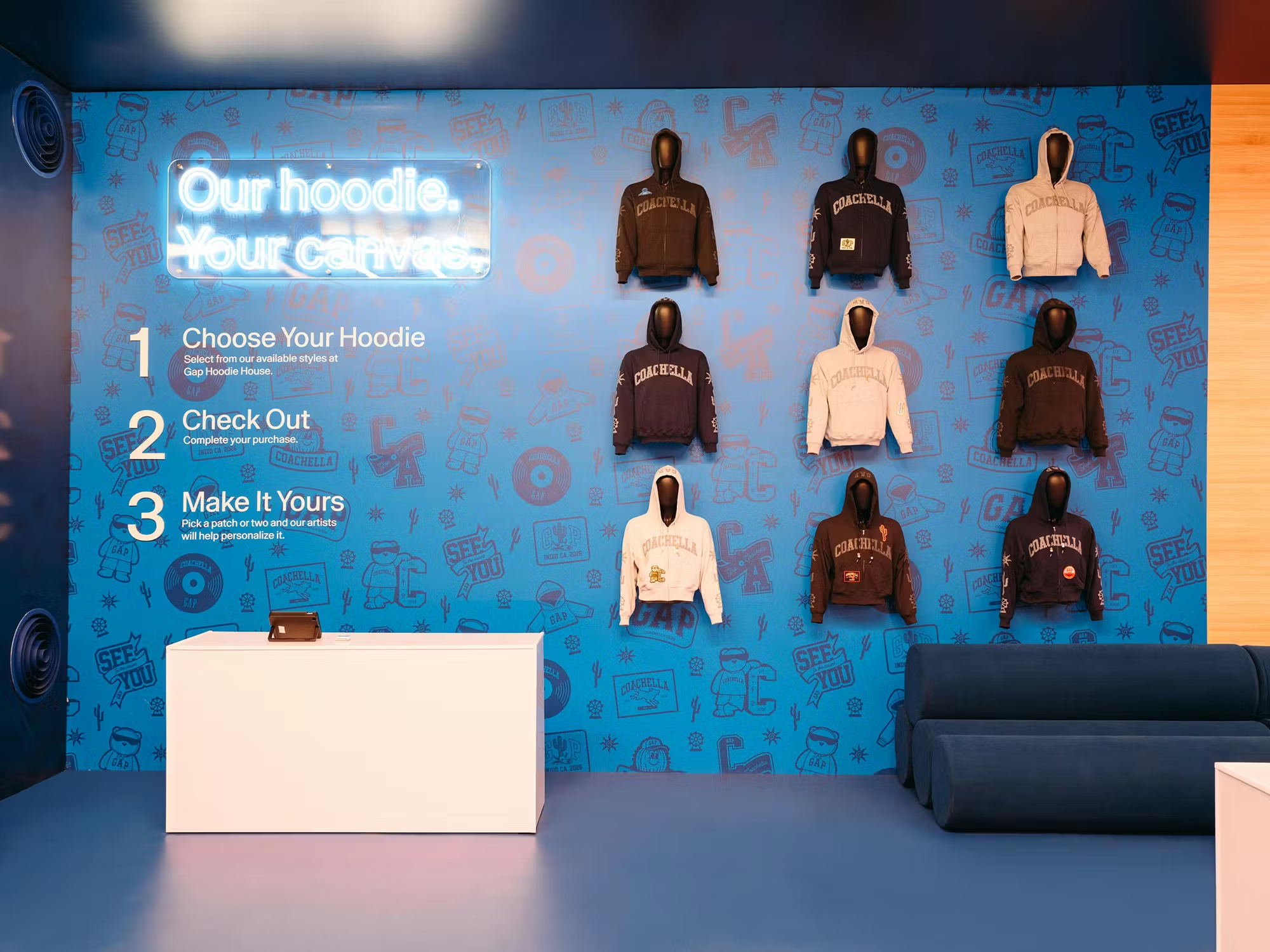
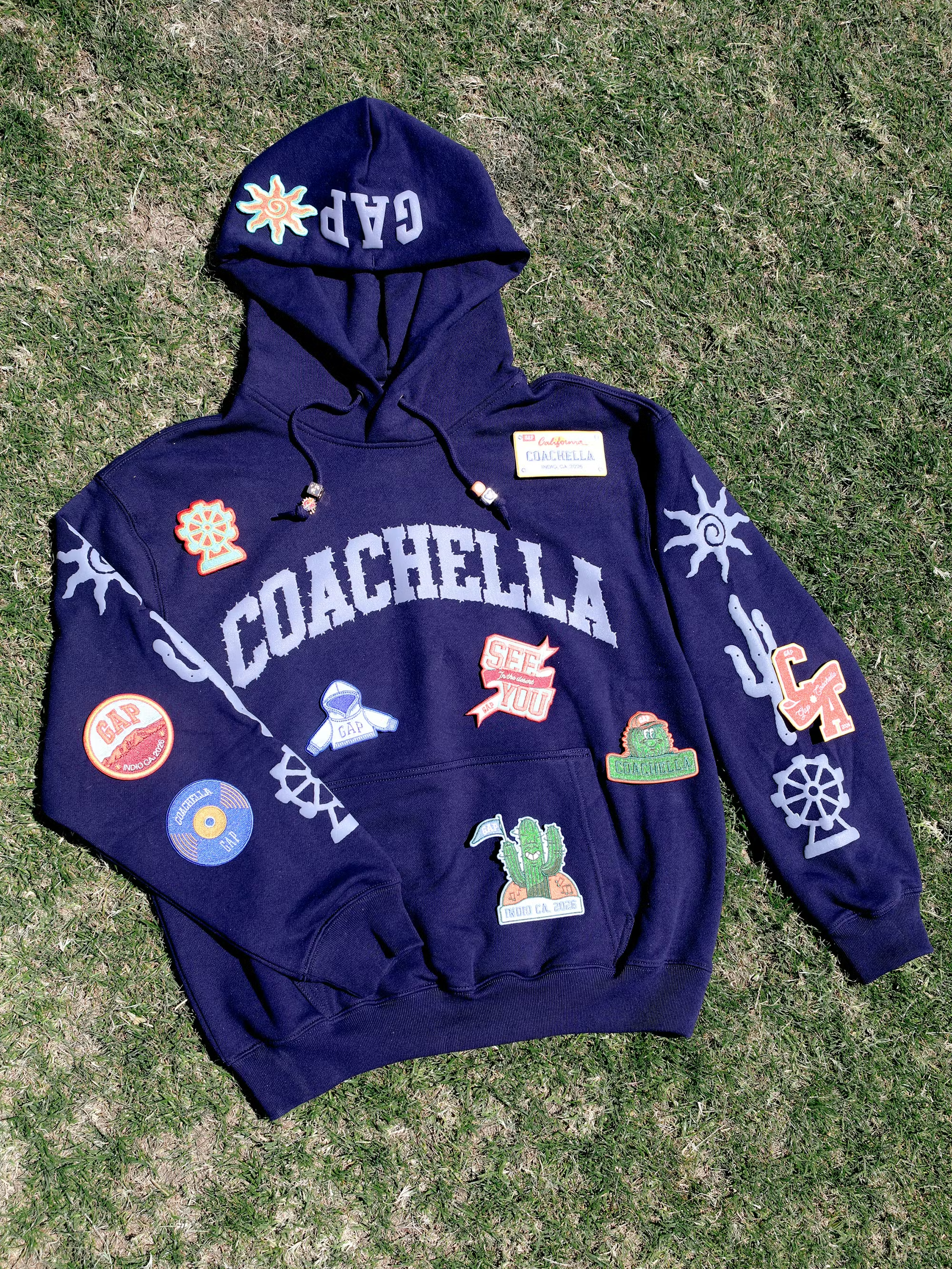
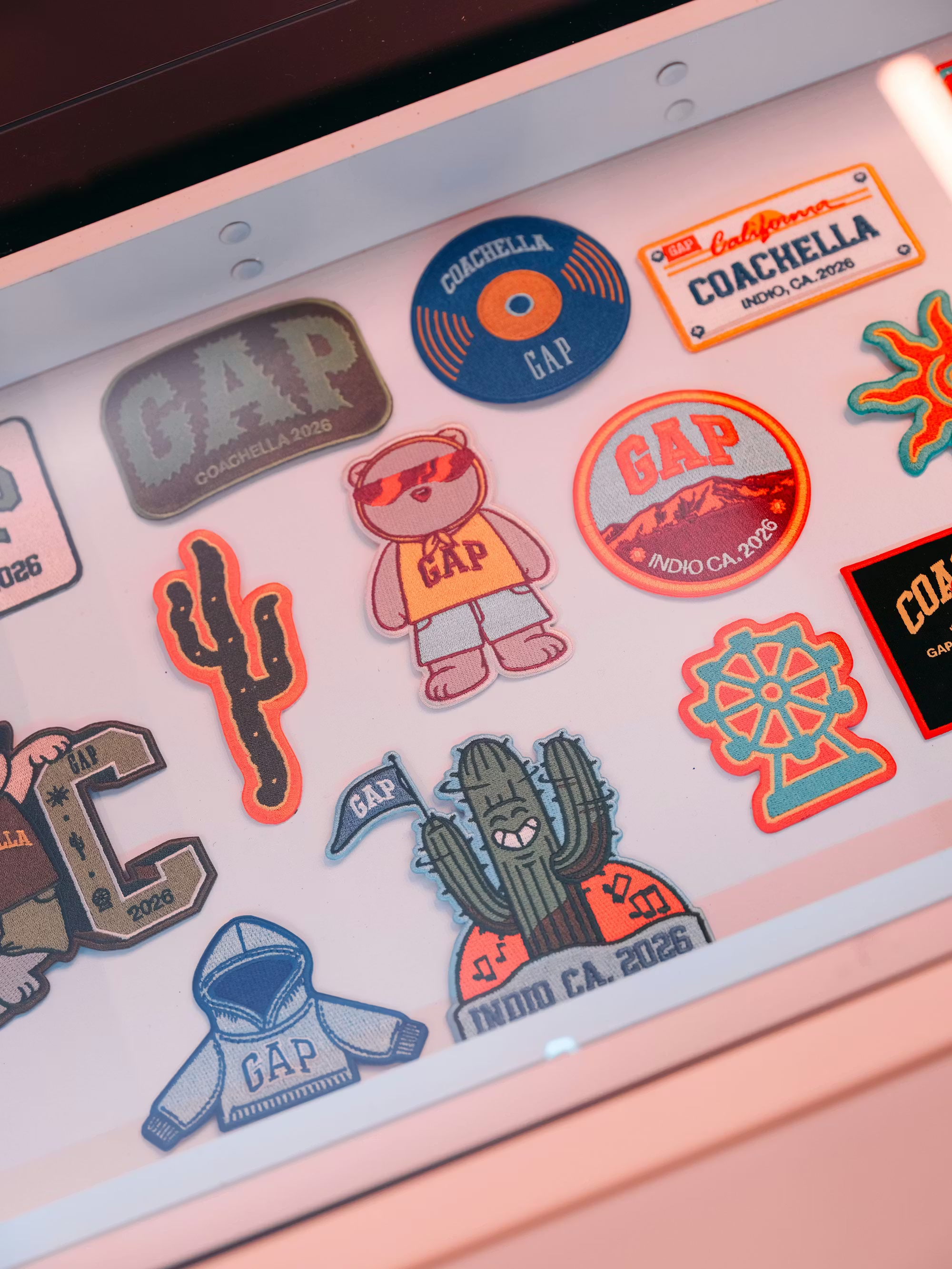
Mattel's Barbie activation ran the same play with a different mechanic. The brand built charms and persona walls that gave attendees a customization sequence inside a recognizable IP universe. Mattel reported nearly 12,000 visitors across the run, and Marketing Brew, citing CreatorIQ data, valued the activation at $3.35 million in EMV across 156 posts and 73 creators, with 4.2 million engagements. The mechanic was narrower than Gap's, and the per-post EMV reflected that, but the model is the same: the activation built the content workflow into the visit, so creators left with material the brand had already structured.
Heineken's Clinker took the same idea and pushed it further. The Clinker is a smart band that attaches to cans or glasses and matches festivalgoers by music taste when they clink drinks together, with the matching layer driven by each user's Spotify or YouTube Music data. The behavior the activation extended already existed at the festival. Heineken added a layer of social discovery to something attendees were doing anyway, and that combination produced $3.1 million in EMV across 33 pieces of content, the strongest per-post efficiency of any on-site activation in WeArisma's 2026 dataset. The Clinker was developed by Heineken with creative agency LePub via its LeGarage tech collective.
Pinterest went the opposite direction with the mechanic and still won the on-site category for cultural recall. The brand asked attendees to lock their phones into Yondr-style pouches and engaged them in analog activities inside the space. In an environment built around documentation, the restraint became the documentation. Event Marketer ranked the activation among the most-discussed experiences of the festival, and Adweek named it one of the few worth the wait. NVE Experience Agency produced the space with fabrication from Treehouse Fabrication. The content Pinterest generated was not made inside the activation, it was made about the activation by creators describing the experience afterward, which is its own kind of content workflow.
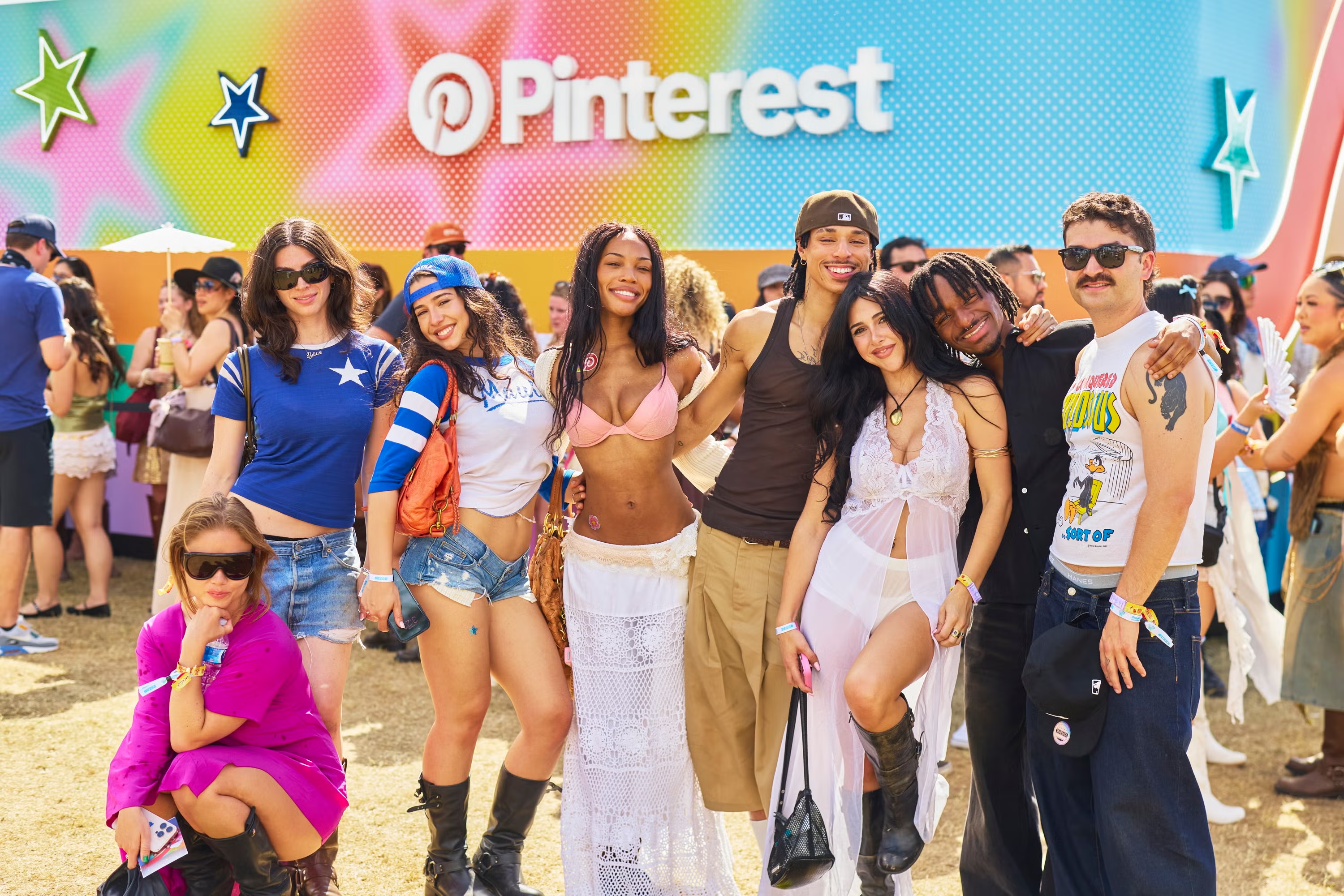
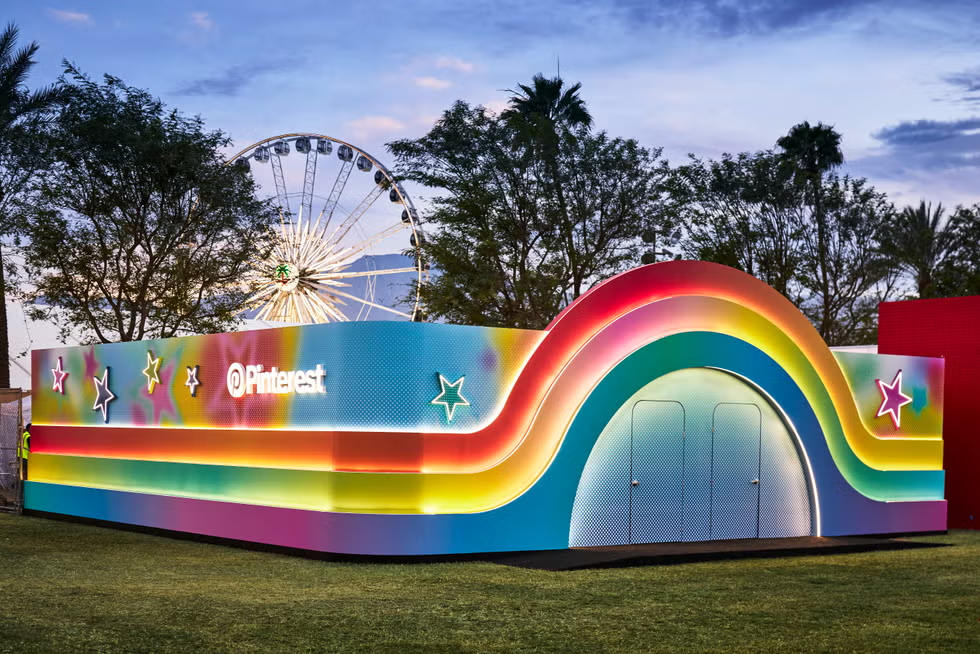
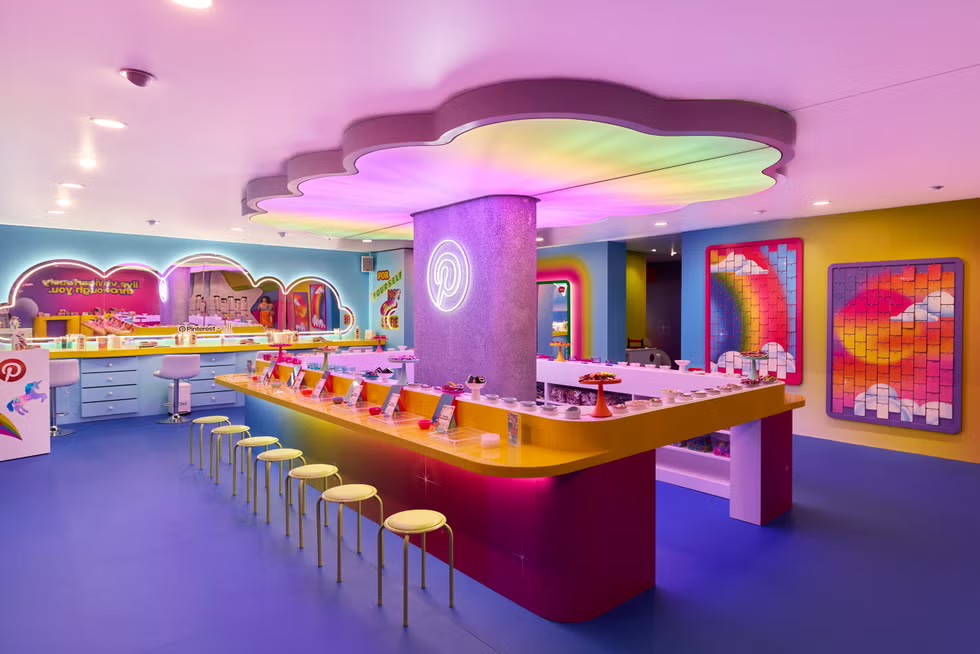
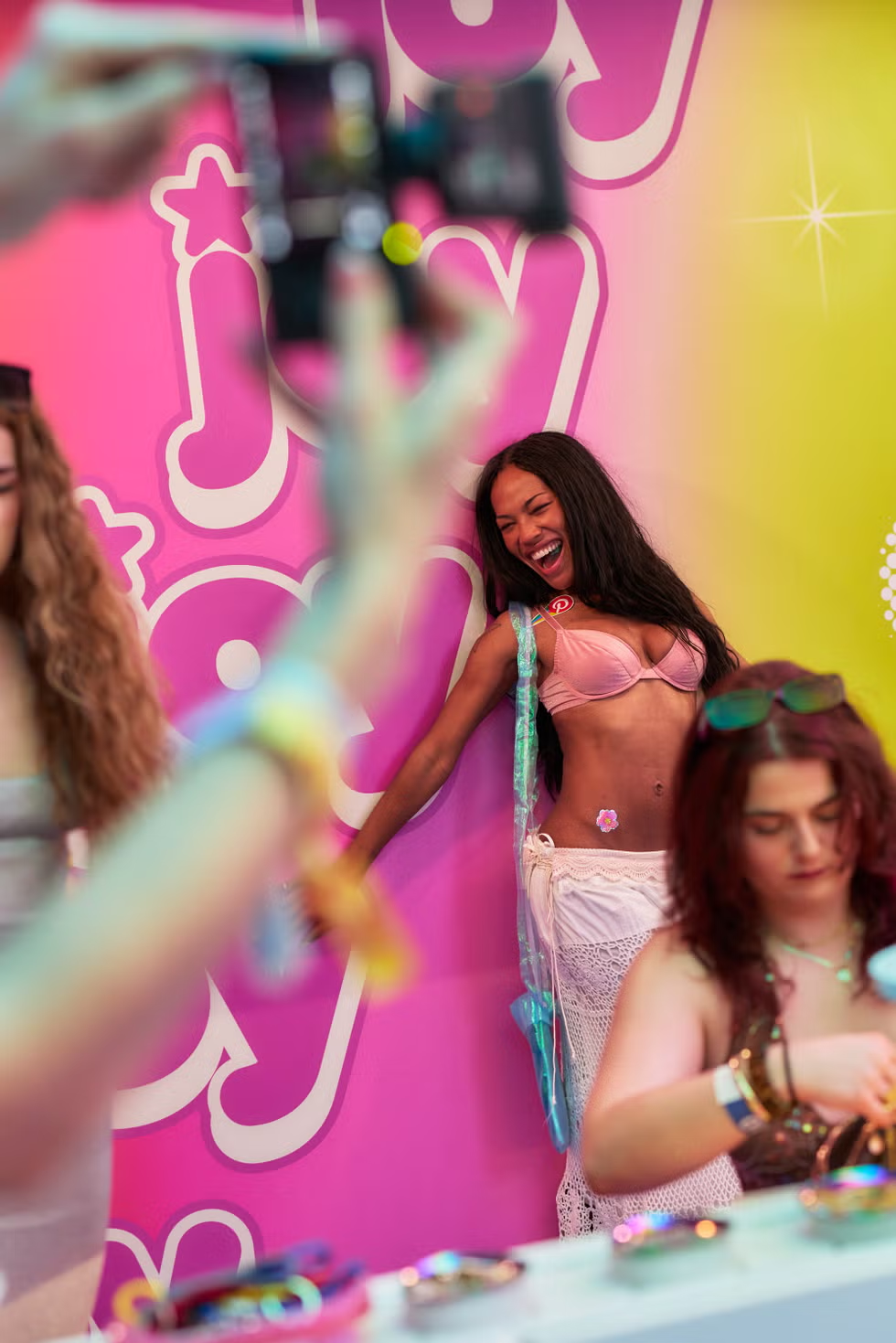
The takeaway across all four activations is that the creator's job inside the activation is the planning unit that matters. A creator with a defined task generates a repeatable content shape, which compounds across the dozens of creators on the invitation list. A creator without a task generates an arrival photo, and the brand carries the rest of the storytelling load on its own.
Utility-based activations gave creators more credible angles for sponsored content
Coachella is glamorous in the recap deck and physically demanding on the ground. It is hot, dusty, crowded, and operationally complex for attendees, and the gap between the recap aesthetic and the lived experience is where the 2026 utility activations did their work. The strongest of them solved a real festival problem at a credible scale, and the solving became the angle creators could use without performing relevance.
Neutrogena returned for its fourth consecutive year as Coachella's official suncare sponsor and expanded its footprint across the entire festival journey. The brand reported 145,000 samples distributed, over 250 gallons of Beach Defense SPF 70 dispensed across eight on-site SPF stations, 114.5 million combined creator reach, and a creator program of 31 partners during Weekend One. WeArisma valued the program at $3.5 million in EMV across 11.25 million engagements. The activation worked because creators posting about sunscreen at Coachella did not have to construct the angle. The Coachella sun is the angle, and Neutrogena is the brand attendees were already reaching for at noon in the desert.
Method ran the same logic on the reset moments around the festival. As the official body wash, shampoo, and conditioner sponsor for the third consecutive year, Method built four multisensory experiences across the main grounds and campgrounds, including scent-led transformation portals, a hair styling station, a cryo-blast body wash portal, and shower upgrades for roughly 100 campers a day. Revolution Marketing produced the activation alongside the brand's creative team. The relevance came from the environment. Campers needing to reset between sweaty days had a reason to use a body care brand, and the brand had a reason to be there.
The pattern that connects the utility category is brand specificity. Neutrogena owns SPF at the festival. Method owns the reset. Gap owns the customized hoodie. Alaska Airlines owns the travel-comfort layer. American Express owns the access-and-member moment. A charging station with a logo or a water-bottle refill with a banner does not qualify as utility in this sense, because neither connects to a distinctive brand role a creator can explain without reading from a brief. Utility works when the problem the brand solves is the problem the brand is built to solve.
The operational test for whether an activation belongs in the utility category is simple. A creator describing the experience should be able to explain what the brand solved without performing enthusiasm. If the creator can describe a real festival problem and a specific brand intervention, the activation is producing usable sponsored content. If the creator has to reach for adjectives to make the visit feel meaningful, the activation is producing content the brand cannot use after the festival ends.
Off-site activations require a coherent brand world to justify the trip
On-site activations borrow legitimacy from the festival. They get attendee flow, proximity to the music, and the assumption from creators that anything on the grounds is worth at least one post. They fight constraints the brand cannot control: space, operations, lines, rules, heat, and direct competition with other on-site brands. Off-site activations invert the trade. The brand gains environment control, curated guest lists, and a cleaner photographic backdrop, and accepts the burden of pulling creators away from the music. The off-site activations that worked in 2026 built a world coherent enough to justify the diversion.
Rhode World was the headline standout of the off-site category. The activation sat at the intersection of Hailey Bieber's founder-led beauty brand, Justin Bieber's headliner moment, the Rhode x The Biebers product collaboration, Sephora retail distribution, celebrity attendance, and the broader Bieberchella storyline running across media coverage of the festival. Launchmetrics, cited by Vogue Business, valued Rhode World at $10 million in MIV. WeArisma estimated Rhode's wider festival presence at $13.4 million in EMV across 484 pieces of content and 21.46 million engagements. Lefty, using a broader source set, reported $106 million in EMV for the brand across the festival, with Hailey driving $99.3 million of that at a 19.1% engagement rate. The activation was designed by BRYANT.
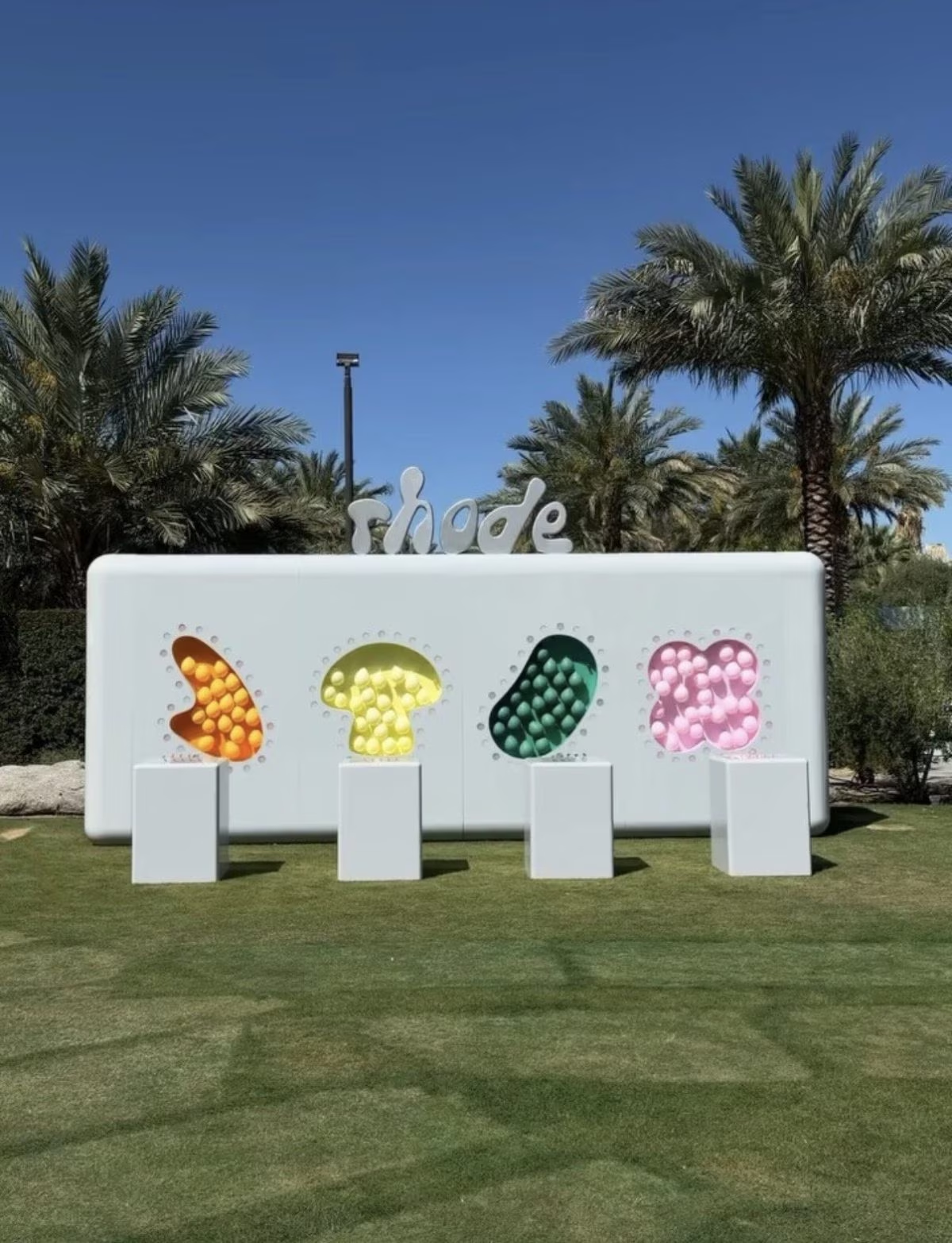
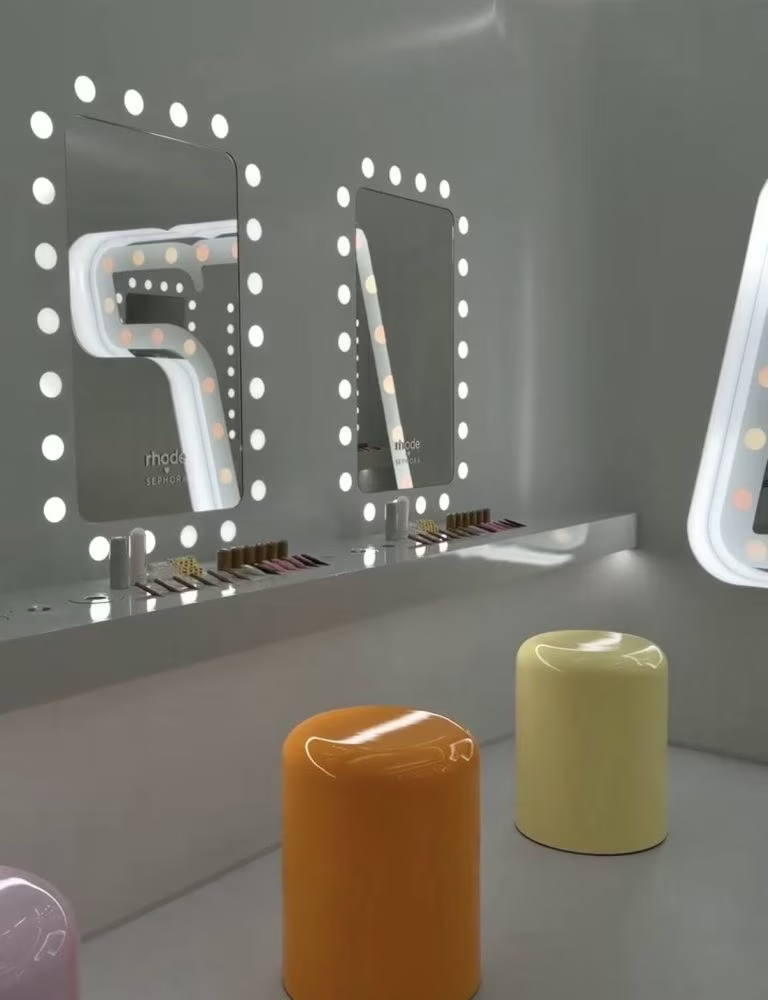
The valuation range across vendors is wide enough to be confusing in a meeting, and we return to that measurement problem later in this piece. What the three vendors agree on is that Rhode produced outsized earned media for the activation footprint. The reason is the cultural stack the brand assembled. Rhode entered Coachella with a pre-existing narrative the audience was already following: Justin was headlining, Hailey had a product collaboration with him, and the Sephora distribution gave the activation a retail backstop most off-site beauty pop-ups do not have. The activation served as the physical venue for a story audiences were already engaged with, which gave creators a reason to cover it that did not require performing surprise.
818 Outpost worked through a similar logic from a hospitality angle. Kendall Jenner's tequila brand built a controlled daytime environment with cocktails, food, live music, partner booths, and a Kardashian-Jenner social halo. Revolution Marketing produced the Outpost with design from BRYANT, in partnership with The h.wood Group as presenting partner. Traackr data, surfaced by NetInfluencer, reported that the activation generated value at both ends of the creator pyramid: a single nano creator drove 252,000 engagements at a 1,040% engagement rate, while one Kylie Jenner post hit an estimated 391 million potential reach. Smaller partner brands inside the Outpost benefited from the validated environment, and 818 absorbed the storytelling cost of building that validation in the first place.
REVOLVE Festival represents the long-horizon version of the off-site model. By 2026, REVOLVE had been running its own branded mini-festival inside the Coachella weekend for nine consecutive years. The 2026 edition ran in Thermal, California, with performances from Don Toliver, Kehlani, and Mustard, plus partner activations across fashion, food, and beauty, and production by Production Arm. Revolve, citing CreatorIQ data in its Q1 prepared remarks, reported that the event generated the highest EMV of any single brand event across both Coachella weekends, despite running only during Weekend One. Meltwater identified the top-performing post from the festival at close to $25 million in EMV. REVOLVE's moat is expectation, accumulated across a decade of running the same event. Creators know the festival is a thing. Press knows. Partner brands compete to be inside it. Audiences recognize the format. The activation works because the audience arrives pre-conditioned to engage with it, and that pre-conditioning is the result of nine years of consistent investment.
REVOLVE's moat is expectation, accumulated across a decade of running the same event during Coachella weekend.
Most brands cannot replicate that overnight, and the brands trying to copy it shortcut by booking talent and assuming the talent will create the gravity. The 2026 results suggest gravity is built differently. YSL Beauty's Stage activation worked because it combined a controlled VIP night with a public reopening the next day, which gave the invite-only moment a cultural surface area outside the celebrity guest list. Closed-loop status theater, where famous people perform exclusivity for other famous people, produced content volume in 2026 without producing the same engagement quality as activations with a public layer attached. The principle for brand teams planning an off-site activation is to design the world the brand wants to belong to, then build a credible reason for creators and audiences to travel into it.
Activations that assigned different roles to different creator tiers generated higher engagement efficiency
Sorting a creator list by follower count is a planning shortcut that produced average Coachella results in 2026. The activations that performed above average treated the creator list as a distribution system, with different roles assigned to different tiers, and different evaluation metrics applied to each role.
At the top of the system sit cultural anchors: founders, performers, athletes, and celebrities whose presence tells the audience how to read the activation. Hailey Bieber anchored Rhode. Kendall Jenner anchored 818. Major performers and celebrity guests anchored REVOLVE. The role of the anchor is to provide reach and to set the cultural frame for the activation. Their content is evaluated on potential reach and on how clearly it signals what the activation is.
In the middle of the system sit macro and mid-tier creators who translate the activation into lifestyle content. They make the event feel aspirational and narratable to audiences who are not at the festival, and they produce the GRWM posts, the arrival videos, the outfit breakdowns, and the come-with-me recaps that make up the bulk of creator coverage. Their content is evaluated on engagement quality and saves.
At the base of the system sit micro and nano creators, who deliver the most credible detail. They show the line, the product, the food, the awkwardness, and the small operational moments most macro creators edit out. Their content reads as trustworthy precisely because it is less polished, and audiences treat it as eyewitness reporting on the brand experience. Their evaluation metric is engagement rate per follower, where the strongest performers in 2026 ran into four-digit percentages.
The 818 Outpost numbers make the case concrete. Kylie Jenner generated cultural gravity with one post at an estimated 391 million potential reach. A single nano creator generated engagement efficiency with 252,000 engagements at a 1,040% rate. Both posts belong to the same activation, both contributed to the program, and neither would have been correctly evaluated on the same scoreboard.
A Coachella creator brief built around the tier system separates roles. The anchor establishes cultural framing. The storyteller explains the experience to audiences at home. The stylist makes the experience desirable. The utility creator translates the brand role into something credible. The fan-community creator makes the activation participatory for niche audiences. The commerce creator makes the activation shoppable for retail conversion. The recap creator extends the activation into the days and weeks after the festival closes. A brief written from this map produces a distribution system with internal differentiation, in place of a list of similar creators producing similar posts.
Compensation works the same way. Business Insider reported that some Coachella creators receive five-figure cash fees, others accept tickets, accommodation, villa access, and hospitality packages, and some Coachella deliverables roll into broader annual contracts. Brand teams should align how much they pay influencers with what each role is being asked to do. Cash belongs with accountable distribution roles. Hosted access fits environment capture. Gifting works when the product is useful or socially desirable. Affiliate mechanics make sense when a real commerce path exists after the festival. Contracts should spell out deliverables, usage rights, and exclusivity windows for every tier on the list, because the rights a brand needs from a recap creator are different from the rights it needs from a celebrity anchor.
Fit matters more than fee. Marketing Brew flagged the Starbucks and Brandon Edelman partnership as a cautionary tale for the 2026 cycle: the views came in, and the fit controversy became part of the story. Meeting FTC disclosure requirements covers the legal layer. The cultural layer sits with audience perception, and the audience decides whether the partnership feels authentic. That perception drives whether the activation lands or becomes its own news cycle.
Audiences decide whether a Coachella partnership feels authentic, and that decision drives whether the activation lands or becomes its own news cycle.
Brand activations should be measured by usable attention, with EMV and MIV as benchmarking inputs
Coachella 2026 surfaced a measurement problem the industry has been working around for several years. Rhode is the cleanest example. Depending on the vendor, Rhode's Coachella impact appeared as $10 million in MIV from Launchmetrics, $13.4 million in EMV from WeArisma, and $106 million in EMV from Lefty. The three numbers describe the same activation. They diverge because each vendor measures a different source set, applies a different valuation model, and uses a different time window for attribution.
EMV and MIV remain useful tools when brand teams use them inside their proper scope. The scope is relative benchmarking inside a single vendor's methodology, over time, with the same source-set definition. Inside that scope, the numbers help teams compare activations against past programs, identify outlier creators inside the program, and confirm whether the brand entered the cultural conversation. The risk arrives when teams treat a single vendor's output as a financial outcome. The output is a benchmarking input, and its accuracy as a real-dollar valuation is the wrong question to bring to it.
Usable attention is a more actionable framing for what brand teams should plan against. Usable attention is the portion of festival attention a brand can do something with after the weekend closes. It includes retargeting pools built from creator audiences, influencer whitelisting assets that turn organic UGC into paid-social inventory, creator relationships that extend across the rest of festival season, email and SMS capture from the on-site experience, product trial linked to documented purchase intent, waitlists, loyalty sign-ups, retail sell-through, and clearer data on which creator formats moved audiences.
A Coachella dashboard built around usable attention reports on creator content volume, engagement quality, saves and shares, dwell time, queue abandonment, samples distributed, scans, CRM capture, redemptions, affiliate conversions, whitelisting performance, branded search lift in the weeks after the festival, and post-event paid performance against the assets the activation generated. The question the dashboard answers is what the attention became, which is the question brand teams should be bringing to the planning meeting before the activation is designed.
Festival marketing programs tend to fall apart at the post-event step. Teams spend months planning the build and days planning the afterlife of the assets the build produces. The post-event arc should be designed before the team arrives in Palm Springs. A recap reel is a closing artifact for the activation, and the planning question is what the brand wants the recap reel to attach itself to once the desert empties out.
Weekend Two performance depends on what teams learn from Weekend One
Most brands continue to treat Weekend One as the main event and Weekend Two as the leftover. The instinct is reasonable. Weekend One has more press, more celebrity density, more novelty, more creator saturation, and more social urgency. Traackr reported a 74% drop in Visibility-Influence-Trust score between weekends in 2026, and the number of active creators across the two weekends nearly halved.
Weekend Two has a different job. Weekend One is where a brand spends on cultural heat: press, celebrity, founder moments, launch timing, hero content, and the largest narrative swing. The activation costs more during Weekend One, the competition for creator attention is sharper, and the upside on a successful moment is wider. Weekend Two is where the brand operates the activation as a marketing lab, with the data and content Weekend One produced now available for analysis.
The days between the two weekends are an optimization window worth treating as a formal review cycle. The questions the team should answer in that window are operational. Which content shapes moved? Which creators overperformed against their tier expectation? Which signage produced the photo angles that traveled? Which partner integrations felt embedded, and which read as sponsor clutter to creators describing the experience on social?
Weekend Two then becomes a tighter version of the same system, with lower-cost creator capture, more operational efficiency, more conversion experiments, more utility-focused content, and less pressure to manufacture the defining cultural moment. The shift reframes Coachella as a two-cycle program where Weekend One generates hypotheses and Weekend Two tests them. The brands that compounded across the festival used Weekend One to learn fast enough to make Weekend Two better.
Five planning questions for a Coachella 2027 activation
The conclusion most teams draw from Coachella 2026 is that brands need bigger budgets, better guest lists, and more celebrities. The data supports a different conclusion. The brands that won at Coachella 2026 spent on the same things every other brand spent on. They organized those investments around five planning questions that are answerable before the budget is set.
The first question is the one-sentence idea. The activations that traveled in 2026 were all describable in a sentence an attendee would actually use. Customize a Gap hoodie. Lock your phone away and experience the festival without documenting it. Clink a smart band to find people with your music taste. Get SPF dispensers across the entire festival journey. Step inside Rhode's Bieber-era beauty world. An activation that resists the one-sentence test will resist a creator's description of it on social.
The second is the real festival behavior the activation extends. The strongest utility activations in 2026 attached themselves to behaviors attendees were already performing: getting ready, reapplying sunscreen, fixing hair, finding shade, recovering between sets, posting the outfit. The closer the brand role sits to an existing behavior, the less forced the creator content reads, and the lower the rhetorical lift the brand has to provide to make the activation make sense.
The third is the cultural anchor. The anchor does not have to be a celebrity. A founder works. An artist works. A fandom, a subculture, a product drop, or a retail partnership works. Rhode had the Bieber storyline and Sephora distribution. 818 had Kendall's hosting power and the h.wood Group's nightlife operating layer. REVOLVE had a decade of accumulated event equity. Gap had a fashion, music, and product crossover story. Pinterest had a timely counter-positioning against documentation culture. Each activation had a stack the audience could already recognize.
The fourth is the creator-role map. A program built from a content map produces a creator list with internal differentiation. A program built from a follower-count list produces redundant coverage of the same content shape. The 2026 activations that compounded across creators worked because the program assigned distinct roles before the booking conversations started, including which creators were responsible for commerce, which for recap, and which for the credible eyewitness content nano creators produce. A working creator strategy is a division of labor across tiers and roles.
The fifth is the post-event plan, which separates expensive entertainment from marketing infrastructure. What gets whitelisted and retargeted into paid social? What drives CRM capture and product-page traffic? Which creators become longer-term partners across the balance of the year? What did the team learn that improves the next festival, pop-up, retail event, or launch? An activation designed without answers to those questions produces a recap deck. An activation designed with them produces marketing infrastructure the brand uses for months.
The brands that won Coachella 2026 organized for what attention becomes after the recap reel, then built activations that produced reusable assets along the way. The bar for entry into the festival continues to rise. A beautiful space and a famous guest list no longer carry the brand through the weekend on their own. The activations that compound across creator output, into paid social, into retail, and into the brand's next moment are the ones designed for that compounding from the start.
FAQ
Which brands activated at Coachella 2026?
The most-covered Coachella 2026 brand activations included Heineken with the Clinker smart wristband, Gap with the Hoodie House customization bar, Rhode World as Hailey Bieber's invite-only beauty pop-up timed to Justin Bieber's headlining set, REVOLVE Festival as the brand's ninth annual off-site mini-festival, 818 Tequila Outpost as Kendall Jenner's daytime hospitality compound, Pinterest with a phone-locking analog activation, Neutrogena with an SPF ecosystem across the festival journey, Method as the official body wash and shower partner, YSL Beauty with a drive-thru glam set, Barbie with Mattel's charm and persona-wall installation, Alaska Airlines, American Express, and Wavytalk.
Which Coachella 2026 activation generated the most earned media?
Rhode World was the headline standout. WeArisma estimated Rhode's wider festival presence at $13.4 million in EMV across 484 pieces of content, and Lefty's broader source set put Rhode's festival EMV at $106 million. REVOLVE Festival generated the highest EMV of any single brand event across both weekends, according to CreatorIQ data cited in Revolve's Q1 prepared remarks, despite running only during Weekend One. Heineken's Clinker recorded the strongest per-post efficiency, at roughly $93,939 in EMV per piece of content.
What is Rhode World?
Rhode World was the invite-only Coachella pop-up activation for Hailey Bieber's founder-led beauty brand, designed by BRYANT. The activation timed itself to Justin Bieber's Coachella headlining set and the Rhode x The Biebers product collaboration, combining celebrity, founder, product drop, Sephora distribution, and the broader Bieberchella storyline into a single physical environment.
What is Heineken's Clinker?
Heineken's Clinker is a smart band that attaches to a can or glass and matches festivalgoers by music taste when they clink drinks together. The matching logic uses each user's Spotify or YouTube Music data to surface overlap. The technology was developed by Heineken with creative agency LePub via its LeGarage tech collective, and the activation produced outsized earned media off only 33 pieces of content because the Clinker added a digital layer to a behavior festival attendees were performing already.
How much do brands spend on a Coachella activation?
Budgets span a wide range. On-site sampling programs and basic brand-house activations typically run in the low to mid six figures. Larger off-site brand worlds with celebrity hosts, talent booking, and full production reach the seven figures. REVOLVE Festival, the largest off-site activation, is a multimillion-dollar production. Creator compensation alone can include five-figure cash fees per top-tier post on top of hosted access, accommodation, and product gifting, according to reporting by Business Insider.
What is REVOLVE Festival?
REVOLVE Festival is the ninth annual invite-only branded mini-festival run by the online fashion retailer REVOLVE in Thermal, California, during Coachella Weekend One. The 2026 edition featured performances from Don Toliver, Kehlani, and Mustard, plus partner activations across fashion, food, and beauty. Production was handled by Production Arm. Revolve, citing CreatorIQ data in its Q1 prepared remarks, said the event generated the highest EMV of any single brand event across both Coachella weekends.
Why did Pinterest's phone-locking activation work?
Pinterest asked attendees to lock their phones into Yondr-style pouches and engage with analog activities inside the activation. In an environment built around documentation, the restraint became its own story for creators describing the experience afterward. Adweek and Event Marketer named the activation among the most-discussed experiences of the festival. The activation was produced by NVE Experience Agency with fabrication from Treehouse Fabrication.
Photo credits
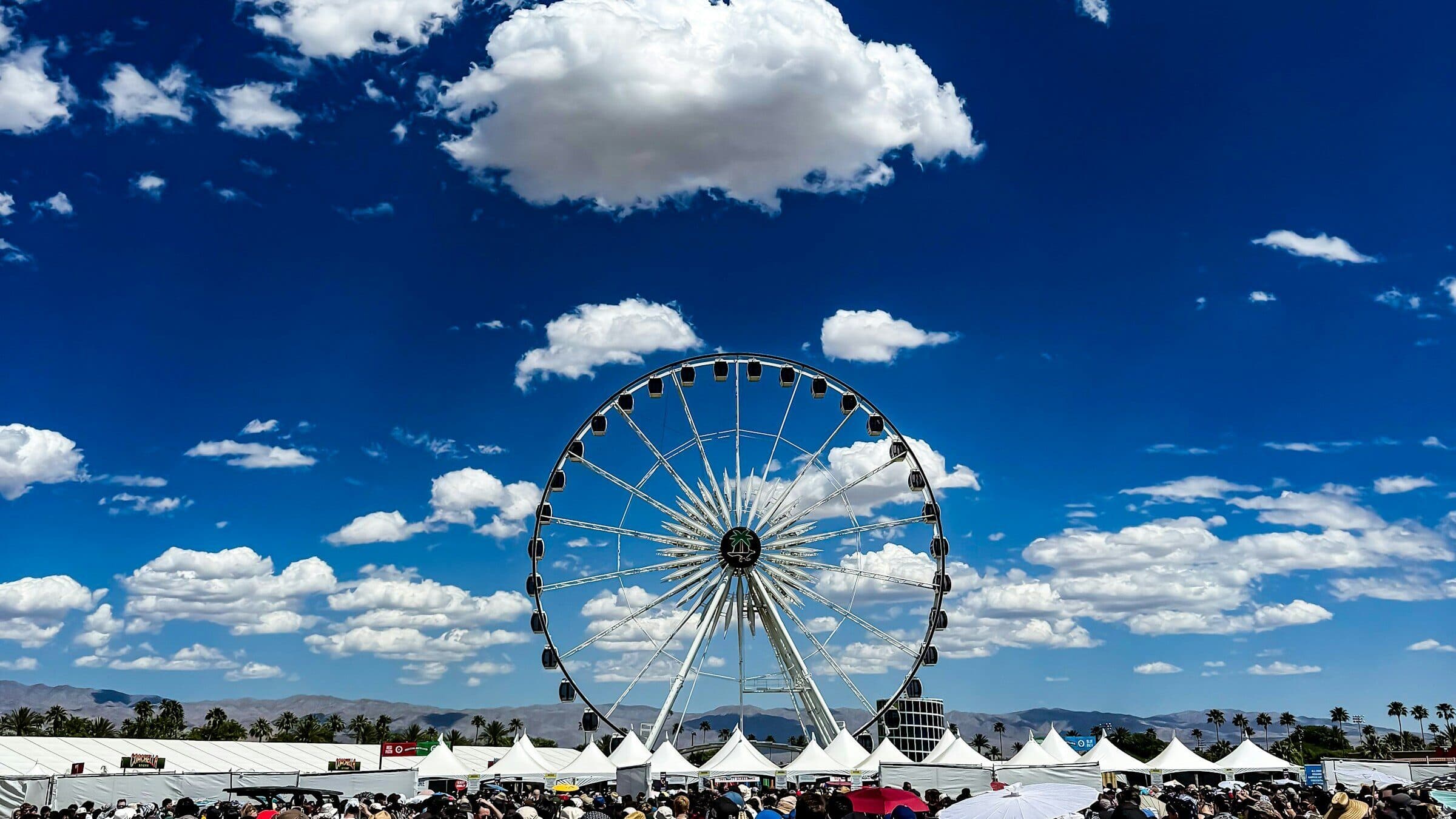
- Hero: Andrew A (Unsplash), Coachella, April 2026. Free use under the Unsplash License.
- Gap Hoodie House gallery (4 images): courtesy of Gap.
- Pinterest activation gallery (4 images): courtesy of Pinterest.
- Rhode World (2 images): courtesy of Rhode.
- Closing shot, Empire Polo Club: courtesy of AEG Global.