Manual outreach does not scale. The math is brutal: to land 10 creator partnerships you typically need 50 to 100 qualified conversations, each of which starts with a researched, personalized first message. Do that by hand and a single mid-size campaign eats days of an analyst's week before a single creator says yes.
The usual fix is a worse version of the problem. Brands export a list, drop it into a mail-merge tool, and blast a templated note with {{firstName}} in the greeting. It scales the sending and kills the reply rate. Creators can smell a merge field from the subject line.
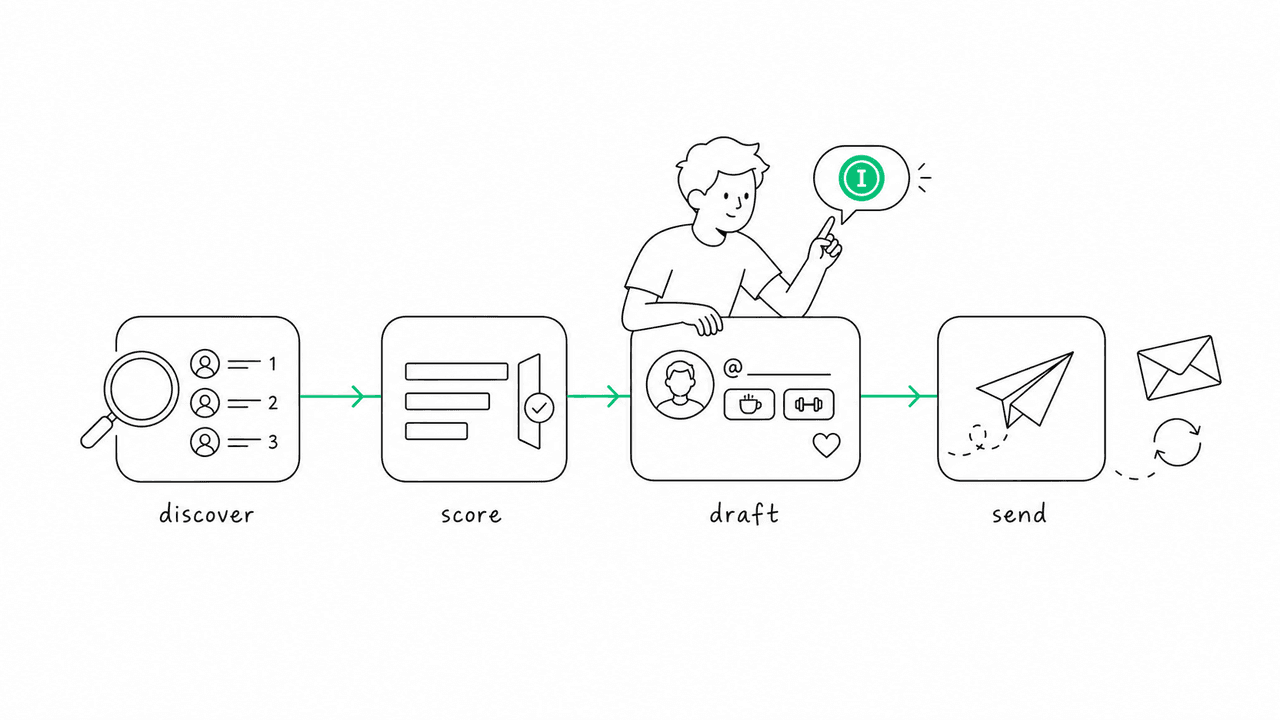
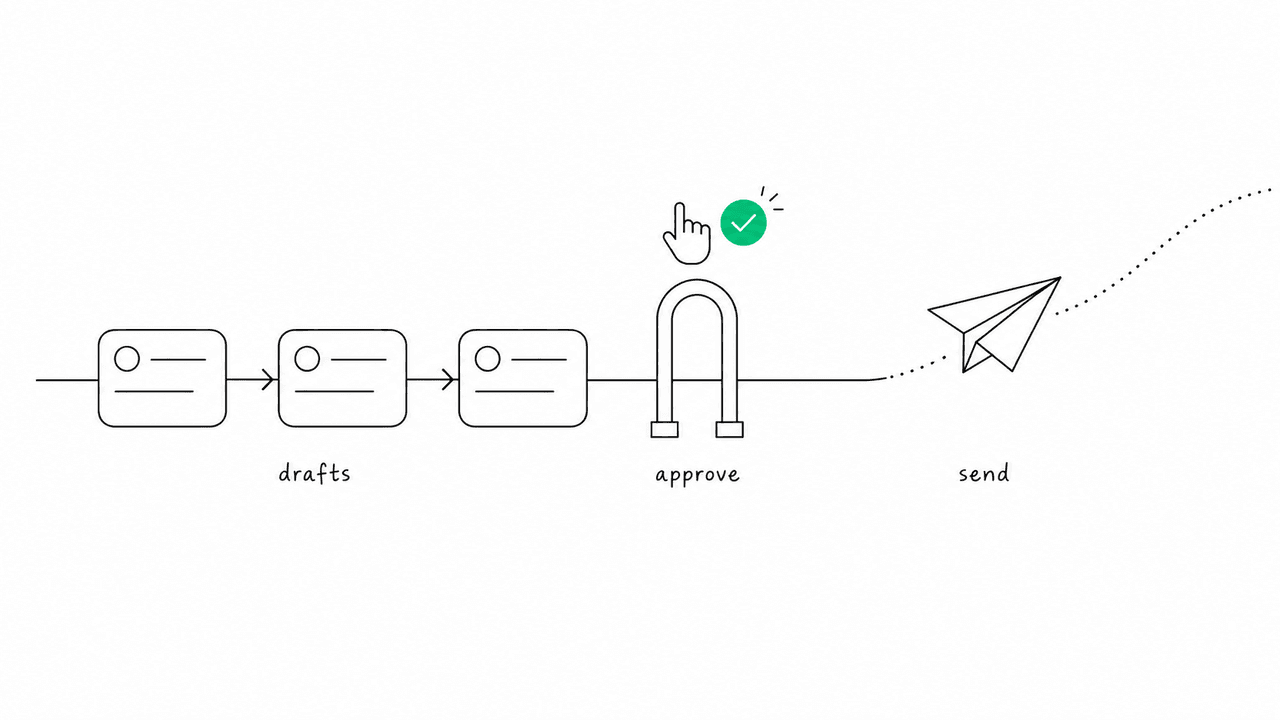
There is a third option that most teams skip because it sounds like an engineering project: automate the whole funnel with an API. Discover creators programmatically, score them so you only contact good fits, pull real profile data to ground a non-generic first line, draft per creator with an LLM, and hand the approved messages to your sequencer. You keep humans on the two steps that actually need judgment, final approval and the relationship, and let code do the repetitive 90%.
This guide is the build. It uses real Influship SDK code for the discover, score, and enrich steps, and ESP-agnostic pseudocode for the send. If you want the non-technical version (deliverability and copy fixes for outreach that gets ignored), read why your influencer outreach gets ignored and how to fix it instead. If you want the definition first, start with the influencer outreach glossary entry. This post is the API/automation pipeline.
Why automate outreach (and what to automate vs not)
The outreach funnel has six stages:
- Discover — find creators who match the campaign.
- Qualify and score — rank them by fit so you contact the right ones.
- Personalize — draft a message grounded in each creator's real content.
- Send — get the first message out.
- Follow up — sequence the non-responders without nagging.
- Track — log sends and replies, update creator status in your CRM.
Four of those are safe to automate end to end: discovery, scoring, draft personalization, and sequencing. They are deterministic, high-volume, and low-judgment. The two that should keep a human in the loop are final approval of any message before it leaves your domain, and the relationship itself once a creator replies. An agent can draft a brilliant opener; it should not be negotiating rates or improvising on a live thread.
The design rule that makes the rest of this work: score before you contact. Volume outreach to a poorly qualified list is what trains spam filters and burns your domain reputation. If you only message creators the API scored as a genuinely good fit, your reply rate goes up and your sender reputation stays intact. Automation is the means; qualification is the point.
Step 1 — Programmatic discovery and scoring
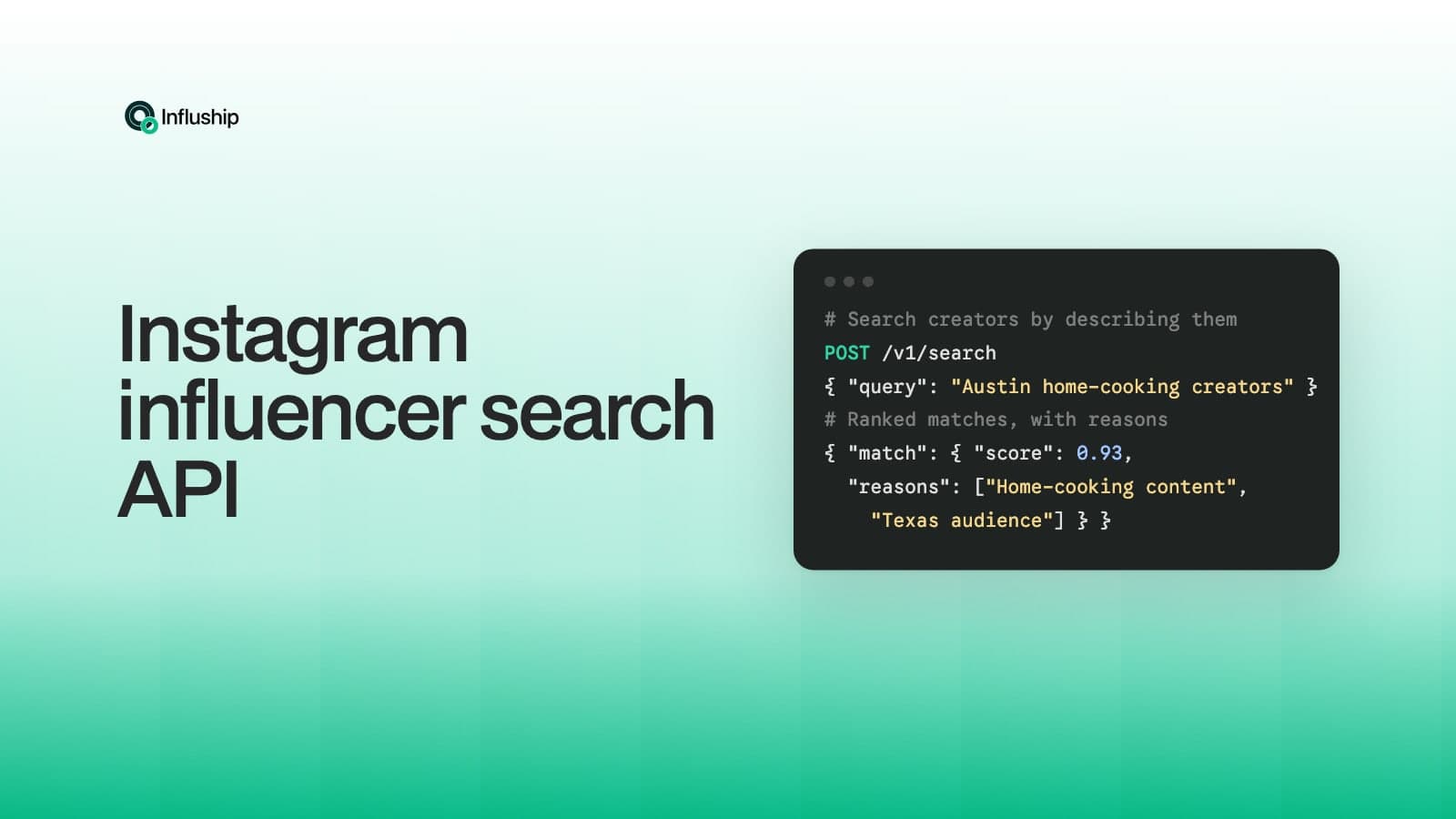
Build the target list with two calls. First, semantic search turns a campaign brief into a ranked shortlist. Then a match pass scores each candidate against your intent and returns a good / neutral / avoid decision so you can drop everything that is not a fit before it ever reaches the outreach queue.
import Influship from 'influship';

const client = new Influship({ apiKey: process.env.INFLUSHIP_API_KEY });

// 1. Discover: natural-language brief -> ranked candidates
const search = await client.search.create({
  query:
    'sustainable home goods creators who post honest product reviews to a US audience',
  platforms: ['instagram'],
  creator_kinds: ['INFLUENCER'],
  filters: {
    followers: { min: 10_000, max: 250_000 },
    engagement_rate: { min: 2 },
  },
  limit: 40,
});

// 2. Score: only keep creators the model decides are a genuine fit
const scored = await client.creators.match({
  creators: search.data.map((r) => ({ creator_id: r.creator.id })),
  intent: {
    query: 'paid review partnership for an eco home-goods launch',
    context: 'Looking for authentic reviewers, not pure aesthetic feeds.',
  },
});

const shortlist = scored.data
  .filter((c) => c.match.decision === 'good')
  .sort((a, b) => b.match.score - a.match.score);

console.log(`${shortlist.length} qualified creators to contact`);That shortlist is your outreach queue, and nobody on it is a guess. Each entry carries match.reasons too, which become raw material for personalization in step 3. For the full version of this discovery stage, ranking logic, pagination, caching, and cost, read the deep dive on how to build an influencer discovery tool.
Step 2 — Pull personalization data
A merge field is not personalization. Retrieving the creator's actual profile is. Use creators.retrieve with the profiles include to pull the AI summary, content themes, and brand-alignment signals you need to write a first line that proves you actually watched their content.
async function getPersonalizationData(creatorId: string) {
  const { data } = await client.creators.retrieve(creatorId, {
    include: ['profiles'],
  });

  return {
    name: data.name,
    summary: data.ai_summary,          // one-paragraph description of the creator
    themes: data.content_themes,        // e.g. ['home organization', 'budget DIY']
    alignment: data.brand_alignment,    // signals on partnership fit
    facts: data.key_facts,              // notable, citable specifics
  };
}Why this beats mail-merge tokens: a token can only echo data you already had (their handle, their follower count). A grounded summary lets the draft reference what they make. “I loved your budget DIY pantry series” lands; “Hi {{firstName}}, I came across your profile” gets archived. If you want to go deeper and reference an exact recent post or a line from a video, you can pull raw posts and transcripts too, see getting raw Instagram posts and transcripts via API for the endpoints and shapes.
Step 3 — Generate personalized outreach
Now combine the personalization data with a fixed brand brief and let an LLM draft one message per creator. The structure that works: a constant brand block (who you are, the offer, the ask) plus the variable creator block from step 2. The model writes the bridge between them.
async function draftOutreach(creator, brief) {
  const prompt = `
You are writing a short, warm influencer outreach email. 80-120 words.
One specific, genuine reference to the creator's actual content. No
flattery filler. No "{{firstName}}"-style merge feel. End with a clear,
low-friction ask.

BRAND BRIEF:
${brief}

CREATOR:
Name: ${creator.name}
What they make: ${creator.summary}
Themes: ${creator.themes.join(', ')}
Notable: ${creator.facts.join('; ')}
`;

  // your LLM call of choice; return { subject, body }
  return await llm.generate(prompt);
}
Do not start from a blank prompt. Borrow angles that already convert, the influencer product gifting email templates are a good source of proven structures you can feed the model as few-shot examples.
One non-optional rule: build disclosure into the offer, not as an afterthought. The FTC Endorsement Guides require creators to clearly disclose a material connection (gifted product, payment) in any sponsored content. Your outreach should state up front that disclosure is expected, and your brief should give them the language. Make compliance the default, not a negotiation, see the full FTC influencer marketing guidelines for what counts as adequate disclosure.
Step 4 — Trigger sequenced sending and follow-ups
The send step is intentionally ESP-agnostic. Influship gets you a qualified, personalized draft per creator; you hand it to whatever sends email, your transactional ESP, a sales sequencer, or your CRM. The pattern is the same: queue the approved draft, send the opener, and schedule follow-ups that stop the moment a creator replies.
// Human gate first: nothing sends without approval
const approved = await reviewQueue(drafts); // your UI / Slack approval step

for (const item of approved) {
  await esp.send({
    to: item.creator.email,
    subject: item.subject,
    body: item.body,
    sequenceId: 'creator-outreach-q3',
  });

  // Cadence: nudge non-responders, never the responders
  await esp.scheduleFollowUp({
    to: item.creator.email,
    after: '4 days',
    cancelOnReply: true,
    body: item.followUp, // short, references the first note, adds one new reason
  });
}
Keep the cadence light: one opener, one or two spaced follow-ups, then stop. Automated sequences are exactly where outreach tips into spam territory, identical bodies, daily nagging, no reply detection. Avoid those traps; the breakdown in why outreach gets ignored is worth reading before you turn the sequencer on.
Step 5 — Track and sync to your CRM
The loop only compounds if you record what happened. Log every send and reply, sync the creator record, and update status so the next run does not re-contact someone already in a thread. This is also what turns a one-off blast into a managed pipeline.
async function syncToCRM(creator, outcome) {
  await crm.upsertContact({
    externalId: creator.id,
    name: creator.name,
    platform: 'instagram',
    matchScore: creator.match.score,     // from step 1
    status: outcome.replied ? 'in_conversation' : 'contacted',
    lastTouch: new Date().toISOString(),
    notes: outcome.replied ? outcome.replyText : null,
  });
}
Now your creator records carry the match score, the message history, and the current state in one place. That is the definition of an influencer CRM: a single source of truth for every creator relationship, fed automatically rather than typed by hand.
The full AI-agent blueprint
Stack steps 1 through 5 and you have not just an outreach script, you have a loop an AI agent can run on its own. Discover, score, enrich, draft, gate for approval, send, follow up, log. Each step is a typed, deterministic function, which is exactly what an agent needs to chain reliably.
async function outreachAgent(brief) {
  const shortlist = await discoverAndScore(brief);          // step 1
  const drafts = [];

  for (const creator of shortlist) {
    const data = await getPersonalizationData(creator.id);  // step 2
    const msg = await draftOutreach(data, brief);           // step 3
    drafts.push({ creator, ...msg });
  }

  const approved = await humanGate(drafts);                 // judgment stays human
  for (const item of approved) {
    await sendAndSequence(item);                            // step 4
    await syncToCRM(item.creator, { replied: false });      // step 5
  }
}
The same operations are exposed as MCP tools, so assistants like Claude Code and Cursor can run this conversationally. For the full agent build with working code at every step, see building an automated influencer pipeline with Claude Code. For the assistants and servers that plug in, compare the best influencer marketing MCP servers. And for the platform overview of running agents against creator data, see Influship for AI agents.
The whole thing runs on one API. Get a key and the endpoint reference at the Influship API and you can build the discover, score, and enrich stages today, then wire your existing ESP to the send step.
Frequently asked questions
Can you automate influencer outreach without it looking like spam?
Yes, if you score before you send and personalize from real data. Spam is high-volume, unqualified, identical messaging. Automated outreach that only contacts genuinely-fit creators (filtered on a good match decision) and grounds each first line in the creator's actual content reads as research, not a blast. The automation is in the plumbing; the message still has to earn the reply.
What data do you need to personalize at scale?
Three things: a match reason (why this creator fits the campaign), a content summary (what they actually make), and at least one specific, citable detail (a series, a recent post, a recurring theme). Influship's creators.retrieve with the profiles include returns all three. Merge-field tokens like name and follower count are not personalization, they are formatting.
Is automated influencer outreach legal and FTC-compliant?
Outreach itself is fine. The compliance obligation kicks in at the partnership: under the FTC Endorsement Guides, any creator with a material connection (gifted product or payment) must clearly disclose it in their content. Build that expectation into your outreach copy and brief from the first message. See our FTC guidelines breakdown.
Can an AI agent run the whole outreach pipeline?
It can run most of it. An agent can discover, score, enrich, draft, sequence, and log autonomously because each step is a deterministic API call. Keep two checkpoints human: final approval before any message sends, and the live conversation once a creator replies. That keeps you compliant and keeps the relationship genuine while the agent absorbs the repetitive work.
Sources and further reading
- Influship SDK and API reference,
search.create,creators.match,creators.retrievewith profiles, posts and transcripts endpoints — docs.influship.com. - Federal Trade Commission, Disclosures 101 for Social Media Influencers and the Endorsement Guides — ftc.gov.
- Influship, How to build an influencer discovery tool — the discovery and scoring stage in depth.
- Influship, Building an automated influencer pipeline with Claude Code — the full agentic build.