Search "companies looking for brand ambassadors" and you get two crowds in one result page: brands trying to find ambassadors, and creators trying to find brands that hire them. This guide serves both. If you run a brand, the first half shows you exactly where ambassadors come from and how to recruit them. If you're a creator, the second half shows you which companies are hiring and how to get picked.
The short version for brands: your best ambassadors are already buying from you. The short version for creators: stop waiting for DMs and go apply. Both sides are converging on the same model because the math favors it. An always-on ambassador produces more content, builds more trust, and costs less per post than a string of one-off sponsorships.
This is the discovery and matchmaking guide. If you already know you want a program and just need the operating manual (compensation models, contracts, onboarding, KPIs), read our brand ambassador program guide instead. Here we focus on the harder question: how the two sides actually find each other.
What "brand ambassador" means in 2026 (vs. influencer, vs. affiliate)
These three terms get used interchangeably, and they shouldn't be. The difference changes how money flows and how long the relationship lasts.
Influencer. A creator you hire for a campaign. You brief them, they post, you measure, the deal ends. It's a transaction with a start and a stop date.
Affiliate. A creator (or anyone with an audience) who earns commission on sales through their unique link or code. There's often no real relationship beyond the payout. Affiliates promote dozens of brands at once.
Ambassador. An ongoing partner. They represent your brand over months or years, get product access and early launches, give feedback, and post on a regular cadence. Compensation usually blends product, commission, and sometimes a retainer. An ambassador is an affiliate with a deeper relationship and a brand to defend.
Why are companies shifting toward always-on ambassadors? Three reasons. Trust: audiences believe a creator who mentions the same product for the tenth time more than one doing a first-time #ad. Content volume: an ambassador on a monthly cadence produces a steady stream of usable assets you can repurpose into paid ads and email. And acquisition cost: the per-post rate on an ongoing relationship is typically lower than booking the same creator for repeated one-offs, and the trust compounds. The Influencer Marketing Hub benchmark report has tracked the industry past $24 billion in spend, and a growing share of that is moving from campaign budgets into ongoing creator partnerships.
What kinds of companies look for brand ambassadors
Almost every consumer category runs ambassador programs now, and B2B is catching up fast. Here's where demand is heaviest, with a note on the difference between big brands and DTC startups in each.
Beauty and skincare
The most ambassador-dense category. Sephora's Squad and Glossier's rep program proved that beauty creators value access (early launches, masterclasses, photo shoots) as much as cash. DTC skincare startups recruit micro creators aggressively because authentic before-and-after content sells product better than studio ads.
Fitness and athleisure
Lululemon and Gymshark wrote the playbook. Lululemon partners with thousands of local yoga teachers and trainers; Gymshark scouts fans and turns them into "Athletes." If you sell fitness gear, supplements, or apparel, see our influencer marketing for fitness brands guide for category-specific tactics.
Food, beverage, and supplements
Energy drinks (Red Bull, Celsius), better-for-you snacks, and supplement brands run some of the largest ambassador rosters. Restaurants and local F&B brands increasingly use ambassadors too; our influencer marketing for restaurants guide covers the local-creator angle.
Fashion and apparel
From fast fashion to sustainable DTC labels, fashion brands lean on ambassadors for constant outfit content. College and campus ambassador programs are common here because the demographic and the creators overlap perfectly.
Gaming
Hardware brands, energy drinks, and game studios recruit streamers and gaming creators as long-term ambassadors, often with affiliate codes baked in. Gaming audiences are notoriously loyal to creators they trust, which makes ongoing partnerships outperform one-off sponsorships.
SaaS, tech, and B2B
The fastest-growing category nobody talks about. SaaS companies are building creator and ambassador programs around founders, power users, and niche B2B influencers. The dynamics differ from consumer (longer sales cycles, credibility over reach), so read our influencer marketing for SaaS guide before you copy a beauty-brand playbook.
Pet brands
Pet food, toys, and accessories brands recruit pet-account creators (and their owners) as ambassadors. Engagement in this niche is high and the content is endlessly shareable. See influencer marketing for pet brands.
For a full breakdown by vertical, the influencer marketing by industry hub links every category guide in one place.
For brands: how to find brand ambassadors
There are four reliable sources of ambassadors, ranked roughly by quality. Most strong programs use all four at once.
1. Recruit from your existing customers and fans (best source)
Your highest-converting ambassadors already paid for your product. They don't need convincing, their enthusiasm is real, and their audience can tell. Lululemon built an entire model on this: instead of paying celebrities, they partnered with local instructors who already wore the gear.
Where to look: tagged posts, mentions, branded-hashtag usage, customer reviews, and your DMs. Anyone already creating content about you unprompted is a warm lead. A short email or DM inviting them to a program converts far better than cold outreach to a stranger.
2. Source from social
Beyond your own customers, you can find candidates by searching the hashtags and tags your category uses: #ambassador, niche-specific tags, and competitors' branded hashtags. Look at who's already doing unpaid creator-style content in your space. The downside of manual social sourcing is speed; it's slow and you can't filter by audience quality at a glance.
3. Use creator search and discovery platforms
When you need to scale past your own customer base, a discovery platform lets you search by audience demographics, engagement, niche, and brand alignment, then expand from your best existing ambassadors using lookalike search. This is where influencer discovery earns its keep: you describe the ambassador you want in plain language and get a ranked, vetted shortlist instead of scrolling hashtags for hours. If you want a walkthrough on your own niche, book a demo.
4. Application forms and landing pages
Put up a dedicated "Become an ambassador" page and link it from your footer, order confirmation emails, packaging inserts, and social bios. This inverts the funnel: your most enthusiastic customers come to you. Sephora's Squad reportedly draws over 16,000 applications a year precisely because the program is visible and the perks are compelling.
Vet before you commit
Whatever the source, vet for two things: audience fit and authenticity. Audience fit means their followers actually look like your customers. Authenticity means the followers are real and the engagement isn't bought. Run candidates through a fake-follower check before you ship product or sign anything; our guide on how to detect fake followers shows the red flags. Once a candidate clears vetting, the brand ambassador program guide covers building the program itself, and you can lock terms with our influencer contract builder (see also how to write an influencer contract).
For creators: how to find companies hiring ambassadors
If you're a creator, the demand is real, but the brands that pay well rarely DM first. Here's how to get in front of them.
Where to look
- Brand websites. Check the footer for "Ambassador," "Affiliate," "Creators," or "Community" links. Most programs live on a page like /ambassadors with an application form.
- Application platforms and marketplaces. Tools like Aspire, GRIN, and various creator marketplaces let brands post ambassador opportunities you can apply to directly.
- Social calls. Brands post open calls on their own accounts, often with a branded hashtag or a link in bio. Follow the brands you actually use and turn on post notifications.
- Your own purchases. The easiest pitch is to a brand you already buy and post about. Tag them, use their hashtag, and then reach out.
How to pitch
Lead with proof that you already use the product, show audience numbers that matter (niche, location, engagement, not just follower count), and link two or three pieces of your best relevant content. Keep it short. Brands skim. Make it obvious why your audience is their customer.

What brands want
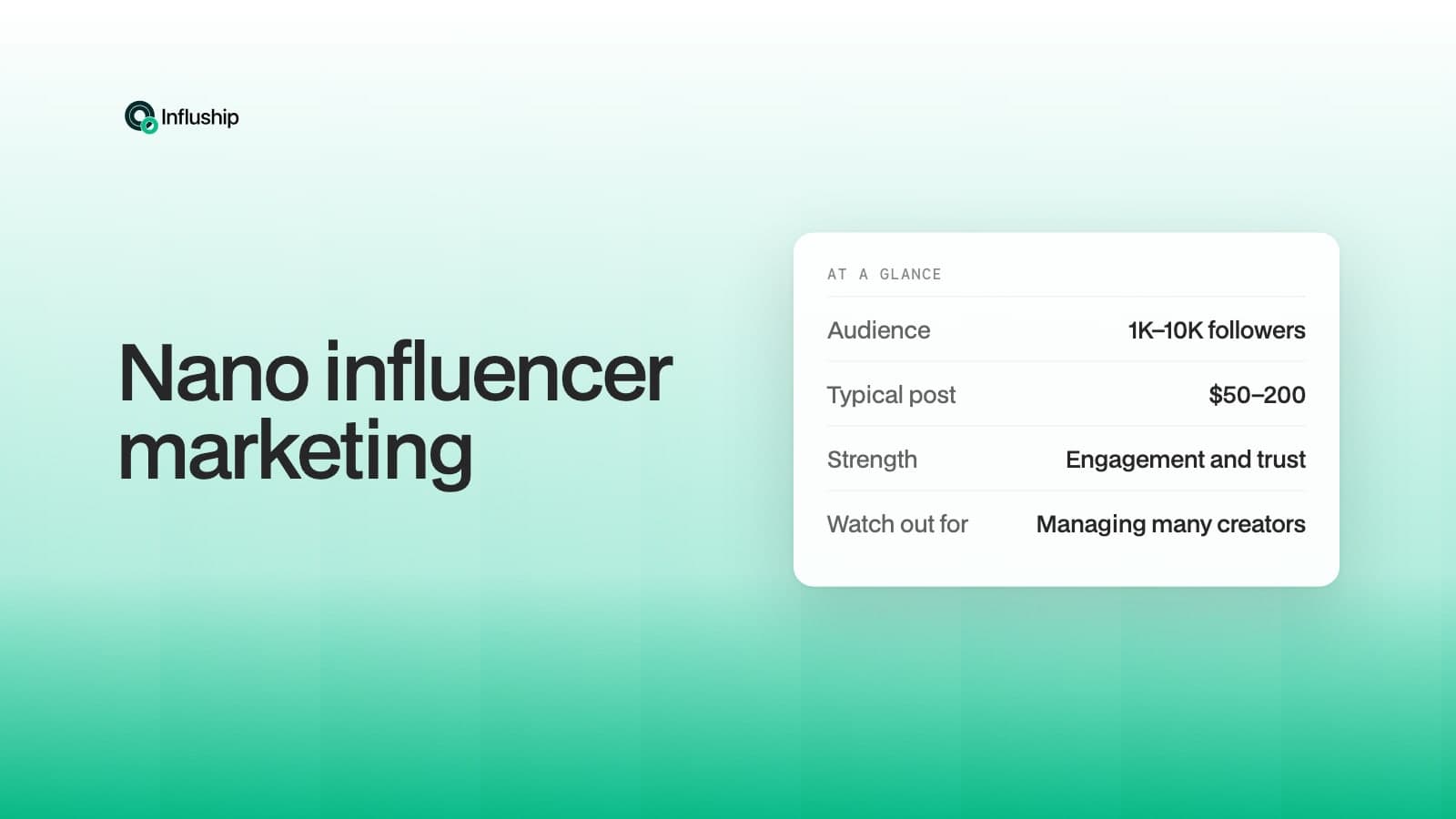
Consistency, authenticity, and a fit between your audience and their product. Plenty of programs recruit nano and micro creators (1,000 to 50,000 followers) specifically because engagement and trust are higher than on big accounts. You do not need a huge following. You need the right following.
Red flags to avoid
Be wary of "partnerships" that are gifting-only with no payment and demand a heavy posting schedule, exclusivity clauses that lock you out of competitors with no compensation, and vague terms with no contract. A real ambassador deal puts content requirements, usage rights, and compensation in writing. If a brand won't document it, treat that as a signal.
Examples of well-known ambassador programs
These four illustrate distinct models worth copying (or applying to):
- Red Bull Student Marketeers. Thousands of college-age ambassadors who run campus events and hand out product. The ambassadors are the target demographic, and the program doubles as a hiring pipeline.
- Lululemon ambassadors. Local fitness instructors and elite athletes. High-trust, hyperlocal influence instead of one expensive celebrity.
- Gymshark Athletes. Fans turned ambassadors, recruited on content quality and engagement rather than follower count. Retainer plus commission plus product. No public application; they find you.
- Glossier and Sephora Squad. Beauty programs that reward creators with access, education, and early launches as much as cash, with application processes that generate their own buzz.
FAQ
What companies are looking for brand ambassadors right now?
Beauty and skincare brands, athleisure and fitness brands, energy drinks, DTC supplements, gaming brands, and a growing number of SaaS companies all run active programs. Most accept applications year-round through a dedicated page on their site, and many scout creators directly rather than waiting for applications.
Do brand ambassadors get paid?
It depends on the program. Some pay only in free product, some add commission on sales, and the more serious programs pay a monthly retainer plus commission plus product. Product-only deals are common for early-stage brands and smaller creators.
How many followers do you need to be a brand ambassador?
There's no fixed minimum. Many programs recruit nano creators with 1,000 to 50,000 followers because their engagement and trust are higher. Audience fit and engagement quality beat raw follower count almost every time.
How do I start a brand ambassador program?
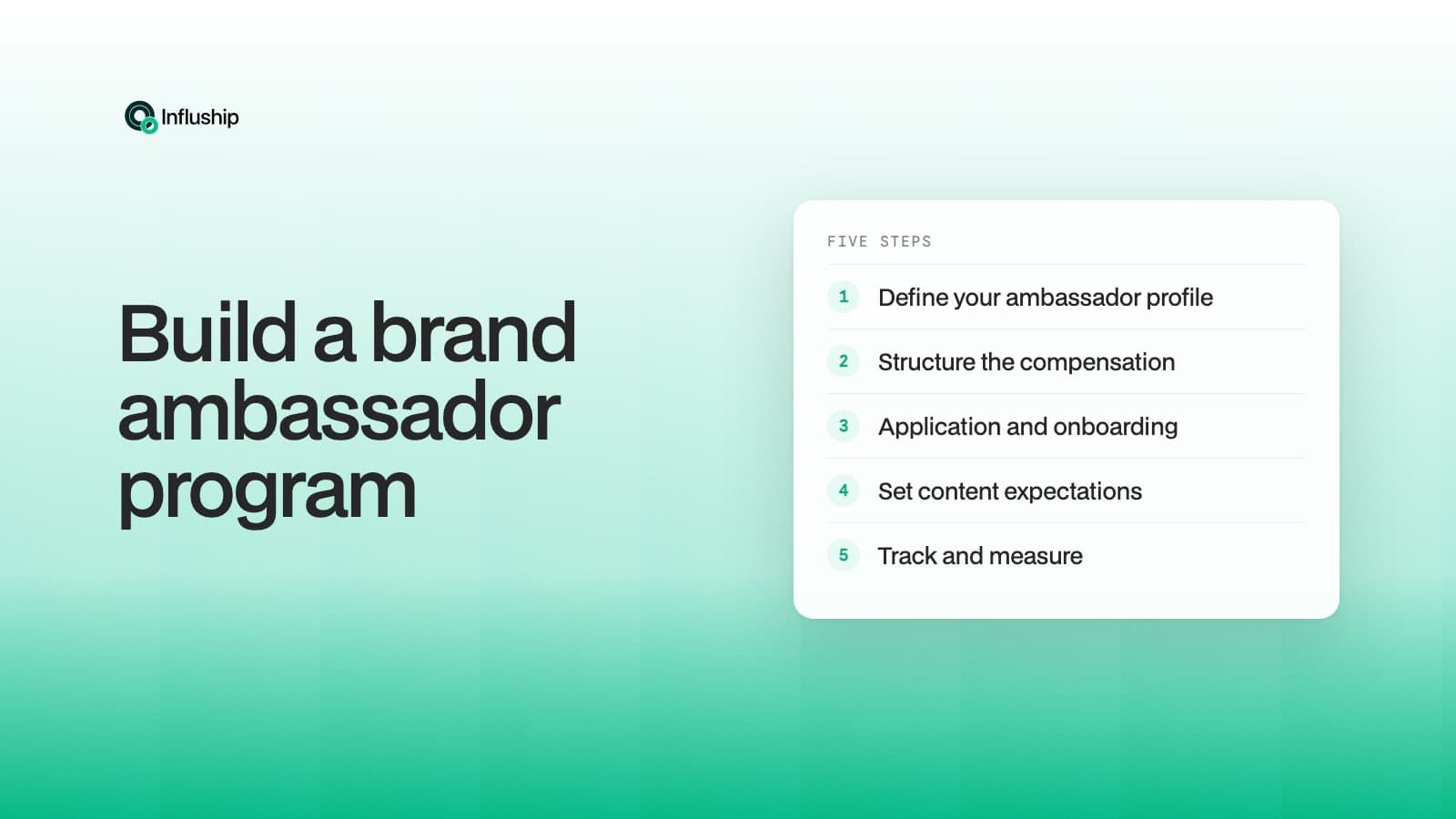
Define your ambassador profile, recruit from existing customers first, set compensation, build application and onboarding flows, set content expectations, and track results with unique codes and links. Our brand ambassador program guide walks through each step.
What's the difference between a brand ambassador and an affiliate?
An affiliate promotes for commission with little other relationship. An ambassador has an ongoing partnership: content commitments, brand guidelines, product access, and regular communication. Most ambassador programs include an affiliate-style commission as part of the deal.
Sources and further reading
- Influencer Marketing Hub, Influencer Marketing Benchmark Report — industry size and the shift toward ongoing creator partnerships.
- Red Bull, Student Marketeer program — campus ambassador model.
- Lululemon, Ambassadors — local instructor and athlete partnerships.
- Influship, How to Build a Brand Ambassador Program — compensation models, contracts, onboarding, and KPIs.