Tech YouTube is one of the highest-trust review surfaces on the internet. An MKBHD-style long-form review, a Linus Tech Tips deep dive, or a niche reviewer's "I used this for 30 days" video can move purchase decisions for gadgets, apps, and dev tools in a way no ad ever will. People watch a 20-minute review before they buy a $40 keyboard or a $200/mo SaaS seat. That trust is exactly what you want pointed at your product.
The hard part is discovery. There are thousands of tech channels, from 2,000-subscriber niche reviewers covering e-ink tablets and self-hosted software up to 18M+ flagship channels. Most brands do one of two things wrong: they chase the famous names (who ignore unknown brands or route everything through an agency) or they spray a generic template at fifty random channels and get nothing back.
This guide is the operator's version. It covers the types of tech reviewers and which one fits your product, five concrete ways to actually find them on YouTube, how to vet a channel on view-to-subscriber ratio and engagement before you spend a dollar, and how to approach reviewers so you get a yes. Every tactic here is YouTube-native, not recycled generic influencer advice.
If you want the broader sourcing playbook across every platform, see our guide to finding influencers for your brand and the how to find influencers hub. This page stays narrow: tech reviewers, on YouTube.
Types of tech reviewers on YouTube
Before you search for anyone, decide what you're hunting. "Tech reviewer" spans three audience tiers and at least five content formats, and matching the wrong type to your product is the most expensive mistake you can make early. Frame the target by size first, then by format.
By audience size
- Flagship / mega channels (5M+ subscribers) — MKBHD, Linus Tech Tips, Unbox Therapy. Aspirational and culture-defining, but realistically out of reach for an unknown brand. They're agency-gated, expensive, and overwhelmed with pitches. Treat a placement here as a long-term goal, not a launch tactic.
- Mid-tier reviewers (200K–2M subscribers) — the sweet spot. Credible enough to convert, engaged enough to matter, and reachable. They'll consider both gifting and paid deals, and a placement here carries real weight without the flagship's price tag or gatekeeping.
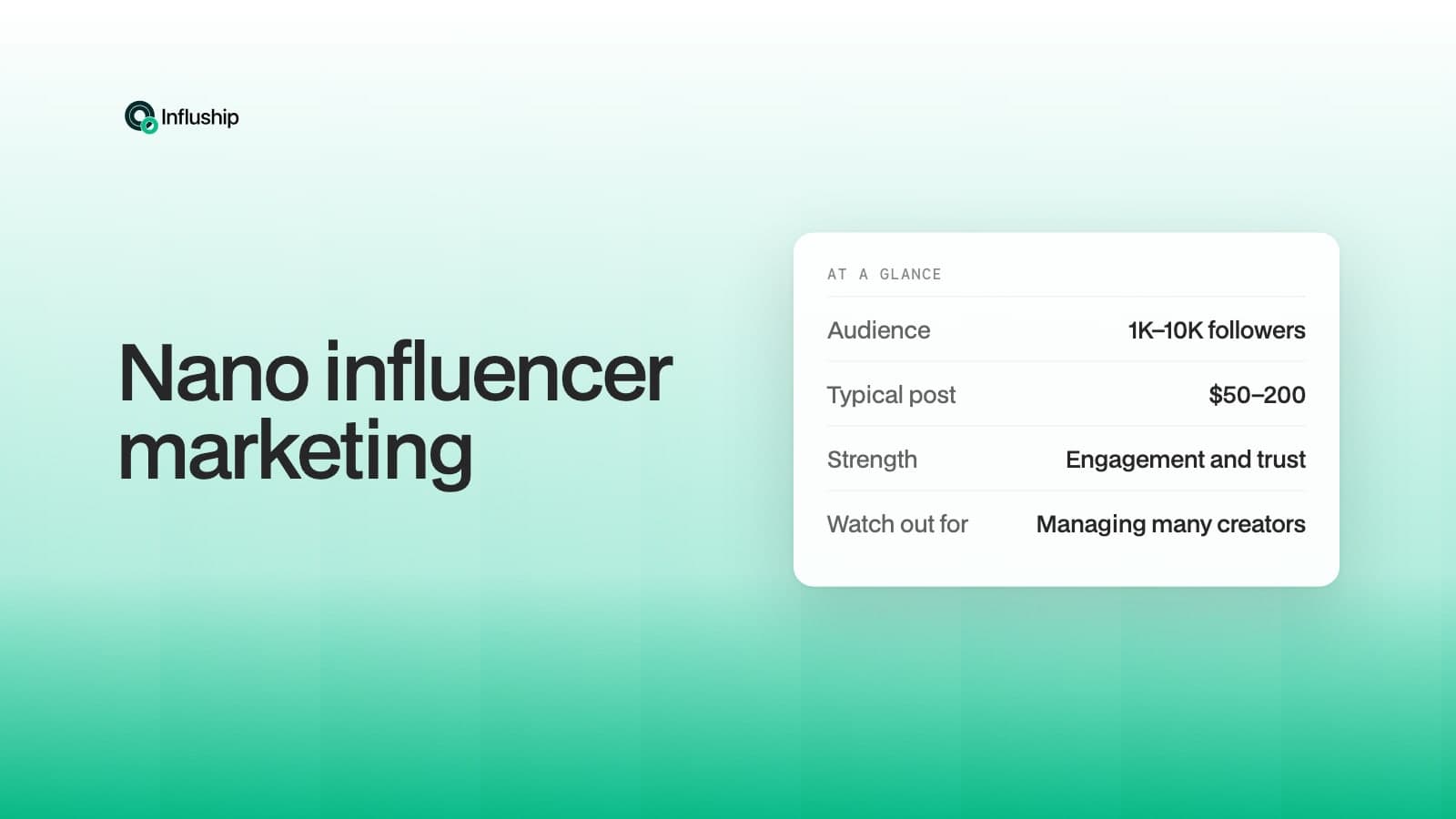
- Micro / niche reviewers (2K–200K subscribers) — the highest engagement-per-view and often hyper-specific: mechanical keyboards, e-ink tablets, self-hosted software, Mac productivity apps, Android ROMs, dev tooling. For a niche product, this tier is the best ROI you can find. A 30K-subscriber channel whose entire audience is your exact buyer beats a generalist with a million subs.
The size tradeoff is the same on YouTube as everywhere else, and worth internalizing before you start. We break it down in macro vs micro influencers and make the case for the smallest tier in nano influencer marketing.
By format and niche
Format matters as much as size, because each one signals a different audience intent and suits a different product:
- Unboxing and first impressions — high reach, low depth. Good for physical gadgets with shelf appeal, weak for anything that needs explaining.
- In-depth long-form reviews — the 15–30-minute format that drives the most purchase intent. The viewer is researching a real buying decision.
- Comparison and "vs" videos — "X vs Y" content captures people at the decision stage. If you have a clear competitor, these channels are gold.
- "I used X for 30 days" / workflow videos — tutorial-style deep dives. This is the right format for SaaS and apps, not unboxers. A productivity-app buyer wants to see the tool used in a real workflow, not pulled out of a box.
- Build and setup channels — PC builds, home-lab, desk setups, smart-home installs. Ideal for components, accessories, and anything that slots into a configuration.
Sub-niches to search within: consumer electronics, PC hardware, mobile (Android/iOS), smart home, dev tools and SaaS, AI tools, audio, and photography/camera. SaaS in particular is a major tech-reviewer buyer, and the economics differ from hardware — see our guide to influencer marketing for SaaS for the full picture.
5 ways to find tech reviewers on YouTube
Here are the five methods that actually surface channels, ordered from most manual to most automated. Each has an exact mechanic and a worked example.
1. YouTube search plus filters
Start with intent-loaded queries: "[your category] review," "best [category] 2026," "[competitor product] review," and "[competitor] vs." Then use the Filters menu under the search bar. Filter by upload date (this week, this month) to find creators who are actively publishing, and by duration (20+ minutes) to isolate the long-form, higher-intent reviewers rather than 60-second shorts. Sort by view count to find proven content, or by upload date to catch channels on the way up before their rates climb.
The single best move: search a direct competitor's product name. Anyone who reviewed a competing product reviews your category, has an audience already shopping in your space, and understands the deliverable. That search alone usually surfaces a dozen qualified channels.
2. Suggested videos and channel mining (the snowball method)
Open one strong reviewer's video and look at the suggested/sidebar rail and the "Channels" tab on their channel page. YouTube's recommendation graph clusters topically similar creators, so one good seed surfaces 20+ adjacent reviewers in the same lane. According to YouTube's own documentation, recommendations are driven heavily by what audiences with similar watch behavior also watch — which is exactly the lookalike signal you want.
This is the manual version of lookalike discovery: start with one channel you like, snowball outward through suggestions, and you build a roster from a single seed. Slow, but free and surprisingly effective for finding the mid-tier and micro channels that don't rank at the top of search.
3. Social Blade and third-party stat sites
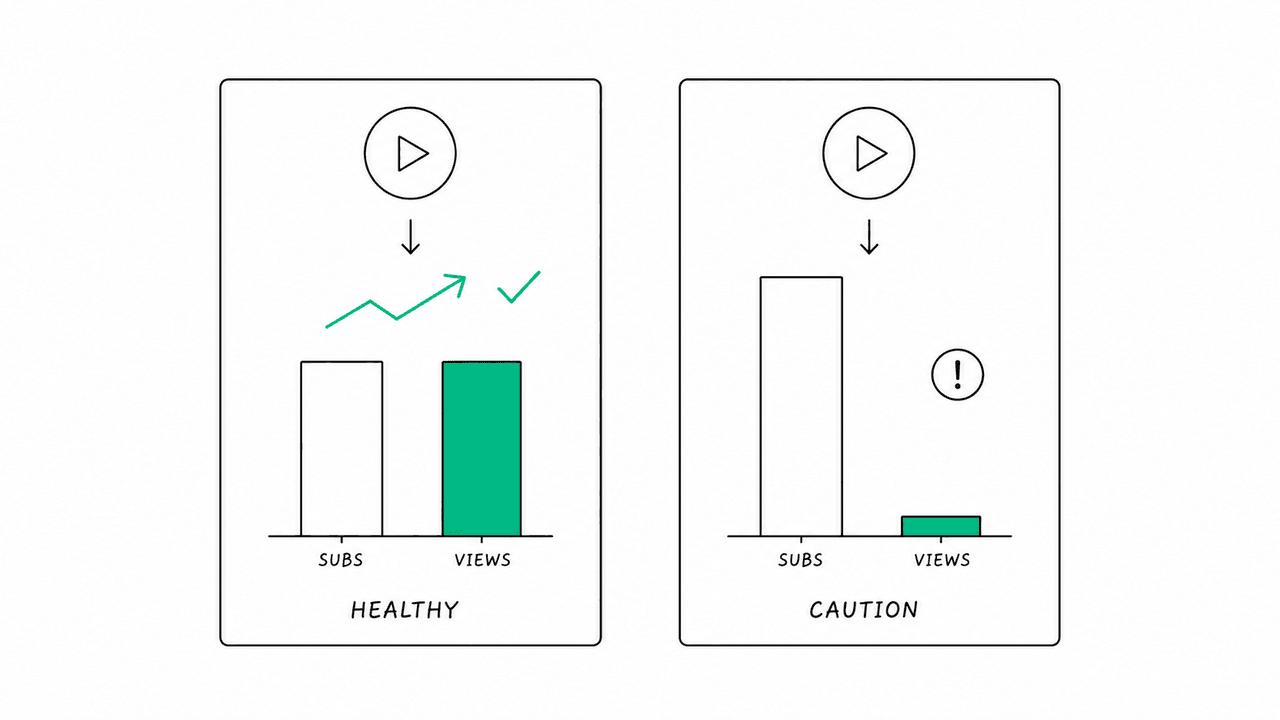
Search gives you names; you need numbers. Social Blade tracks public YouTube stats — subscriber and view growth trends, estimated monthly views, upload cadence, and a relative channel rank. Pull up any channel and read the trend line: steady or growing views signals a healthy, active audience; a flat-to-declining trend is a caution flag, especially if subscriber count keeps rising while views fall (a classic sign of an aging or inflated audience).
For category discovery rather than single-channel vetting, vidIQ surfaces the tags and topics channels rank for, which helps you find adjacent reviewers and understand what search terms a niche actually uses. Use these tools to qualify the list you built in steps 1 and 2, not to build it from scratch.
4. Creator directories and natural-language discovery
General-purpose creator directories and static "top tech YouTubers" lists exist, but they age badly: they're stale within months, carry no vetting, and sort alphabetically or by raw subscriber count rather than by fit. You end up scrolling a list that has no idea what you sell.
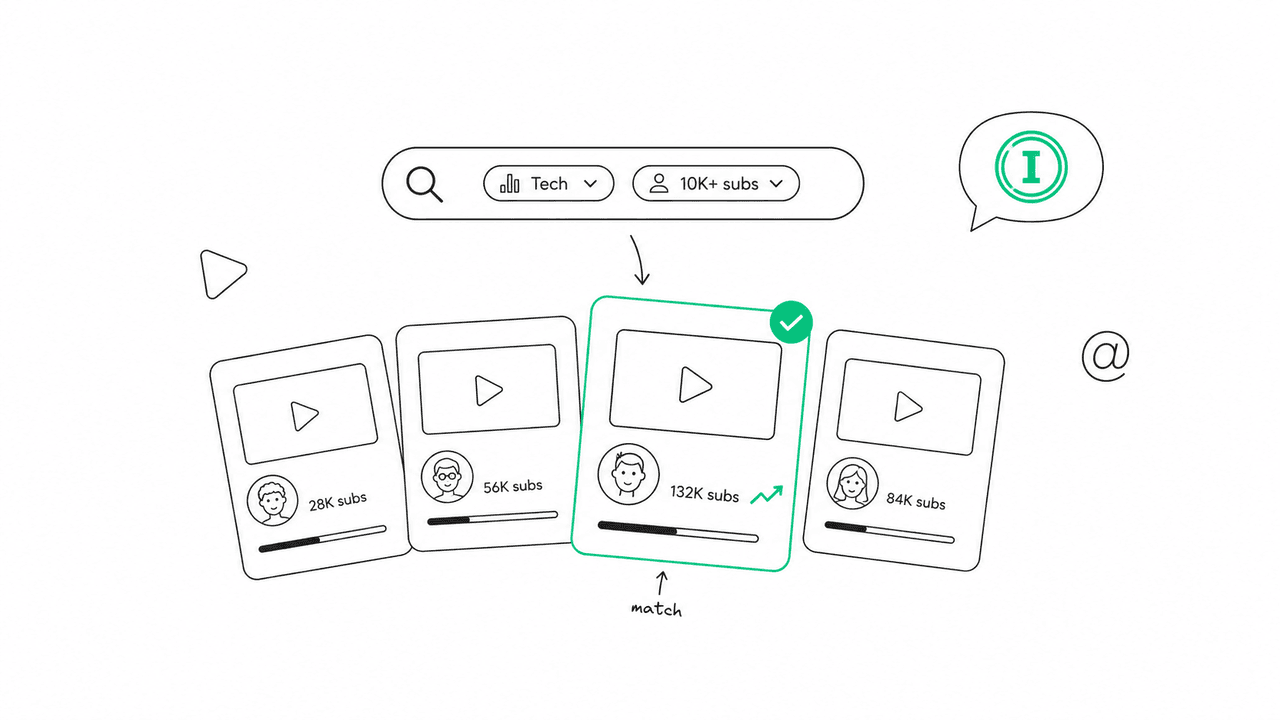
The upgrade is natural-language discovery. Instead of filtering a directory by hand, describe the exact reviewer you want in plain English — "YouTube reviewers who cover indie Mac productivity apps, 50K–500K subscribers, US audience, long-form reviews" — and get a ranked, pre-vetted shortlist back. Influship's influencer discovery works this way on Instagram today, with YouTube coming soon: it collapses the search, snowball, and stat-checking steps into one query, with match scoring and audience signals attached. More on that below.
5. Comment and community mining
Find who your competitors' customers already trust. Check which reviewers your competitors tag or sponsor (their YouTube descriptions and pinned comments often name the creators). Then scan Reddit — r/gadgets, r/[your-product] subreddits, r/buildapc for hardware — and X for "who reviews [category]" threads. The names that recur across multiple threads are pre-validated by the exact audience you're trying to reach. Community recommendations are the cheapest qualification signal you'll get.
How to evaluate a tech reviewer before you reach out
A channel on a list is not a partner. This is the section that separates a real shortlist from a wish list. Run every candidate through these checks — with actual numbers — before you send a single email.
View-to-subscriber ratio
The most important YouTube-native health metric. Take the average views on the last ~10 uploads and divide by subscriber count. Healthy tech channels commonly see 10–30%+ of their subscribers view a typical recent video. A 500K-subscriber channel pulling only 8K views per video (under 2%) is a red flag: either the subscribers were bought, the audience has gone dormant, or the channel is past its peak. Look at the actual view counts on recent videos, not the subscriber badge. Subscribers are vanity; views are reality.
Audience retention and engagement signals
You can't see a channel's retention graph from the outside, but you can read proxies. Like-to-view ratio in the healthy range is roughly 3–5%+. Comment volume and quality matter more: real comments asking purchase questions ("does it work with X?", "is it worth it over Y?") signal a commercially-minded audience, while generic praise and emoji strings signal a passive or bought one. Long videos that still pull strong views are a good sign — people only sit through 25 minutes if the creator holds attention.
Relevance and content fit
Does the channel review products like yours, at your price point, for your audience? Scroll the last 20 videos and check for category consistency. A budget-gadget channel that reviews $30 accessories is the wrong home for a $2,000 professional tool, no matter how good the production is. Niche fit beats raw reach every time: the narrow, trusting audience is the entire point of doing this on YouTube instead of buying ads.
CPM, sponsorship rates, and cost expectations
Tech is a high-CPM niche — advertisers pay a premium for tech audiences because they have buying power and purchase intent — which means tech reviewers' sponsorship rates run higher than lifestyle or entertainment creators. As a public benchmark, the Influencer Marketing Hub rate data puts integrated sponsor segments commonly in the range of roughly $20 or more per thousand expected views, with dedicated, full-product reviews costing meaningfully more. Treat any single number as a starting point, not a quote — rates vary widely by channel, audience, and deliverable. Set expectations accordingly: gifting-only works for micro and niche reviewers, while mid-tier channels and up will expect paid.
Authenticity and fake-follower check
Inflated channels exist on YouTube too. Quick checks: subscriber spikes on Social Blade with no viral video to explain them, generic or emoji-only comments, and views wildly inconsistent with subscriber count (the same view-to-sub mismatch from above). If the numbers don't add up, walk away. Our guide to detecting fake followers covers the full manual and tool-assisted workflow, and the fundamentals are in our glossary entries for influencer discovery and influencer vetting.
How to approach tech reviewers so they say yes
Tech reviewers get pitched every single day, and most of those pitches are interchangeable. Differentiation is the whole game. The brands that land reviews lead with why their product is genuinely worth covering, not with "we'd love a review."
- Lead with novelty, not the ask. Open with what makes your product actually review-worthy — the thing it does that nothing else does, the spec that breaks the category norm, the price that undercuts the incumbent. Give the reviewer a story, not a favor request.
- No strings on honest reviews. Credible tech reviewers will not accept editorial control, and asking for it is the fastest way to get blacklisted. Offer the product and full access, never a script. A negative-but-fair review from a trusted channel still drives qualified buyers; a sponsored puff piece convinces no one.
- Match the offer to the tier. Send the product to micro and niche reviewers as a gift with no obligation. Budget real money for mid-tier integrations. Make the unboxing and onboarding effortless: ship a pre-configured device, include a trial license and a quick-start, and remove every step between "package arrives" and "films the review."
- Personalize and keep it short. Reference a specific recent video — prove you watched it. Keep the first email to a few sentences. Most outreach gets ignored because it's generic; if your replies are dead, read why your influencer outreach gets ignored and how to fix it and steal the structure from our product gifting email templates.
- Brief them lightly. Give context and a few key talking points, then get out of the way. Our influencer brief guide and campaign brief template show how to give structure without strangling the creative.
Do it faster with natural-language discovery
The manual workflow above works, but it's slow: search with operators, snowball through suggested videos, cross-check each channel on Social Blade, and vet view-to-sub and engagement by hand, one channel at a time. For a single placement, fine. For building a roster, it's hours of tab-juggling.
Influship collapses steps 1 through 4 and the manual vetting into one query. Describe the exact tech reviewer profile in natural language — niche, follower range, audience location, content format — and get a ranked, pre-vetted shortlist back with audience and engagement data attached. The app covers Instagram today, with YouTube coming soon; if you need YouTube channel data now, the Influship YouTube API already covers it. Try it on the natural-language creator search, or request a demo to run your own search.
FAQ
How do I find small tech YouTubers?
Search niche-specific terms rather than broad ones — "mechanical keyboard review," "self-hosted software," "[specific app] tutorial" — and use the suggested-video snowball method: open one small channel and mine its sidebar and "Channels" tab. YouTube's recommendation graph clusters similar creators, so one micro channel surfaces a dozen more in the same lane. Filter by upload duration (20+ minutes) to find serious reviewers rather than shorts creators.
What's a good view-to-subscriber ratio for a tech channel?
Healthy tech channels commonly see 10–30% or more of their subscribers viewing a typical recent video. Calculate it as average views on the last ~10 uploads divided by subscriber count. Anything under roughly 5% is a warning sign — it usually means a dormant, aging, or partly-bought audience, even if the subscriber number looks impressive.
Do tech YouTubers review products for free?
Micro and niche reviewers often will, through gifting — you send the product with no obligation and they review it if it's genuinely interesting. Mid-tier channels and above almost always expect paid integrations, because tech is a high-CPM niche and their time has real market value. Match the offer to the tier: gift small, pay mid-and-up.
How much does a tech YouTube review cost?
It varies widely, but tech is a premium-CPM vertical, so rates run higher than lifestyle content. Public benchmark data from the Influencer Marketing Hub puts integrated sponsor segments commonly around $20+ per thousand expected views, with dedicated full reviews costing more. Treat that as a directional starting point, not a fixed quote — the only real number is the one the creator gives you.
What's the best way to find tech reviewers in a specific niche?
Natural-language discovery. Instead of guessing search terms and scrolling directories, you describe the exact reviewer you want — niche, subscriber range, audience location, format — and get a ranked, pre-vetted shortlist back. Influship does this for Instagram creators today, with match scoring and audience signals included. YouTube search is coming soon.
Sources and further reading
- Social Blade — YouTube channel statistics and growth tracking: public subscriber/view trends, estimated views, upload cadence, and channel rank.
- YouTube Help — How YouTube recommends content: how the recommendation system surfaces topically similar channels.
- Influencer Marketing Hub — YouTube creator and sponsorship rate data: CPM and integration-pricing benchmarks for the tech vertical.
- vidIQ — channel tags and topic discovery: finding adjacent reviewers and the search terms a niche actually uses.
- Influship — How to detect fake followers: methodology for spotting bought audiences and engagement fraud.
- Influship — Influencer marketing for SaaS: strategy and economics for software brands working with tech reviewers.