Fitness trends break on TikTok before they reach anywhere else. The 12-3-30 treadmill workout, 75 Hard, "cozy cardio," the Pilates-princess aesthetic, and the entire #GymTok lifting culture all caught fire on the For You page first, then spilled out to Instagram, YouTube, and the actual gym floor. If you sell anything in or adjacent to fitness (apparel, supplements, equipment, an app, a coaching tool), TikTok is where the creators who move your category actually live.
Here is the problem. The For You page is engineered to keep you watching, not to hand you a shortlist of partnership-ready creators in your niche, your budget, and your shipping region. Scroll for an hour and you'll get entertained, not sourced. Brands that find good fitness creators on TikTok do it with a deliberate process, not vibes.
This is not another "top 30 TikTok fitness influencers" listicle. Those go stale the week they publish. This is the repeatable method brands use to discover, shortlist, and vet fitness creators on TikTok themselves: four discovery routes (from #GymTok scrolling to the Creator Marketplace to natural-language search), how to tell a real audience from a bought one, and how to turn a list into outreach that gets answered.
If you want the broader money question (how much to budget, what ROI to expect, how fitness campaigns are structured), read our guide to influencer marketing for fitness. This page stays narrow: how to find the creators on the platform itself.
The types of fitness creators you'll find on TikTok
"Fitness" is not one niche, and the single most common sourcing mistake is treating it like one. A pre-workout brand and a Pilates-mat brand are hunting completely different audiences. Match the creator type to the product before you search for anyone.
- Personal trainers and coaches — form breakdowns, programming, client transformations. Best fit for training apps, supplements, equipment, and coaching tools, because their audience already trusts them to prescribe.
- Gym and bodybuilding "gymfluencers" (#GymTok) — heavy lifting, physique updates, gym-bag hauls. Strong for apparel, pre-workout, shaker bottles, belts, and accessories.
- Yoga and Pilates creators — mobility, flexibility, the "Pilates princess" aesthetic. Built for mats, athleisure, recovery, and wellness products with a calmer brand voice.
- Running and endurance creators (#RunTok) — marathon build-ups, Strava culture, race-day vlogs. The audience for footwear, hydration, gels, and wearables.
- CrossFit and functional fitness — WODs, competition prep, technique. A natural home for equipment, recovery gear, and performance nutrition.
- Wellness and lifestyle adjacent — "that girl" morning routines, weight-management and GLP-era content, home-workout creators. Broad reach for habit, nutrition, and at-home fitness products.
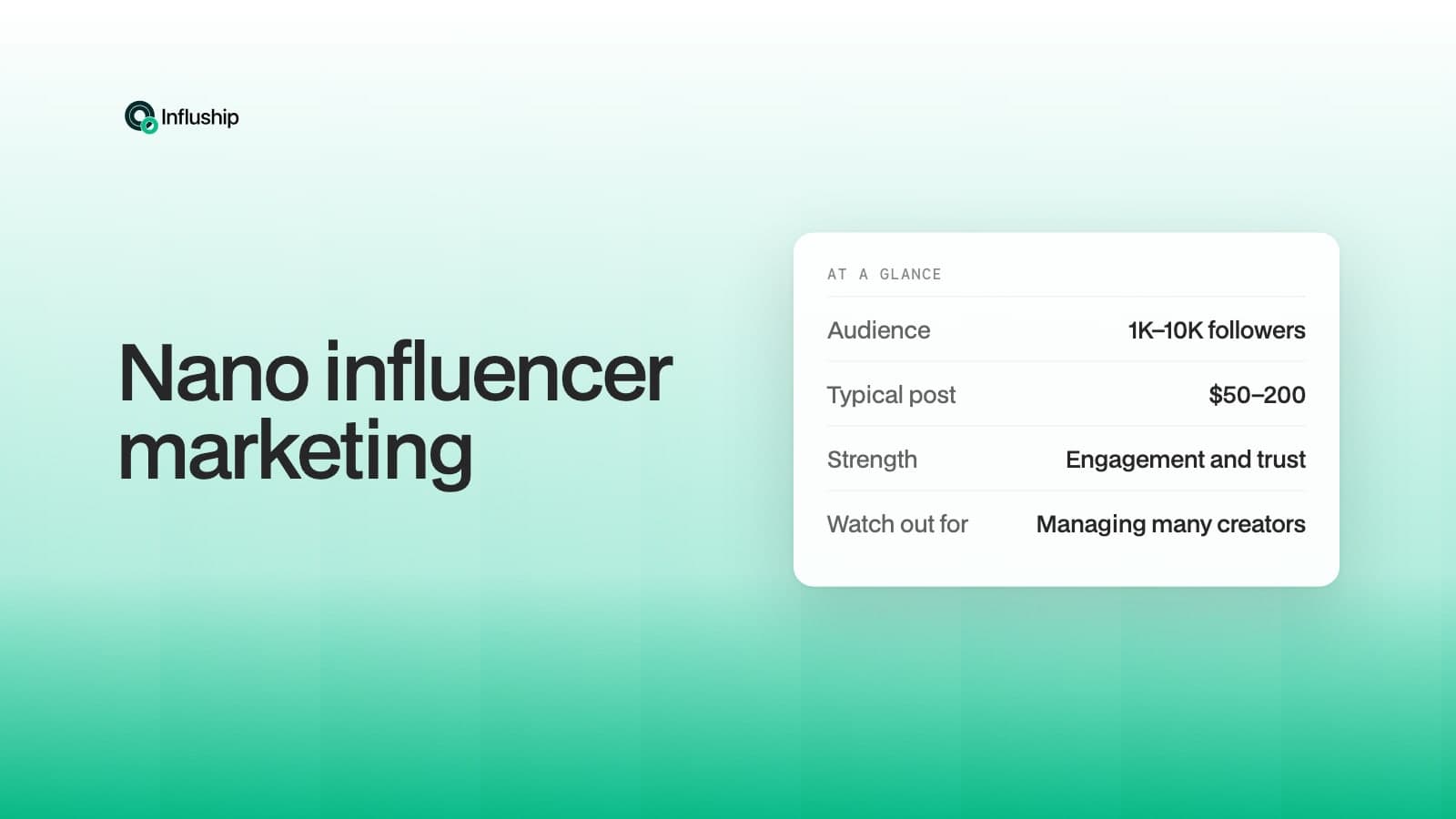
One follower-tier nuance worth internalizing before you start: on TikTok, nano and micro fitness creators routinely out-engage the big accounts. A trainer with 28k engaged followers often drives more saves, shares, and actual buying intent than a generalist with a million. We break the tradeoff down in our macro vs micro influencers guide and make the case for the smallest tier in nano influencer marketing.
Method 1: Hashtag and FYP discovery (manual)
The free, hands-on route. Start with the broad fitness tags — #FitTok, #GymTok, #fitnessinfluencer, #gymfluencers — then narrow into niche and product-category tags: #pilates, #runtok, #crossfit, #marathontraining, #preworkout, #homeworkout. Niche tags surface creators committed to a specialty rather than generalists chasing reach.
Use TikTok's search with its filters: sort by most liked to find proven content, or by recency to catch creators on the way up before their rates climb. Check the related-search suggestions under the search bar; they map out adjacent tags and creator clusters you wouldn't have guessed.
You can also train your For You page. Follow and genuinely engage with creators in your target niche, and the algorithm starts surfacing more of them. The catch: it's slow, and it's biased toward whatever is already viral, so it tends to over-feed you the same large accounts.
Sound and trend discovery is the underused move. Find the trending fitness sound or challenge relevant to your launch, tap into it, and you get a live list of every creator riding that format right now. That's a ready-made pool of people already producing the kind of content you want.
Be honest about the ceiling. Manual scrolling gives you names and nothing else. No contact info, no audience location or age split, no fake-follower signal, no rate range. It works for finding a handful of creators to study. It does not scale to a real shortlist, and it won't tell you whether the audience is in the country you ship to.
Method 2: TikTok Creator Marketplace vs third-party tools
The TikTok Creator Marketplace (TTCM, now folded into the broader TikTok One creator hub) is TikTok's official marketplace for brand-creator deals. The upside is real: first-party audience data straight from TikTok, in-platform briefs and messaging, and creators who have actively opted in to partnerships. It also plugs directly into Spark Ads, so you can boost a creator's organic post as paid media without leaving the ecosystem.
The limits are equally real. You only see creators who joined, the filtering is thinner than dedicated tools, semantic and natural-language search is weak, eligibility is region-gated, and creators face minimum follower thresholds to qualify. If your target is nano creators or a niche TTCM under-indexes, you'll feel the gap.
Third-party discovery platforms (Modash, HypeAuditor, influencers.club, and others) index far larger databases, cover Instagram and YouTube alongside TikTok, and add the layer TTCM skips: audience-quality and fake-follower analytics, contact data, and lookalike search. The tradeoffs are cost and data freshness, which varies by vendor.
Decision rule: choose TTCM if you're running TikTok-only and want native Spark Ads integration with opted-in creators. Choose a third-party tool when you need scale, deeper vetting, or to compare the same creator's presence across TikTok and Instagram before you commit. Most brands that run fitness programs seriously end up using both.
This is also where a platform like Influship changes the shape of the work. Instead of filtering down a database, you describe the creator you want in plain English and get a ranked shortlist with match scoring and audience-quality signals attached, which is essentially Methods 1 through 3 collapsed into one query. More on that below.
Method 3: Competitor and lookalike sourcing
The fastest shortcut to qualified creators is the creators your competitors already pay. Open the profiles of competing and adjacent brands, read their branded content and #ad posts, and note every creator they tag. Those people already produce sponsored fitness content, already understand deliverables, and have proven they convert for a brand like yours.
Then go to the TikTok Creative Center, which is free. Browse Top Ads by category and region to see which creators are actually driving paid performance in fitness right now, not just racking up organic views. That's a signal money is changing hands and the format works.
Once you find one creator whose style and audience you like, find lookalikes. Manually, that means working TikTok's "suggested accounts" recommendations. Faster, it means a tool with similar-creator or lookalike search that expands one seed creator into twenty in the same lane. Lookalike expansion is the difference between sourcing one good fit and building a roster of them.
Method 4: Natural-language / AI search (the fast path)
The shift over the last two years is from guessing hashtags to describing intent. Instead of searching #pilates and manually filtering, you write what you actually want: "US-based Pilates creators, 20k to 100k followers, mostly female audience, high engagement, no fake followers" and get a ranked shortlist back.
This is where Influship's influencer discovery fits. Semantic creator search, match scoring, and audience-quality signals run in a single step, which collapses the manual hashtag scrolling, the marketplace filtering, and the lookalike expansion into one query. The Influship app covers Instagram today, with TikTok and YouTube coming soon, so for a TikTok program it is most useful right now for checking a creator's Instagram footprint alongside the TikTok-native methods above.
Treat it as a complement to manual discovery, not magic. AI search gets you to a clean, relevant shortlist far faster than scrolling. You still vet the people on it. The next section is how.
How to evaluate a TikTok fitness influencer before you reach out
A name on a list is not a partner. Run every shortlisted creator through these checks before you spend a dollar or send a DM.
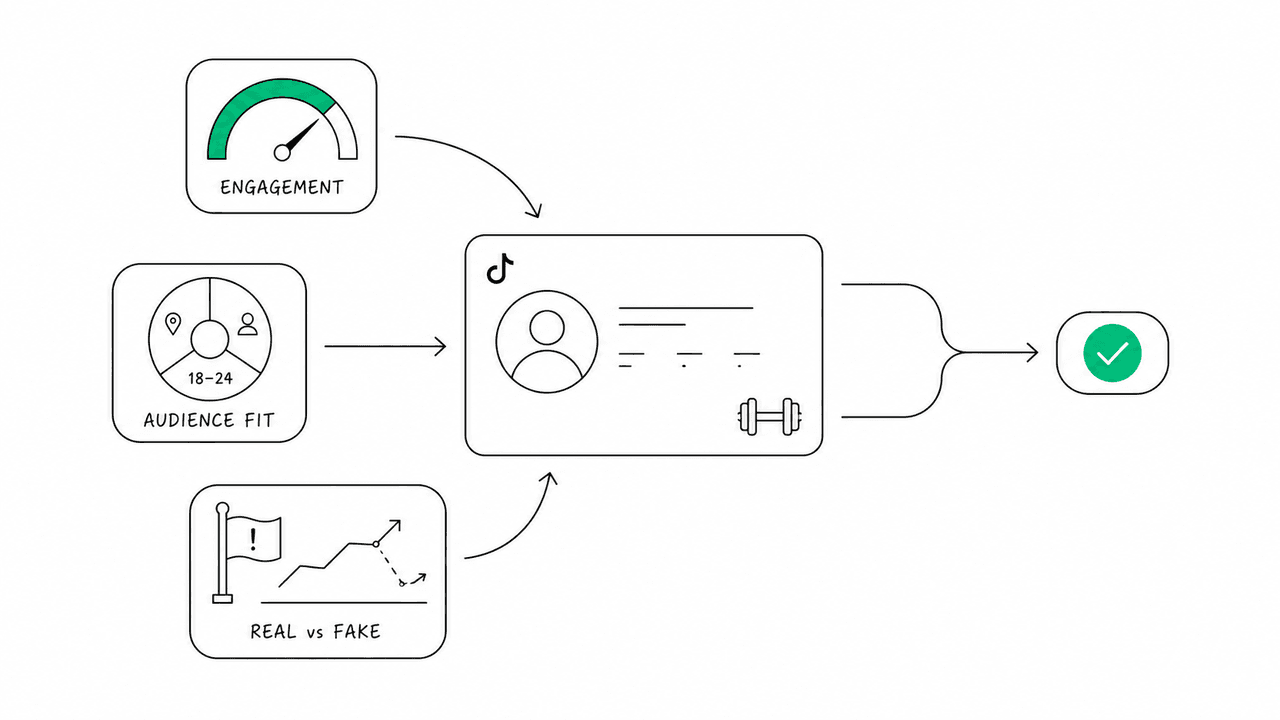
Engagement rate over follower count
Follower count is vanity. Engagement is the signal. On TikTok, judge engagement against views, not just followers, because a creator's reach often dwarfs their follower count. A rough calculation: (likes + comments + shares) divided by views for per-post engagement, or divided by followers for the follower-relative rate. Watch for view-to-follower mismatch in both directions: 2 million views on a 30k account can mean a viral fluke, while a 500k-follower account pulling 8k views per video signals a dead or bought audience.
Audience authenticity
Bought followers and engagement are everywhere in fitness, where transformation content attracts spammy growth tactics. Red flags: sudden follower spikes with no viral video to explain them, generic comments ("great post!" and emoji strings from photo-less accounts), and a high like count with almost no saves or shares. Saves and shares are hard to fake and are the metrics that actually predict buying intent. Our guide to detecting fake followers walks through the full workflow and the tools that automate it.
Audience fit (location, age, gender)
This is the check manual scrolling can't do, and it's decisive for fitness products that ship or region-restrict. A creator with a perfect aesthetic and 70% of their audience outside your market is worthless to a brand that only ships domestically. TTCM and third-party tools expose audience demographics; the For You page does not. Don't skip it.
Content quality and brand safety
Do their values and aesthetic actually match yours? Scan their recent posts for past controversies, conflicting sponsorships (a competitor's pre-workout last month), and whether they disclose paid partnerships cleanly. Proper #ad disclosure isn't just good manners; the FTC's endorsement guidelines make undisclosed sponsorship a liability you can inherit. A creator who hides ads is a creator who'll cut corners with yours.
Consistency and comment sentiment
Are they posting regularly, or did they go quiet three months ago? And read the comments: is the audience genuinely engaged and trusting, or just lurking? In fitness there's a simple test — does the creator actually train? An audience can tell when someone lives the content versus performs it, and that trust is exactly what you're renting.
Above all, weight niche fit over raw reach. A 30k-follower trainer whose audience lifts will outperform a 1M generalist for a supplement launch every time. The narrow, trusting audience is the whole point.
From shortlist to outreach
Once you've vetted, organize the survivors into a clean shortlist with notes on why each fits. Then personalize outreach — reference their actual content, not a template — and lead with what you offer (product, payment, creative freedom) before you ask for anything. Propose concrete deliverables so the creator can say yes without a dozen follow-up questions.
Most outreach gets ignored because it's generic. If your replies are dead, read why your influencer outreach gets ignored and how to fix it, and brush up on the fundamentals in our glossary entries for influencer discovery, influencer vetting, and influencer outreach. For the cross-platform view, see how to find influencers on Instagram and the broader playbook for finding influencers for your brand.
FAQ
How do I find fitness influencers on TikTok for free?
Three free routes. Search core hashtags (#FitTok, #GymTok) plus niche tags (#pilates, #runtok) and sort by most liked or recency. Browse the TikTok Creative Center's Top Ads to see which fitness creators are driving paid results. And use the TikTok Creator Marketplace to browse opted-in creators with first-party audience data. All three are free; none of them give you fake-follower analytics or contact data, which is where paid tools earn their cost.
What is the TikTok Creator Marketplace and is it worth it?
It's TikTok's official platform (now part of TikTok One) for connecting brands with creators who opt in to partnerships, with native briefs, messaging, first-party audience data, and Spark Ads integration. It's worth it if you're running TikTok-only campaigns and value native paid-boost integration. It's weaker for scale, deep vetting, and natural-language search, and it only shows creators who joined, so pair it with a third-party tool if you need a bigger or better-qualified pool.
How many followers should a fitness influencer have?
There's no minimum. Nano (1k to 10k) and micro (10k to 100k) fitness creators usually post the highest engagement and the most trusted recommendations, which makes them efficient for conversions. Reserve macro and mega creators for broad awareness pushes. For a supplement or app launch, a 30k-follower trainer with a niche, engaged audience beats a million-follower generalist. See our macro vs micro influencers breakdown.
How do I know if a TikTok fitness influencer has fake followers?
Check for view-to-follower mismatch, sudden follower spikes with no viral video behind them, generic copy-paste comments, and a high like count with almost no saves or shares. Audience authenticity tools such as HypeAuditor score this automatically. Our fake follower detection guide covers the full manual and tool-assisted process.
TikTok vs Instagram for fitness influencers, which is better?
Use both for different jobs. TikTok wins on discovery and virality; it's where fitness trends start and where you reach new audiences cheaply through the For You page. Instagram is more polished and shoppable, and it converts considered purchases through Reels, Stories link stickers, and product tags. Most fitness programs use TikTok to break out and Instagram to convert and retain.
Sources and further reading
- TikTok for Business — Creators and TikTok Creator Marketplace (TikTok One): eligibility, opt-in partnerships, briefs, and Spark Ads integration.
- TikTok Creative Center — Top Ads and trend discovery: free browsing of top-performing ads and trends by category and region.
- Federal Trade Commission — Disclosures 101 for Social Media Influencers: endorsement and #ad disclosure rules for vetting brand safety.
- Influship — How to detect fake followers: methodology for spotting bought audiences and engagement fraud.
- Influship — Influencer marketing for fitness: industry strategy, budget, and ROI, including how audiences discover fitness trends on social.