A brand partnership is any arrangement where two parties combine audiences, products, or credibility to reach a shared goal. That covers a sponsored Reel, a co-branded sneaker drop, an affiliate link, and a multi-year ambassador deal. The word gets stretched to mean all of them, which is exactly why most people end up confused about what they are actually buying or selling.
This guide fixes that. It lays out the full taxonomy, the main types of collaboration, where deals actually come from, how to structure and price them, and a set of examples that worked and why. It is written for both sides of the table: brands trying to source and run partnerships, and creators trying to land and keep them.
One number to anchor the stakes. The influencer marketing industry alone was projected to reach roughly $24 billion in 2024, according to Influencer Marketing Hub. That figure is only one slice of brand partnerships, and it is bigger than the worldwide box office. Partnerships are not a side tactic anymore. For a lot of brands, they are the primary growth channel.
The opinionated take running through this piece: the partnership type matters far less than the fit. A perfectly structured contract with the wrong partner loses. A loose handshake with the right partner can build a brand. Spend your effort on selection first, structure second.
What is a brand partnership?
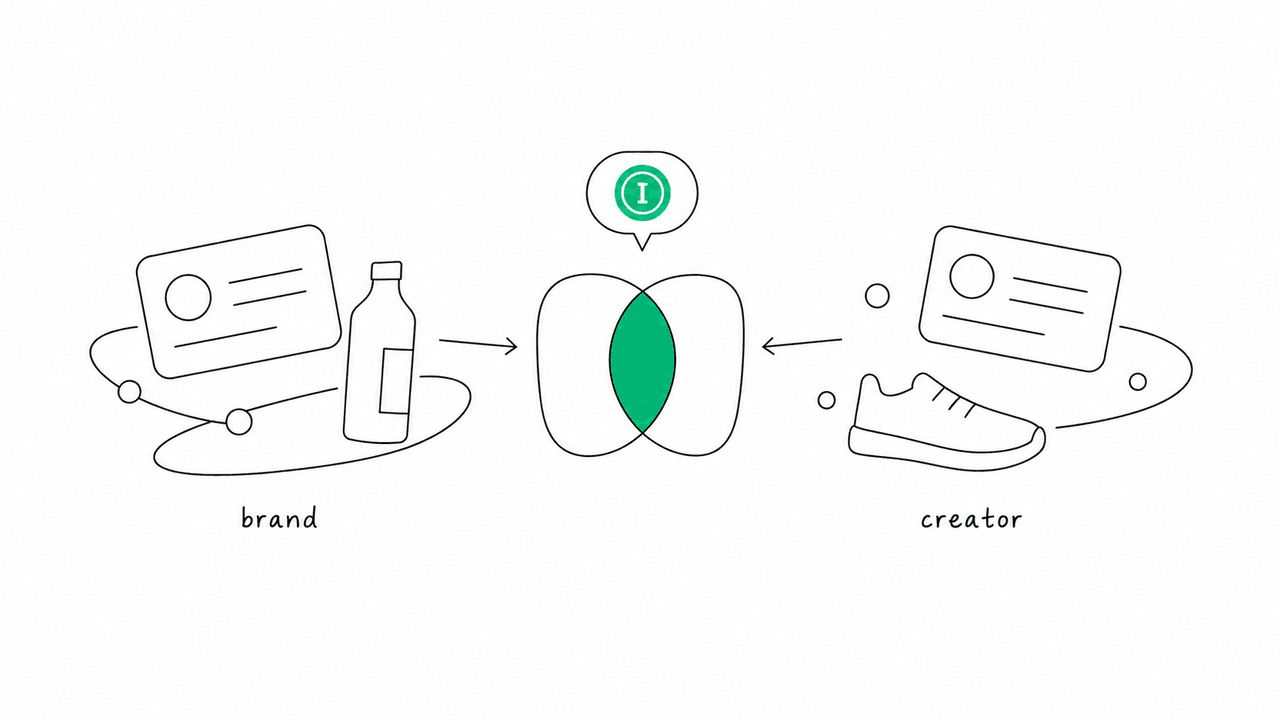
A brand partnership is a deliberate collaboration between two or more parties to achieve a commercial outcome, where each side contributes something the other lacks: an audience, a product, distribution, credibility, or creative capability. The defining feature is mutual benefit. A vendor relationship is one-directional. A partnership is reciprocal.
The terminology overlaps constantly, so here is a clean taxonomy. "Brand collaboration" and "brand partnership" are used interchangeably most of the time; collaboration tends to imply joint creation (a co-designed product, a shared campaign), while partnership is the broader umbrella. A "paid partnership" is a partnership where money changes hands for promotion, which is also what platforms label sponsored content. A "brand deal" is the informal, creator-side word for any of the above.
| Term | What it means | Direction of value |
|---|---|---|
| Brand partnership | Umbrella term for any reciprocal commercial collaboration | Two-way |
| Brand collaboration | Partnership involving joint creation (product, campaign, content) | Two-way, co-created |
| Sponsorship | One party funds another's content, event, or creator in exchange for exposure | Money for visibility |
| Paid partnership / sponsored content | Creator is paid to feature a brand; disclosed per platform and FTC rules | Money for promotion |
| Affiliate partnership | Promoter earns commission on tracked sales, paid on performance | Commission for results |
| Brand deal | Creator-side slang for any of the above | Varies |
The distinction that trips people up most is partnership versus sponsorship. A sponsorship is a type of partnership where one side primarily provides funding and the other provides visibility. A partnership can be far more involved: shared product development, co-marketing, revenue splits, equity. Every sponsorship is a partnership; not every partnership is a sponsorship.
Types of brand partnerships and collaborations
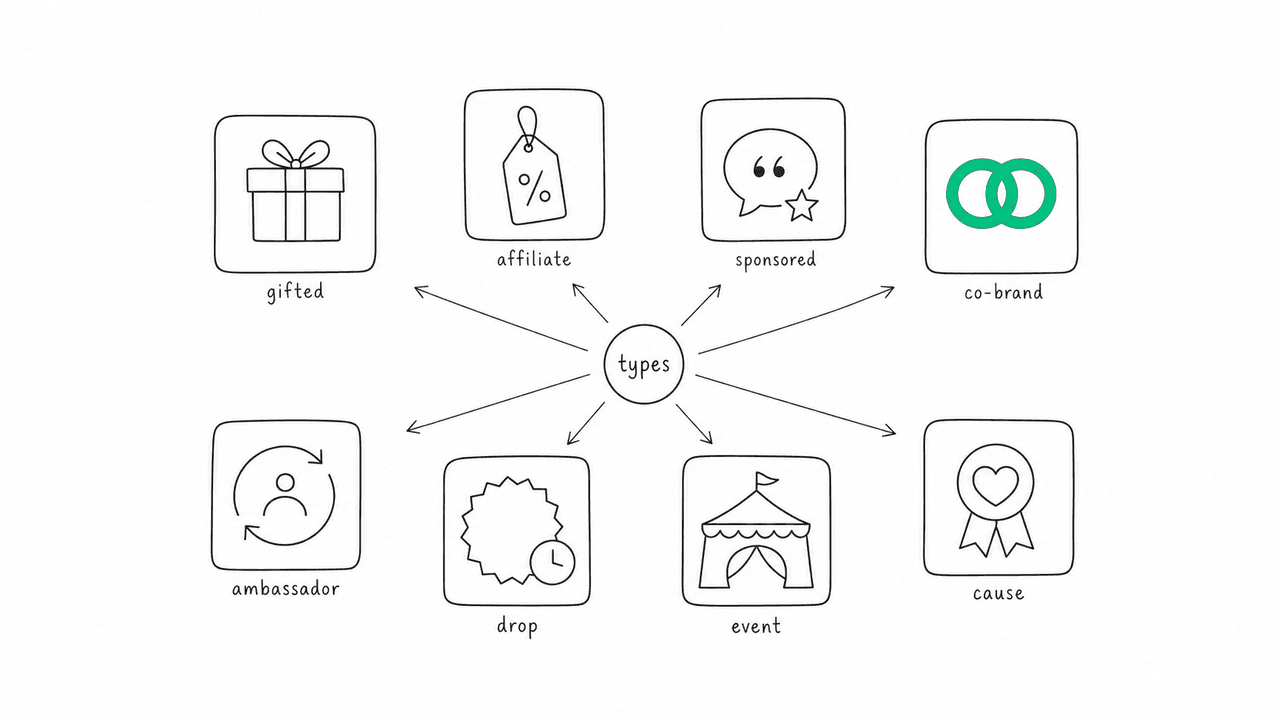
There are eight common structures. Most real programs combine several. A brand might gift product to nano creators, pay a few macro creators on flat fees, run an affiliate layer underneath all of them, and co-brand a limited drop with a partner company once a year.
Influencer and creator partnerships
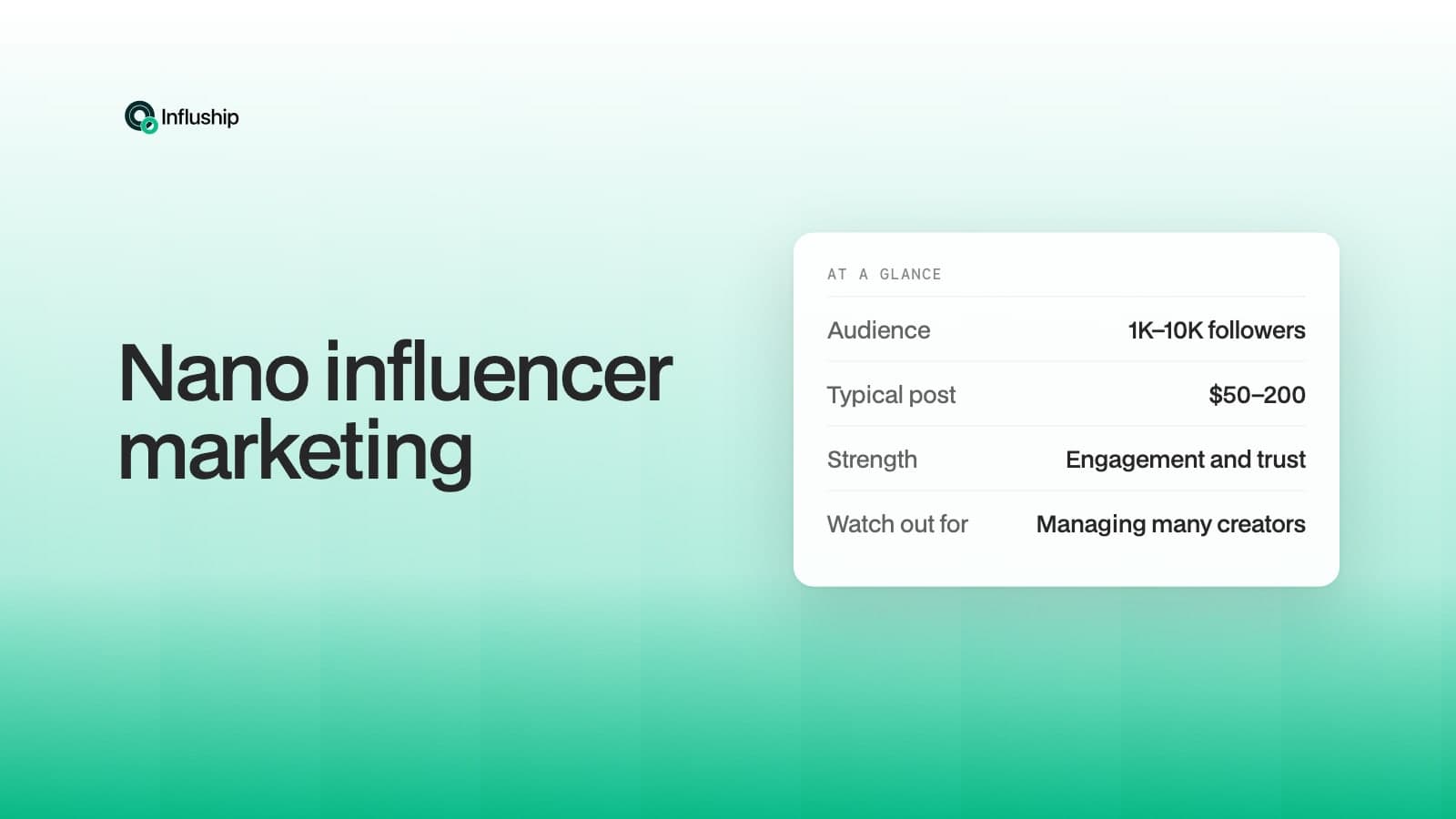
The most common form: a brand pays or gifts a creator to make content featuring its product. These range from a single gifted post to a structured campaign across dozens of creators. The mechanics of finding, briefing, and paying creators make up most of this guide. If you are starting from scratch, our walkthrough on influencer discovery covers how to source the right people instead of the loudest ones.
Co-branding and brand-to-brand collaborations
Two companies create something neither would have made alone. Co-branding works when the audiences overlap in spirit but not in product, so each brand introduces the other to new customers without cannibalizing its own. The classic example is GoPro and Red Bull: Red Bull supplies the adrenaline events, GoPro supplies the cameras, and both own the footage. The 2012 Stratos space jump was co-produced and seen live by millions. Neither brand sells the other's product, but each amplifies the other's positioning.
Co-branding examples worth studying span industries: Spotify Wrapped turns user data into a shareable annual campaign that dozens of partner brands piggyback on; Louis Vuitton x Supreme fused luxury and streetwear into a 2017 collection that resold for multiples of retail. The pattern is always the same: combine two distinct credibilities into one object or moment that neither could claim alone.
Affiliate partnerships
The promoter earns a commission on tracked sales, usually through a unique link or discount code. The brand pays only on performance, which makes affiliate the lowest-risk structure to start with. The trade-off: creators with leverage often want guaranteed money on top of commission, because affiliate-only deals put all the risk on them. Commission rates for creator affiliate programs typically run 10 to 20 percent.
Sponsored content and paid partnerships
Money for promotion, disclosed clearly. This is where compliance matters most. The FTC Endorsement Guides require that any material connection between a brand and a promoter be disclosed clearly and conspicuously. #ad or #sponsored works; a buried #partner does not. The platform's built-in "Paid partnership" label is good practice but does not replace an in-caption or in-video disclosure. We cover the rules in detail in our guide to the FTC influencer guidelines.
Brand ambassador programs
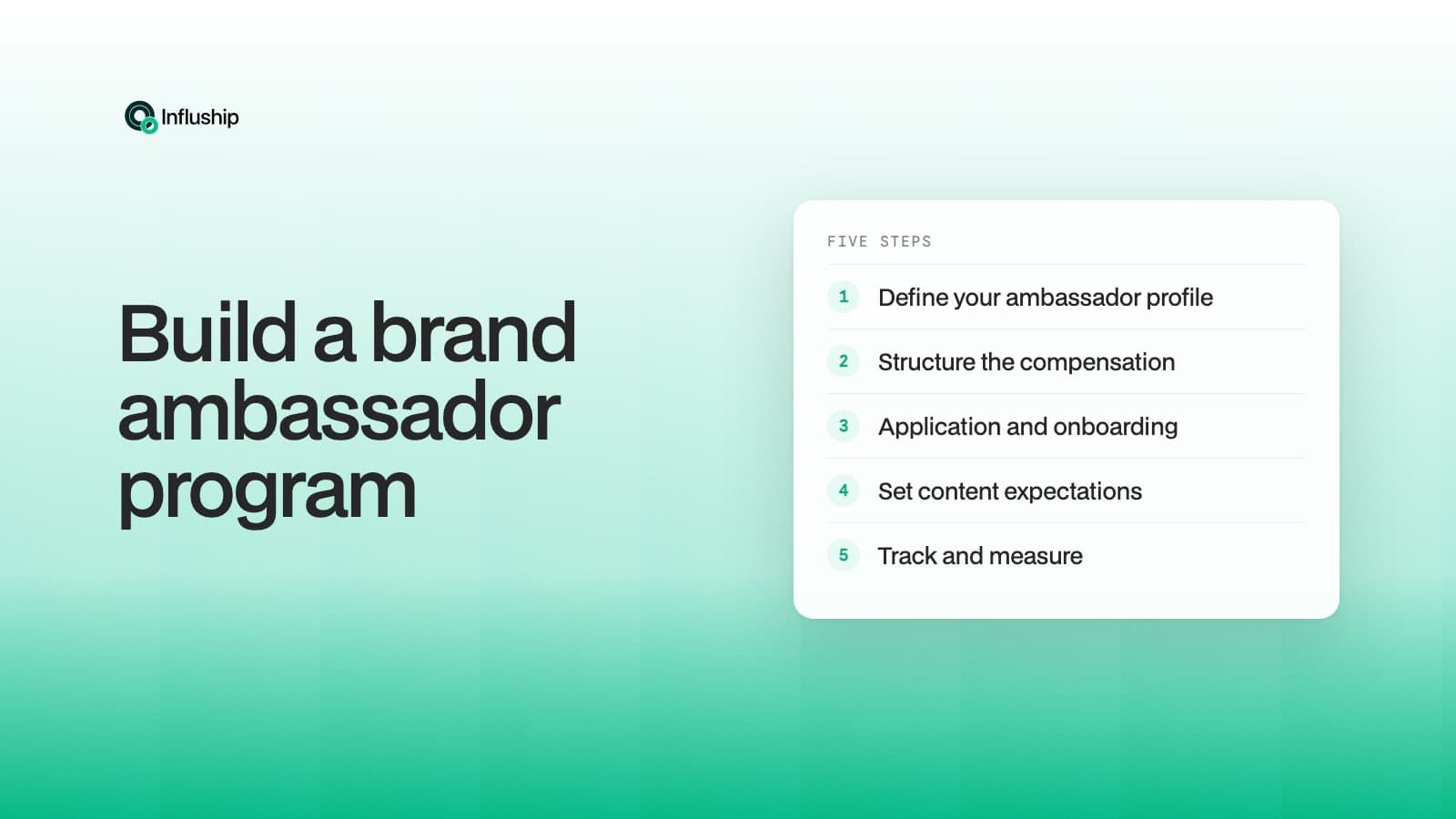
Long-term relationships where a creator represents the brand over months or years rather than for a single post. Ambassadors get product access, early launches, and usually a hybrid of retainer, commission, and gifting. They build the repeated, trusted mentions that one-off posts cannot. We have a full build guide on how to build a brand ambassador program, plus a list of companies looking for brand ambassadors if you are on the creator side.
Product collaborations and limited drops
A co-created, often limited-edition product. The scarcity is the point: a finite drop generates urgency, resale value, and press. Creator x brand product lines (a beauty line, a signature shoe, a capsule collection) sit here too, blending the influencer partnership with the co-branding model. The creator brings the audience and the design input; the brand brings manufacturing and distribution.
Event and experiential partnerships
Activations, pop-ups, sponsored stages, and creator trips. The value is in-person reach plus a flood of content the brand can repurpose for months. Festivals and tentpole events are where this concentrates. See our coverage of brand activations at major events for how these are structured on the ground.
Cause and charity partnerships
A brand aligns with a nonprofit or social cause. Done sincerely, it builds brand equity and does real good. Done as a marketing veneer, audiences spot it instantly and it backfires. The bar is higher here than anywhere else: the partnership has to be backed by actual commitment, not a campaign cycle.
Industry spotlights
Partnership norms differ by vertical. Pricing, platform mix, and what counts as a credible collaboration all shift depending on the industry. Here is where the patterns diverge most.
Fashion collaborations
Fashion runs on the drop. Successful fashion collaborations tend to be limited, hyped, and built on a tension between two brands that do not obviously belong together. Louis Vuitton x Supreme paired Parisian luxury with skate-shop streetwear and became one of the most resold collections of the decade. Adidas x the right creator or designer, H&M's annual designer collaborations, Nike's endless collab pipeline: the formula is scarcity plus an unexpected pairing.
Beauty collaborations
Beauty is the most creator-saturated category, which makes nano and micro partnerships unusually cost-effective and gifting unusually powerful. Creator-led beauty lines (a makeup artist's palette, a skincare founder's routine) are the high end of the collaboration spectrum. Our beauty influencer marketing guide breaks down tiers, platforms, and the TikTok-versus-Instagram split.
Gaming collaborations
Gaming partnerships reward authenticity and punish anything that smells corporate. The most interesting deals are non-endemic: a snack brand or car maker sponsoring a streamer or an in-game event, reaching an audience that ad-blocks everything else. See gaming influencer marketing for how to partner without getting roasted by the community.
Music collaborations
Music partnerships blend artist endorsements, sync placements, festival sponsorships, and creator-driven sound trends. A single track going viral on TikTok can carry a brand further than a paid campaign. Our guide to influencer marketing for music covers the artist and platform mechanics. For the full set of verticals, the influencer marketing by industry hub is the index.
How to find brand partnership opportunities
The sourcing problem looks different from each side of the table. Brands need to find the right partners and filter out the fakes. Creators need to find brands with budget and a real fit. Both fail the same way: chasing reach instead of relevance.
For brands: define, source, vet
Start with the goal, not the partner. Awareness, conversions, content for ads, and community credibility each point to a different kind of partner. Once the goal is clear, source against it. Manual sourcing through hashtags and your own tagged posts works at small scale; past a handful of partners you need search. Tools like Influship's influencer discovery let you search by audience demographics and content fit rather than follower count, which is the only signal that actually predicts performance.
Then vet. Inflated follower counts and engagement pods are everywhere, and a partnership built on fake reach is money set on fire. Our guide to how to detect fake followers walks through the red flags: sudden follower spikes, generic comments, a follower base in countries that have nothing to do with the audience the creator claims.
For creators: media kit, pitch, inbound
Deals come from three places. Inbound (a brand finds you), outbound (you pitch), and platforms or networks (affiliate programs, creator marketplaces, agencies). To win any of them, you need a media kit: audience demographics, engagement rate, recent results, rate card, and two or three examples of past brand work. Keep it to one or two pages.
For YouTube creators, proven sponsor activity is a useful starting point. Sponsorbook shows which brands are buying YouTube sponsorships, how recently they were active, and the channels they have sponsored. Use that evidence to build a shortlist, then pitch where your audience and content genuinely fit.
When you pitch, lead with fit and results, not your follower count. A short message that names the specific product, explains why your audience matches, and points to a comparable result you have driven beats a generic "love your brand, let's collab" every time. Reach out to a named contact, not the support inbox.
Structuring and pricing a partnership
A partnership lives or dies on what is actually agreed. The most common cause of a deal going sideways is not bad faith; it is two parties who assumed different things about deliverables, timing, usage, or exclusivity. Write it down.
Deliverables and timing
Specify exactly what gets made: how many posts, in which formats, on which platforms, by when. "A few posts" is not a deliverable. "Two in-feed Reels and four Stories, published across two weeks, with the brand tagged and the disclosure in the first line" is. The single best tool for getting this right is a clear brief; see how to write an influencer brief.
Exclusivity, usage rights, and whitelisting
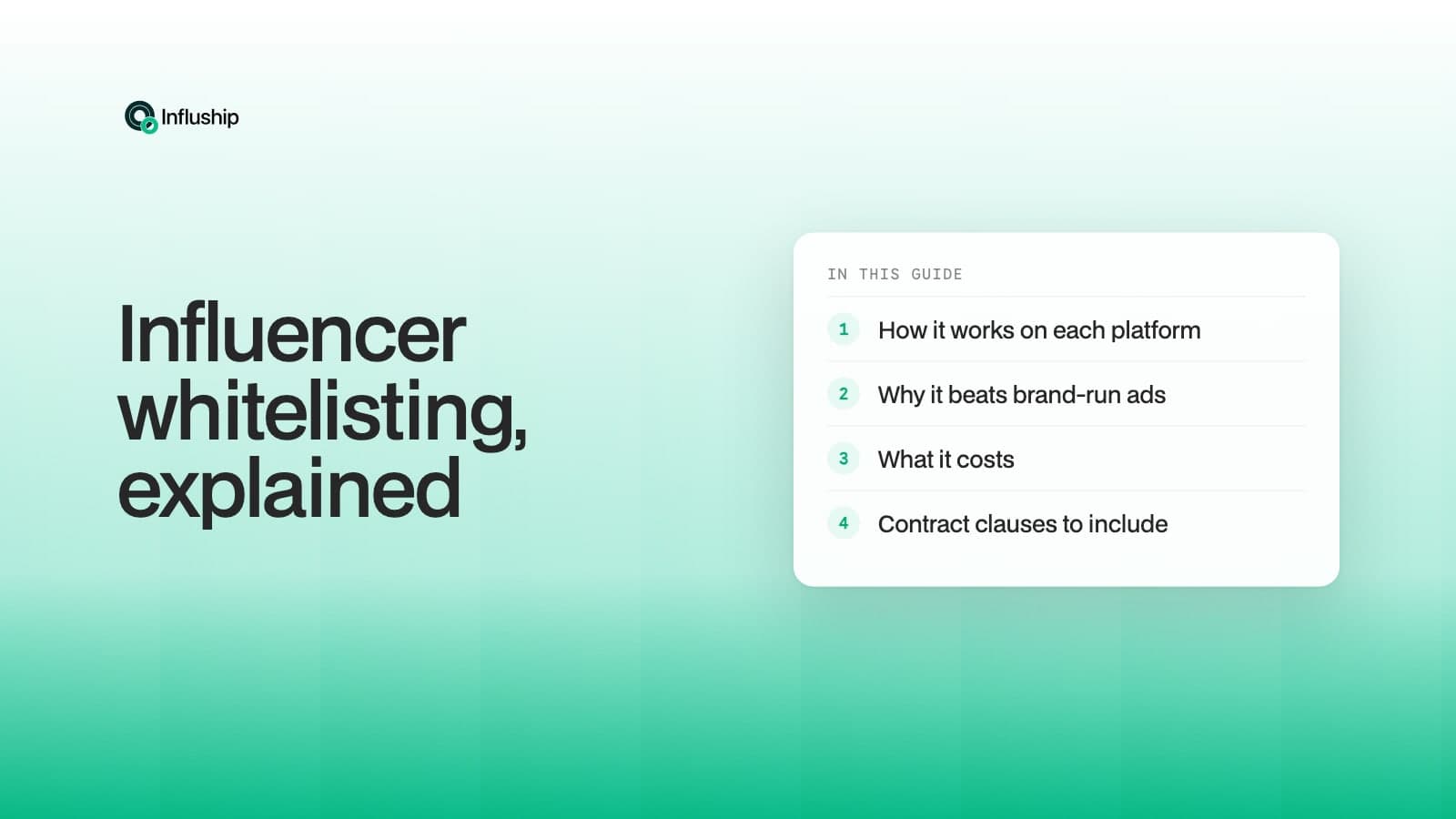
Three terms that quietly drive most of the price. Exclusivity (the creator agrees not to promote competitors for a set window) costs extra because it removes their other income. Usage rights (you reuse the content in your own channels) and whitelisting (you run ads from the creator's handle) are separate grants that should each be priced and time-boxed. A lot of brands assume they own content they only licensed for organic posting. They do not. Our influencer whitelisting guide explains how paid amplification through a creator's account works and what to negotiate.
Pricing
There is no universal rate. Price scales with audience size, engagement quality, exclusivity, usage rights, and production effort. A common starting heuristic on Instagram is roughly $100 per 10,000 followers for a single post, but that is a floor, not a rule, and it bends heavily with the factors above. Our influencer pricing guide has tier-by-tier benchmarks for both sides to anchor a negotiation.
Contracts
Put the agreement in writing, even for small gifted deals. Cover deliverables, timing, payment terms, exclusivity, usage rights, disclosure obligations, approval process, and termination. You do not need a lawyer for every micro deal, but you do need a clear document. Our guide on how to write an influencer contract covers the clauses that matter, and the influencer marketing contract builder generates a starting draft you can adapt.
Examples of successful brand partnerships
Five partnerships that worked, and the specific reason each one did. The reason is never "they had a big audience." It is always a real strategic fit.
GoPro x Red Bull. Red Bull owns extreme-sports moments; GoPro captures them. The Stratos space jump in 2012 was co-produced, streamed live to a then-record YouTube audience, and gave both brands footage and positioning neither could buy. It worked because the products are complementary, not competitive: one creates the spectacle, the other records it.
Louis Vuitton x Supreme. The 2017 collection paired luxury heritage with streetwear scarcity. Pieces sold out instantly and resold for multiples of retail. It worked because the tension between the two brands was the product. Each lent the other a credibility it could not manufacture: Supreme got luxury legitimacy, Louis Vuitton got youth and hype.
Spotify Wrapped. Wrapped turns each user's listening data into a shareable year-in-review, and partner brands and artists ride the annual wave of organic posts. It worked because the campaign makes the audience the content. The reach is earned, not paid, which is the most valuable kind.
Gymshark x fitness creators. Gymshark built a billion-dollar apparel brand largely on long-term partnerships with fitness creators it recruited before they were famous. It worked because the partnerships were ambassador-deep, not campaign-shallow: the same creators wore the gear for years, which read as genuine rather than sponsored.
Non-endemic gaming sponsorships. Snack, beverage, and car brands sponsoring streamers and esports reach a young, ad-resistant audience that traditional media cannot. It works when the brand respects the community's norms and integrates naturally rather than slapping a logo on a stream. The ones that fail are the ones that treat the audience as a billboard.
Measuring partnership success
The KPI depends on the partnership type. Measuring an awareness co-brand by last-click sales will make a great partnership look like a failure, and vice versa. Match the metric to the goal.
- Awareness partnerships (co-branding, events, sponsorships): reach, impressions, branded-search lift, earned media value, and brand-lift surveys.
- Conversion partnerships (affiliate, paid creator, ambassador): tracked sales via unique codes and links, cost per acquisition, return on ad spend on whitelisted content.
- Content partnerships: volume and quality of usable content, and its performance when repurposed in paid ads versus studio-produced creative.
- Community partnerships (long-term ambassadors): retention, repeat mentions, sentiment, and the share of content you can reuse.
On attribution: no single method captures everything. Combine unique discount codes, UTM- tagged affiliate links, and a post-purchase "how did you hear about us" survey to catch the word-of-mouth that codes and links miss. The survey routinely reveals partnership influence that the tracking pixels never saw.
FAQ
What are the four types of brand partnerships?
The four most common are influencer and creator partnerships (paid or gifted content), co-branding or brand-to-brand collaborations (a jointly created product or campaign), affiliate partnerships (commission on tracked sales), and brand ambassador programs (long-term representation). Sponsored content, product drops, event activations, and cause partnerships are further variations.
How do brand partnerships make money?
For brands, partnerships drive awareness and sales by borrowing a partner's audience and credibility, often at a lower cost than paid ads and with content they can reuse. For creators, they make money through flat fees, affiliate commissions, retainers, gifted product, and revenue shares on co-created products. The best deals combine several of these.
How do I get brand partnerships as a creator?
Build a media kit with your audience demographics and real results, pitch brands whose products genuinely fit your audience, and join affiliate programs and creator marketplaces for inbound. Lead with fit and proof, not follower count, and reach out to a named contact rather than a generic inbox. Consistency and a track record of driving results are what turn one deal into repeat partnerships.
What is the difference between a brand partnership and a sponsorship?
A sponsorship is a type of partnership where one side primarily provides funding in exchange for visibility. A partnership is the broader category and can involve far more: shared product development, co-marketing, revenue splits, or equity. Every sponsorship is a partnership, but not every partnership is a sponsorship.
How do I reach out for a brand collaboration?
Send a short, specific message to a named contact (marketing or partnerships, not the support inbox). Name the exact product, explain in one line why your audience matches theirs, point to a comparable result you have driven, and propose a concrete first step rather than asking them to figure out the deal. Attach or link a one-page media kit. Specificity and proof beat enthusiasm every time.
Sources and further reading
- Influencer Marketing Hub — Influencer Marketing Benchmark Report (industry size and partnership/sponsorship spend benchmarks).
- Federal Trade Commission — Disclosures 101 for Social Media Influencers (disclosure rules for paid and gifted partnerships).
- Red Bull — GoPro x Red Bull Stratos (co-branding case study).
- Influship — Influencer Pricing Guide (rate benchmarks by tier for structuring partnerships).